
A virtual Mastercard with a dedicated IBAN and no monthly fee, built for people who cannot get an ordinary bank card
 Available in US
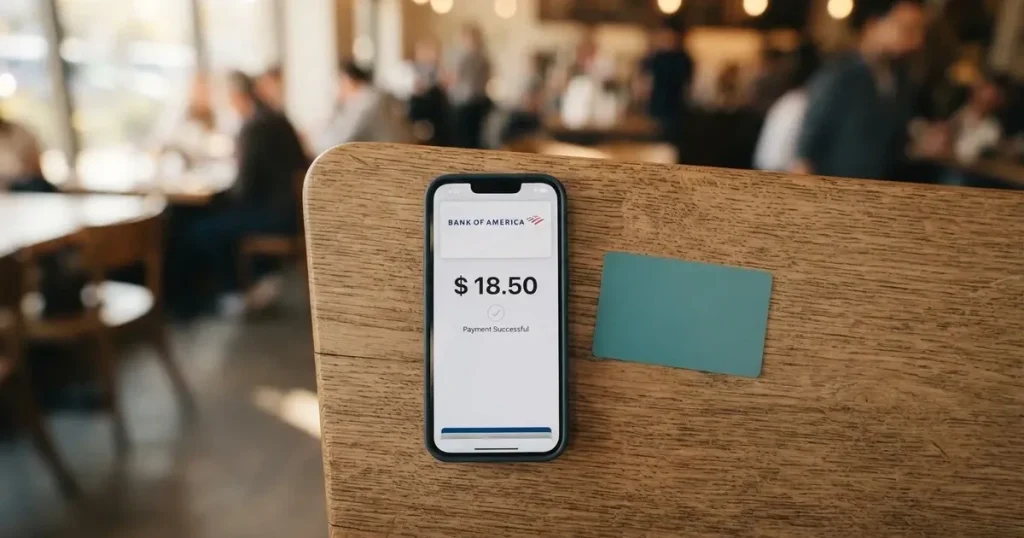
The Zoomex card is a virtual Mastercard with a dedicated IBAN, meant for people who cannot easily open an ordinary bank card. There is no card issuance fee and no annual fee. Crypto-to-fiat conversion is charged at 1%, and cross-currency spending goes through Mastercard’s real-time exchange rates. The card is loaded in stablecoins — USDC is the only deposit method the company names — and it lives inside a UR account, which is where the limits and the withdrawal terms come from too. There is no physical plastic, and the ATM situation is not stated.
I scored it 6.8 out of 10. That is a card that solves one real problem cleanly and leaves almost everything around it undocumented. Before you read further, you should know the shape of the problem: the card itself is thin on detail, and the exchange behind it has a low rating from a third-party review site.
The conditions described here are current as of October 28, 2026.
Verdict: 6.8 out of 10, a practical tool with thin documentation
Zoomex scores well where it matters for daily use and poorly where it matters for trust and clarity. There is no cost to hold the card, the wallet support is standard and complete, and the IBAN makes it usable for direct debits in a way that most crypto cards are not. What pulls the number down is a top-up story that mentions exactly one asset, a launch timeline so recent that independent card reviews barely exist, and an exchange that a third-party site scores at 1.9 out of 5.
| Criterion | Mark | Why |
|---|---|---|
| Who can get it | 8 / 10 | The press release gives no country list; availability is generally global excluding the USA, Russia, Iran and North Korea |
| Cost | 8 / 10 | No issuance fee, no annual fee, 1% crypto-to-fiat conversion, Mastercard real-time rates between currencies |
| Top-up options | 5 / 10 | USDC deposit and a USDC transfer from a Zoomex exchange account; the networks are not named |
| Reliability and complaints | 5 / 10 | Zoomex is in the Seychelles and claims registrations in Canada, the US and Australia; the issuer is not named; Gridinsoft scores the exchange 1.9/5 from 81 reviews |
| Everyday use | 7 / 10 | Virtual Mastercard with a dedicated IBAN and Apple Pay, Google Pay, Samsung Pay; no plastic, ATM terms not stated |
Total: 6.8 / 10
Who this suits: you already hold crypto or stablecoins, you can get into a UR account, and you want a card number that spends from a crypto balance with an IBAN attached — for direct debits, subscriptions, or spending in places where an ordinary card of yours is refused. Who it does not suit: anyone who needs a physical card, who needs ATM cash, who lives somewhere the eligibility rules turn out to exclude them, or who wants to know in advance exactly which merchant categories are blocked.
Here is how the pieces fit together, in the order you would meet them.
Will they give you the card?
The short answer is: the announcement does not say. The press release that launched the card gives no country list. However, availability is generally reported as global, excluding the USA, Russia, Iran and North Korea, plus some US territories. Whether the test is citizenship or residence is not stated, and those are not the same test.
That gap matters more than it sounds. Sanctions screening and issuer risk policy are often applied to citizenship and country of birth as well as to the country where you live, so a residence-based answer and a citizenship-based answer can point at different countries for the same person. If the difference between those two lists decides whether you can open the account, and the company has not published the lists, you are being asked to find out by trying.
The card arrives as a virtual Mastercard. Physical is not mentioned at all, so treat it as not existing rather than as coming later. It settles in USD, EUR, CHF, SGD, HKD, JPY “and more”, and a dedicated IBAN comes with it — the part of the offer that genuinely distinguishes it from most crypto cards, because an IBAN lets you be debited directly rather than only tapping a card terminal.
On membership, only two levels are stated: Basic and UR Pro. Verification tiers are not stated. The card is reached through a UR account, and the release does not state what identity checks that account requires. So the honest answer to “will they give me the card” is: if you can open the UR account, the card follows from it; what stands between you and that is the UR account’s own rules, which this announcement does not publish.
How to get it
Two steps, really: get a UR account, get the card inside it. There is no separate application flow described.
What you end up with:
- A virtual Mastercard — usable in a wallet, not in a plastic slot.
- A dedicated IBAN assigned to the account.
- Settlement balances in USD, EUR, CHF, SGD, HKD, JPY “and more”.
- Delivery: virtual only, so the question of shipping does not arise.
On identity verification, the release does not state what KYC the card requires; it simply says the card is issued via a UR account. Membership is what the release does speak about: there is a Basic tier and a UR Pro tier, and new cardholders are automatically upgraded from Basic to UR Pro at no cost. UR Pro is what carries the higher limits and “better withdrawal fees”, so in practice the card arrives at the better tier by default.
What to check first, before you go further: whether your own country appears in the eligibility rules you can find, and what the UR account asks you for in the way of documents. Both are answers only the provider can give you, and neither is on the announcement.
What it really costs: Fees, limits and what a payment leaves behind
The headline cost of this card is zero. There is no card issuance fee and no annual fee. The money is in the conversion, and only in the conversion.

| Fee or limit | What the card states |
|---|---|
| Card issuance | No fee |
| Annual fee | None |
| Crypto-to-fiat conversion | 1% |
| Cross-currency spending | Mastercard’s real-time exchange rates |
| ATM | Not stated |
| Monthly limit | Up to 100,000 CHF for upgraded UR Pro members; other limits not stated |
| Fiat withdrawals | No fee |
| Withdrawal terms for UR Pro | “Better withdrawal fees” — amounts not stated |
| Category | Mark | Why |
|---|---|---|
| Issuance and holding | Nothing | No issuance fee, no annual fee |
| Every purchase you fund from crypto | 1% | Charged on the crypto-to-fiat conversion |
| Spending across currencies | Mastercard real-time rate | No separate FX fee is listed |
| Cash from a machine | Unknown | ATM terms are not stated at all |
| Closing balance | Unknown | What you get if you close the account is not stated |
Now three ordinary payments, walked through, so you can see where the 1% does and does not apply.
Buying lunch for 20 EUR, balance in EUR. You hold a EUR balance already, so there is nothing to convert and nothing to cross. The card spends the EUR balance directly. No 1% appears in this transaction.
Buying lunch for 20 EUR, balance in USD. Two things happen, in this order. Your USD is converted to EUR at Mastercard’s real-time rate, which is the market rate rather than a marked-up one, and the card’s own 1% conversion fee has nothing to do with this step — it is the crypto-to-fiat step. The 20 EUR leaves your USD balance at roughly the live rate. What you pay extra here is spread, not a fee from the card.
Buying a 40 EUR subscription, funded from USDC. This is where the 1% lives. The USDC is sold and loaded as fiat balance at a cost of 1%, and then the EUR payment itself is a plain balance spend. So the round trip costs you one percentage point of the amount, once, before any exchange-rate movement.
The limits sit at the other end. For upgraded UR Pro members the monthly limit goes up to 100,000 CHF; no other limits are stated — not daily, not per transaction, and not for the Basic tier. The 100,000 CHF figure is generous enough that it will not be the constraint for most people, but the absence of a daily limit is worth knowing about.
What is missing is ATM. If you need cash from a machine, this card’s terms are simply not on the table, and “not stated” is not the same as “no fee”.
How to Top up the card
The only funding route the company names is USDC. That is the fact to sit with. Not “USDC and other stablecoins” — USDC.
Two routes are described:
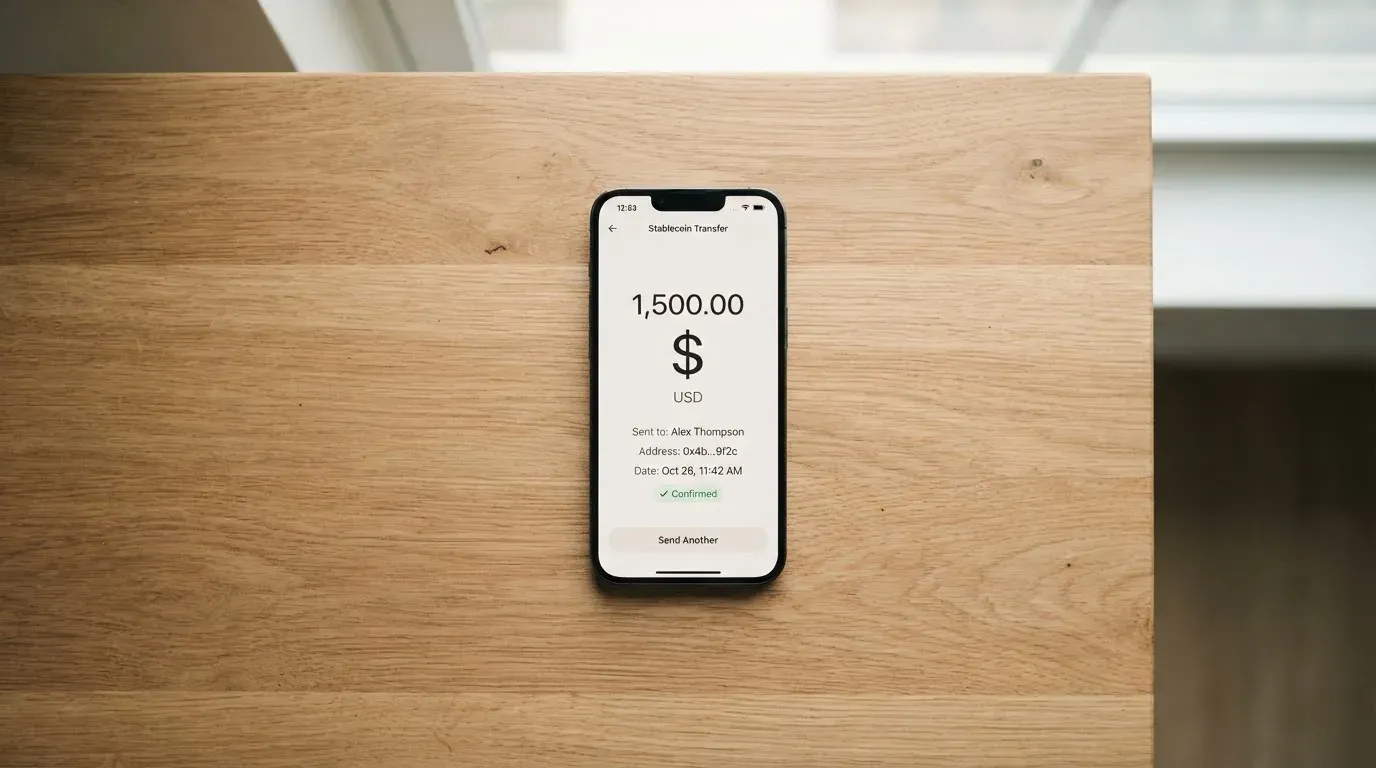
- USDC deposit — instant funding with digital assets.
- USDC transferred from a Zoomex exchange account to a UR account.
The networks are not named, and this is the single most consequential gap on this page. USDC lives on many chains — Circle listed it as natively supported on 38 networks as of 16 September 2026, including Ethereum, Solana, Base, Polygon PoS, Avalanche, Arbitrum and Stellar — so “send USDC” is an instruction with several incompatible answers. A transfer sent on a network the provider does not support, or to an address belonging to another network, can be lost or need manual recovery with no guarantee, because blockchain transfers are irreversible. The on-chain network fee is charged by the blockchain, not by the card.
Fees and minimums for top-ups are not stated either. So before your first deposit you want two answers from support: which networks are accepted, and what the deposit fee and minimum are.
On the way out: no fee for fiat withdrawals, and UR Pro members get “better withdrawal fees” — though the card does not publish what those are, or what happens to the balance when the account closes.
Paying with it every day
Day to day this is a familiar card, which is the card’s strongest suit.
Mobile wallets work: Apple Pay, Google Pay, Samsung Pay. All three are named. Tokenisation does the rest — the card number is replaced by a device-specific number held on the device, and each payment carries a one-time code, so adding the card to a phone wallet is not meaningfully riskier than using the card itself.
Multi-currency balances are the feature that makes it feel less like a crypto product and more like a travel card. USD, EUR, CHF, SGD, HKD, JPY “and more” are held at once, and cross-currency spending goes through Mastercard’s real-time rates. For anyone who moves between currencies, that is more useful than the cashback.
Rewards, while they last. Through 30 April 2026, 23:59 UTC, compliant purchases earn 1% cashback credited in real time, and new users get a $10 reward for a $5+ purchase within 30 days of activation. The rate after the promotion is not stated, so treat the 1% as an introductory term rather than a feature of the card.
What is not stated: the app (it is a UR app), the merchant categories that are blocked, and how disputes work — whether a chargeback can be raised at all, and who would handle it. Blocked categories are worth chasing on your own: many issuers block gambling, for instance, by policy rather than law, and the blocked list differs from issuer to issuer. If a category matters to you, ask.
One practical note on declines: a foreign-issued card can look foreign to a shop. Address verification, which compares the numeric parts of the billing address you type against the issuer’s records, is generally unavailable for foreign-issued cards, and some merchants decline prepaid or foreign card numbers outright. Declines are normal with cards like this and do not necessarily mean the card is broken.
What can go wrong
The honest list here is short on incidents and long on unknowns, and I would rather say that plainly than dress it up.
On complaints. No official incidents were found for the card, and no Trustpilot or Reddit card reviews were found either — which reflects how new it is more than how clean it is. The one rating that exists is unofficial and is about the exchange, not the card: Gridinsoft scores the Zoomex exchange at 1.9 out of 5 from 81 reviews. Take it for what it is, a third-party score of the company’s website from people who dealt with the exchange, not a card satisfaction survey.
The timeline is short. Early registration opened in late December 2025, rollout was expected in early 2026, the card launched on 9 March 2026, and the cashback promotion ended on 30 April 2026. The card is months old. There is no track record to inspect, which is also why the review above is thin on the things a long track record would answer.
The company. Zoomex is in Victoria, Seychelles, which it gives as its announcing office, and was founded in 2021. It claims registration as a Canada MSB, a U.S. MSB, U.S. NFA and Australia AUSTRAC, and describes the card as “backed by UR’s licensed financial infrastructure” — but UR is not explicitly named as the issuer, and UR’s country and licences are not stated. That gap sits underneath everything: when you hold this card, the issuer whose rules apply to your money is not named in the announcement. Security arrangements for the card are not stated; the exchange says it passed a Hacken audit, which is the company’s own claim about the exchange. Support arrangements are not stated.
Money at rest. This is a custodial arrangement in the ordinary sense: the card spends from a balance held for you, so you are trusting the provider with it. Cryptocurrency transfers are irreversible, so a stolen key has no built-in recovery and the network cannot return funds. Custodial platforms have a real record of failures — Mt. Gox at about US$350 million reported stolen across 2011–2014, Coincheck at about US$400 million in 2018, and the Ronin Network at US$625 million in 2022.
Programmes close. Card programmes do get wound down: Visa terminated its global agreements with FTX on 13 November 2022, and WaveCrest, a Visa issuer that supplied crypto card brands, was suspended by Visa in Europe in 2018, closing every WaveCrest-issued programme. Closures typically follow a pattern — notice, then spending and loading stop, then users are asked to withdraw their balances. So keep only what you need on the card and do not treat a balance there as savings.
Your rights. In the US, debit card reversal rights come from Regulation E and credit card rights from Regulation Z; prepaid-card coverage varies and should not be assumed. Which of those applies to a virtual card with a dedicated IBAN behind an unnamed issuer is exactly the question I would ask support.
What to take instead
The realistic alternatives are other crypto cards, and the comparison below is on the same footing as the Zoomex score — with one honest caveat: for Young Card, MSX and Bybit Card, the fees, card format and funding routes are largely not stated officially, so the rows where they are blank are blanks, not zeros. None of these figures are confirmed by the companies’ own pages in what I could read.
| Zoomex | Young Card | MSX | Bybit Card | |
|---|---|---|---|---|
| Score | 6.8 / 10 | 5.7 / 10 | 6.4 / 10 | 6.0 / 10 |
| Eligibility | Not stated in the release; earlier check indicated the world except USA, Russia, Iran, North Korea and some US territories | Not stated | Not stated on an official page I could read | Named regions only; European Economic Area customers strictly excluded |
| Card format | Virtual Mastercard with dedicated IBAN | Not stated officially | Not stated officially | Virtual and physical, by region |
| Issuance fee | None | Not stated | Not stated | Virtual free; physical varies by region |
| Conversion fee | 1% crypto-to-fiat | Not stated | Not stated | 0.9% over the One-Click Sell rate, by region |
| Funding | USDC only, networks not named | Not stated for the card | Not stated | Draws on the Funding Account and crypto balance, fiat first |
Bybit Card is the one with the most published detail, and the most geography. Its help centre lists Argentina, the AIFC (Kazakhstan), Georgia, Kazakhstan, Australia, Mexico, Brazil, Peru and Asia Pacific; its cards page states plainly that the product is not meant for European Economic Area customers and that all EEA participation is strictly prohibited. It offers both virtual and physical cards, Mastercard in some regions and Visa in others, with the card’s fiat currency depending on your country of advanced identity verification. Its conversion fee is 0.9% on top of the One-Click Sell rate in most regions, with an FX fee of 2% on top of the network rate in several and as high as 7% in Argentina. Its rewards structure is the most elaborate of the group — tiers from 2% to 10% cashback with monthly caps, points pending four calendar days — but from 5 October 2026 only crypto-funded transactions earn them. If you are in a named region and want published numbers rather than an announcement, it is the more documented option.
Young Card scores lowest of the three at 5.7. Its one published reward detail is cashback paid in YNG tokens, with the rate set by Club tier: Essential 0.1%, Gold 1.8%, Platinum 3.6%, with Bronze and Silver not stated. Cashback denominated in the company’s own token is a different proposition from cashback in dollars.
MSX sits at 6.4 with almost nothing published on the dimensions that matter here — eligibility, card format, fees and funding all came back not stated.
If what you actually need is a card in a European Economic Area country, none of these is the right shape, and the crypto-card route generally ends with an EMI or a licensed issuer rather than an exchange.
Who I would recommend it to
I would recommend the Zoomex card to you if all four of these are true. You already hold crypto or stablecoins and are comfortable converting them. You cannot get an ordinary bank card, or you have one that is refused where you shop. You want a virtual card with a dedicated IBAN, because direct debits and recurring payments matter to you more than tapping a physical card. And you are willing to treat the balance on it as spending money, not money in storage.
I would steer you elsewhere if any of these apply. You need cash from an ATM, because ATM terms are not stated. You need a physical card. You need a merchant category you suspect is blocked, because blocked categories are not published. You are in a European Economic Area country and need a card that works normally there. Or you simply want to read what other users say before you commit, and for the card there is almost nothing to read yet.
The 6.8 is not a verdict on whether the card works. It is a verdict on how much of it is documented. The parts that are documented — no issuance fee, no annual fee, 1% conversion, real-time cross-currency rates, standard wallet support, a generous UR Pro monthly ceiling — are good parts. The parts that are not documented — the eligibility rules, the networks, the issuer, the ATM, the disputes, the post-promo cashback — are the parts where you are buying on trust. Judge it that way, and the number makes sense.
Frequently asked questions
What is the Zoomex card?
The Zoomex card is a virtual Mastercard with a dedicated IBAN, offered through a UR account by the Seychelles-based exchange Zoomex. It holds balances in USD, EUR, CHF, SGD, HKD, JPY and more, and is funded with crypto, with USDC named as the deposit asset. It is virtual only — no physical plastic is mentioned — and cross-currency spending uses Mastercard’s real-time exchange rates.
How does the Zoomex card work?
You load a balance, and the card spends that balance, so it behaves more like a prepaid card than a debit card. Buying with EUR from a EUR balance costs nothing extra; buying EUR from a USD balance crosses currencies at Mastercard’s live rate; funding either from USDC triggers the 1% crypto-to-fiat conversion. The IBAN means the account can be debited directly, not just tapped in a shop.
Is Zoomex a bank?
Not on the evidence available. Zoomex is a Seychelles company founded in 2021 that says it holds money-services registrations in Canada, the US and Australia, and describes the card as backed by UR’s licensed financial infrastructure. It does not explicitly name UR as the issuer, and UR’s own country and licences are not stated. Nothing in the announcement describes a bank.
Who owns Zoomex?
Official ownership information is not published. Zoomex is based in Victoria, Seychelles, where it maintains an office, and was founded in 2021. It claims registration as a Canada MSB, a US MSB, a US NFA registrant and an AUSTRAC-registered entity, and says its exchange passed a Hacken audit — a company claim, not an independent finding.
Does the Zoomex card require KYC?
The launch release does not say. It states that the card is issued via a UR account and that membership runs through Basic and UR Pro tiers, but no verification tiers are described. Only two membership levels are named, and new cardholders are upgraded from Basic to UR Pro at no cost. To answer this for yourself, you would need the UR account’s own requirements.
How much does the Zoomex card cost?
No card issuance fee and no annual fee — that part is clear. Crypto-to-fiat conversion is 1%, and cross-currency transactions use Mastercard’s real-time exchange rates. What is not stated: ATM fees, whether a separate FX charge applies, minimum top-up amounts, top-up fees, and the balance treatment on closure. So the cost of holding and spending is known; the cost of the edges is not.
How do I top up the Zoomex card?
The only asset named is USDC, through two routes: a direct USDC deposit described as instant, and a USDC transfer from a Zoomex exchange account to a UR account. Networks are not stated, and this is the detail to settle first, because USDC exists on dozens of chains and a transfer sent on an unsupported one can be lost with no built-in recovery. Fees and minimums for deposits are also not stated.
Where can I use the Zoomex card?
Anywhere a Mastercard virtual card is accepted in a wallet or online checkout, with the usual caveats for foreign-issued cards. Because address verification is generally unavailable for foreign-issued cards and some merchants decline prepaid or foreign card numbers, declines do happen and do not necessarily mean a fault. Merchant categories that are blocked are not stated, and neither is ATM availability, so neither can be answered from the company’s published material.
Is the Zoomex card safe?
No safety is claimed here. What the evidence supports is a neutral reading: no official incidents were found for the card, no Trustpilot or Reddit card reviews were found, and the card launched on 9 March 2026, so it is months old with no track record to judge. An unofficial third-party score of 1.9 out of 5 from 81 reviews refers to the exchange, not the card. Treat balance as spending money.
Is Zoomex worth it?
Worth it if you need a virtual card with an IBAN, cannot get an ordinary card, and are comfortable holding a balance with a provider whose issuer is not named. Not worth it if you need plastic, ATM cash, or published eligibility and fee detail before committing. At 6.8 out of 10 the score reflects less on how the card performs than on how little of it is documented — no issuance fee, no annual fee and 1% conversion are genuinely good terms; eligibility, networks, issuer and ATM are all still unstated.
Exchange cards in the catalogue – cryptocardcatalog
Content created by the «cryptocardcatalog» team