
A self-custody wallet with cards attached — good for crypto natives, thinner on published detail
 Available in US
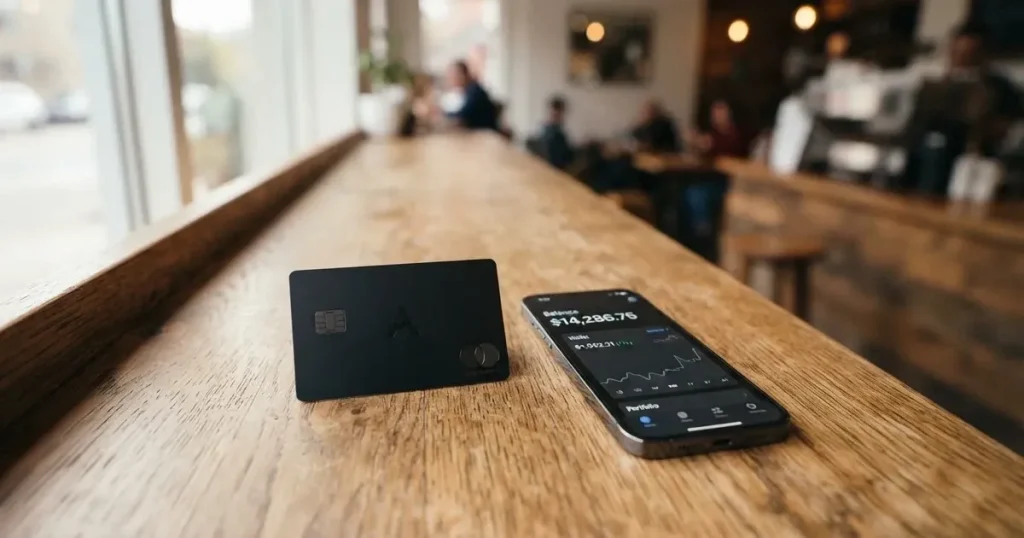
The XHYPE card is not a bank account and it does not pretend to be one. What it is: a prepaid payment card, virtual or physical, that spends a balance you load from your own crypto wallet through the XHYPE Superwallet interface. If ordinary banking has been awkward for you — no local card, a closed account, a rejected application, or simply a preference for holding your own keys — that is the pitch. The self-custody side is real in the sense that XHYPE says you control the authentication factors of the wallet and can export the private key into wallets like MetaMask or Trust Wallet. The card side is thinner in the sense that the card comes from an unnamed third-party issuer, and a great deal of the practical detail — exchange rates, ATM charges, refunds, which merchants are blocked — is simply not published.
My score for the card is 7.0 out of 10. That is not a rounding of something stronger. It is a card that does the thing it advertises unusually well on availability, on top-up options and on the number of cards it can give you, and that is unusually vague on the numbers you would need to plan a month of spending. Read on if you are weighing it; read the sections on costs and risks twice if you are the type who needs the exchange rate before you commit a year of fees.
The conditions described here are current as of October 28, 2026.
The short version: 7.0 / 10
Here is the breakdown I worked from, criterion by criterion.
| Criterion | Mark | Why |
|---|---|---|
| Who can get it | 9 / 10 | Ordered from 203 countries and territories, with eligibility depending on where you live and what nationality you hold |
| Cost | 5 / 10 | Three tiers at $10, $58 and $70 for a year, top-up fees of 2.1%, 1.8% and 1.2%, and the foreign-exchange fee not published |
| Top-up options | 9 / 10 | USDT, USDC or the native coin across BNB Smart Chain, Ethereum, Base, Polygon and Arbitrum |
| Reliability and complaints | 4 / 10 | Dubai-based XHYPE FZCO states plainly that it is not the card issuer, the issuer is not named, and user reports describe delays |
| Everyday use | 9 / 10 | Virtual card on every tier, physical card on the two upper tiers, Apple Pay and Google Pay everywhere, ATM access to $1,500 a day |
| Total | 7.0 / 10 | Strong on reach and use, thin on published detail and on who stands behind the card |
Who this suits: people who already hold stablecoins, run a self-custody wallet, and want a card number that spends that balance in ordinary shops, with the option of a physical card and mobile wallets on the higher tiers. Who it does not suit: anyone who needs a fully published cost picture, who expects a named bank behind the card, or who is in a restricted jurisdiction.
Will they give you the card?
The headline reach is genuinely wide. Cards can be ordered from 203 countries and territories, and eligibility depends on your country of residence and your nationality at the point of application. Two different things are being tested there, and both matter to you. Residence is the ordinary geographic check. Nationality is screened separately, because sanctions screening and issuer risk policy often follow citizenship and country of birth as well as your address. So a person living legally in one country with a passport from another can pass one test and fail the other.
The terms also say the service may not be used “in jurisdictions where such services are restricted”. That sentence is doing quiet work, because the list of restricted places is not attached to it.
Here is where I have to be explicit about what is official and what is not. What the card states: 203 countries and territories, eligibility by residence and nationality, and that restriction clause above. What a third-party site reports, and what the card’s own pages do not confirm: 184 countries available and 9 closed — Afghanistan, Cuba, Iran, North Korea, Somalia, South Sudan, Sudan, Syria and Yemen. That list comes from a third-party profile, not from the terms, so treat it as a strong hint rather than a promise. The gap between 203 and 184 is not explained anywhere I could find, and that gap is exactly the kind of thing that would be annoying to discover after you have wired funds.
You must also be 18 or older. That is from the terms.
How to get it
The path is short and entirely in the browser. You sign up in the web app at superwallet.xhype.io, complete verification, pick a plan, deposit crypto, and load the card. Nothing is downloaded — there is no iOS or Android app to install, and consequently no App Store or Google Play rating to read, because there is no listing.
Verification runs through Verinex and XHYPE describes it as “Private KYC”. The practical meaning given in the terms is that XHYPE receives only the result of the check, not the documents themselves. What the public pages do not say: which documents are on the list, whether proof of address is required, what the verification levels are, how long processing takes, and what the rejection reasons are. Not stated — plainly, once, and it applies to every “not stated” in this review. If a document requirement matters to you, you will have to ask support before you send anything.
One unofficial claim deserves a mention because it is exactly what a reader in a hurry would search for. A third-party site lists XHYPE as “No KYC”. Another third-party profile, from August 2026, puts it more carefully: routine ID checks are not advertised at signup, but every deposit is screened for anti-money-laundering purposes and flagged funds may be rejected. Those two statements are not in conflict, and the second one is the one to plan around. No KYC at the door does not mean no screening at the counter.
Delivery: the virtual Essential card arrives instantly. Physical cards take about 15 days once a correct address is entered. Shipping countries, shipping cost and replacement cost are not stated.
One more discrepancy to keep in view, because it affects what you order. A third-party profile describes Visa and Mastercard programmes, virtual only, with no physical card. The official pages say the opposite about physical cards on two of the three tiers. Where a third-party profile and the card’s own page disagree, I go with the card’s page.
Fees and what a payment actually costs
Let us start with the tier prices as the card states them, then get to the part that matters more.

- Essential — $10/year, one virtual card.
- Premium — $58 for one year or $118 for three years, one virtual plus one physical card.
- Whale — $70 for one year or $148 for three years, two virtual plus one physical card.
The site says the app displays current prices, which is a reasonable hedge but also means the published figures are not a contract. A third-party profile lists a different and much higher set — $108, $228 and $588 a year, with monthly equivalents of $9, $19 and $49, and auto-renewal. That conflicts with the official figures. It is possible the two are describing different things — an old pricing structure, a different product, or regional pricing — but nothing on the card’s pages explains the difference, and auto-renewal is a detail worth nailing down in writing before you pay.
Now the table you actually need. Every value below is from the card’s own pages.
| Fee or limit | Essential | Premium | Whale |
|---|---|---|---|
| Tier price | $10/year | $58/year or $118/3 yrs | $70/year or $148/3 yrs |
| Top-up fee | 2.1% | 1.8% | 1.2% |
| FX fee | not stated | not stated | not stated |
| ATM fee | not stated | not stated | not stated |
| ATM limit per transaction | $1,500 | $1,500 | $1,500 |
| ATM limit per day | $1,500 | $1,500 | $1,500 |
| ATM operations per day | 30 | 30 | 30 |
| ATM limit per month | $15,000 | $15,000 | $15,000 |
| Annual spend limit | $50,000 | $250,000 | $1,000,000 |
| Cards included | 1 virtual | 1 virtual + 1 physical | 2 virtual + 1 physical |
A third-party profile gives different figures again: reload fees of 4.5%, 3.5% and 2.3%, an FX charge described only as a “standard fee” with no percentage, and annual recharge limits of $25,000, $50,000 and $100,000. I would plan on the official numbers and treat the rest as a warning that what you are shown in the app may not be what is written anywhere.
Now three everyday payments, and which fees apply.
Coffee, $4.50. You top up $50 into the wallet. On Essential you pay a 2.1% top-up fee, so $1.05 goes on top of the $50 — the fee is charged on the deposit, not skimmed off the balance later, which is worth knowing because it means your first purchase costs more than the price on the till. Then you pay $4.50. No FX fee applies if you are spending in USD, since there is no conversion; the FX question only arises when you spend in another currency.
A weekly shop, $80, on Premium. Top-up fee 1.8%, so a $100 load costs $101.80. The $80 purchase spends from that balance. Again no conversion on a USD purchase. This is the tier where the annual fee has started to earn its keep against the lower top-up fee: on $6,000 of annual spending you would save the difference between the 2.1% and 1.8% top-up fees against a $58 annual price. That arithmetic is mine, and you should run your own with your own spending.
A purchase in a currency you do not hold, say €60. Here the card stops publishing. A third-party profile says the card converts USDT to USD for spending; it does not publish the exchange rate, and it describes the FX charge only as a “standard fee”. So the honest answer is: the conversion happens somewhere between you and the price on the till, and you will not find out how wide that spread is from the public pages. If you spend abroad regularly, treat this as an open question to settle in the app before you rely on it.
One more cost that is not the card’s but will land on you: on-chain network fees for your deposit are charged by the blockchain, not by XHYPE. And on Ethereum, gas is paid only in ETH — a wallet holding USDT and no ETH cannot send it. If you are topping up from Ethereum, keep a little ETH in the wallet or the transfer simply will not happen.
Top up: which coins, which networks, what it costs
Topping up is the strongest part of the offer, and it is the main reason I did not score this card lower.
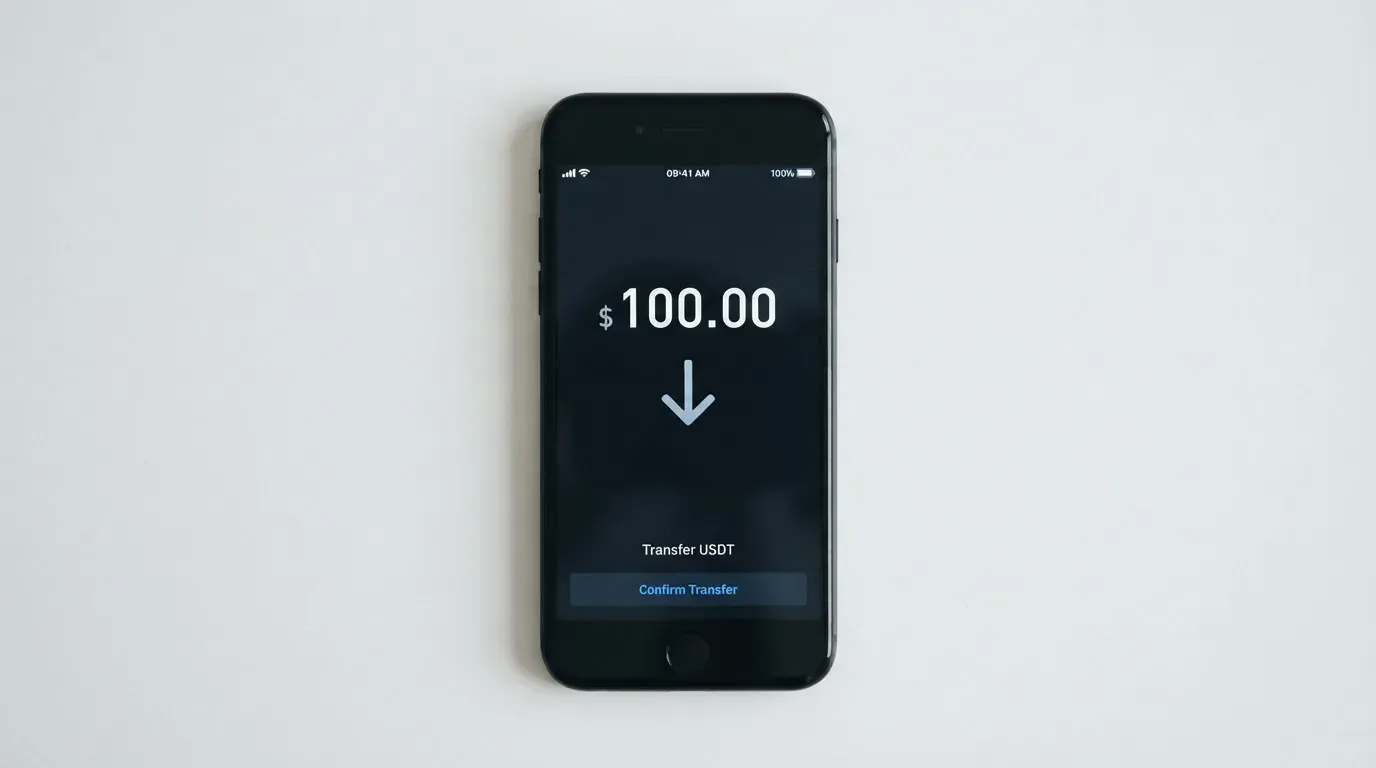
You can deposit USDT, USDC or the native coin of the network, on BNB Smart Chain, Ethereum, Base, Polygon and Arbitrum, sending it to the XHYPE Superwallet and then loading the balance onto the card. That is five networks and three assets, and it is a lot of room to manoeuvre. Not stated: the minimum deposit, who pays the network fee, and whether there is any fiat top-up at all. A third-party profile cites a minimum crypto deposit of 15 USDT from the user guide.
That same profile says something quite different — USDT only, on Tron (TRC20) and BNB Chain (BEP20) — which contradicts the official list of five networks. Do not plan around the narrow version. If you have ever sent a stablecoin to an address on a network the provider does not support, you already know how that ends: blockchain transfers are irreversible, and recovery means a support ticket with no guarantee.
Two extras worth knowing: gift cards and eSIMs are also payable in crypto through the same arrangement. And there is no statement anywhere about withdrawing, refunds, closure or what happens to a remaining balance. If you are planning to hold a meaningful balance for a while, that silence is the thing I would raise with support first, in writing.
Paying with it every day
Every tier gets a virtual card, and the two upper tiers add a physical one. Apple Pay and Google Pay work with both virtual and physical cards. Physical cards work at ATMs.
What is not stated: which merchant categories are blocked, whether the card currency is fixed, and whether there is any cashback. A third-party profile says there is no cashback, and describes instead a welcome credit of $5, $10 or $40 by tier, XTraveler points of 290, 690 or 2,490, and a referral commission of 15% of referred users’ reload fees paid in USDT. Whether the points are worth anything at all depends entirely on what they can be spent on, which is not explained.
A few mechanics of card use are worth having in your head, because they explain most of the declines people report.
The card number starts with a six- or eight-digit issuer identification number, and any shop can look that up and see which institution and country issued it. If the issuer country differs from your billing address, the shop may apply extra scrutiny — which is why a card issued in one country can look foreign in another. Some merchants decline prepaid or foreign-issued cards for exactly this reason. Address verification, which compares the numeric parts of the billing address a buyer types against the issuer’s records, is mainly offered in the US, Canada and the UK and is generally unavailable for foreign-issued cards, which can cause declines.
Online payments may also trigger 3-D Secure, an identity check where the issuer either approves without friction or challenges you with a one-time code or a biometric. Visa’s version is called Visa Secure, Mastercard’s is Identity Check. And a declined authorisation can leave a hold on your funds for several days, typically up to seven — a declined payment can therefore tie up money you were counting on.
The self-custody part deserves a word, because it is the real differentiator. Control of crypto belongs to whoever holds the private key or seed phrase. The XHYPE Superwallet is described as self-custody: you control the authentication factors and can export the private key to wallets such as MetaMask or Trust Wallet. That is a genuine advantage over custodial platforms, where the provider holds the credentials and you must trust them completely — and custodial platforms have a poor record, including Mt. Gox, Coincheck and the Ronin Network bridge.
The flip side of self-custody is that the responsibility is yours. A seed phrase is typically 12 to 24 words and unencrypted; anyone who gets it can restore the wallet and spend the funds. Transfers are irreversible by design. Malware that swaps a copied address on your clipboard does not need your key at all. None of this is a reason to avoid a self-custody wallet. It is a reason to treat the export function as a deliberate, careful act rather than a convenience.
Where the two models meet is the part I would think about hardest: the crypto in your wallet is yours, but the balance on the card is held by the independent third-party issuer. Two different custody arrangements, and only one of them is the one the crypto wallet design speaks about.
Also not stated: two-factor authentication, instant card freeze, and spending controls in the app. Those are the standard safeguards people expect to find, and their absence from the public pages is conspicuous because the wallet advertises a “Zero Data model” privacy stance at the same time.
What can go wrong
Here the marks drop furthest, and the reason is structural rather than a single bad experience.
You do not know who issued the card. XHYPE FZCO is registered in Dubai Silicon Oasis, United Arab Emirates. The terms state “We are not a card issuer”: the cards come from an unnamed independent third-party issuer. The terms are governed by UAE law with the courts of Dubai, and the licences held by either party are not stated. A third-party profile reports the issuer is a licensed provider in jurisdictions including Hong Kong — but the name is still not given to you by the card.
Why this matters more here than elsewhere: in a card payment, the network routes the messages, the issuer holds the card programme and your balance, and the crypto brand is often only a programme manager or a front end. Visa and Mastercard do not issue crypto cards to consumers themselves; they license issuers, and they can suspend a programme. When a programme is suspended, the sequence is usually a notice period, then loading and spending stop, then you are asked to withdraw what is left. The FTX card was wound down after Visa terminated its global agreements in November 2022; WaveCrest, a card issuer that supplied several crypto card brands, was suspended in Europe in 2018 and all its Visa programmes closed.
Complaints are thin and negative. No official incident is described on the site’s own pages. What a user report from August 2026 describes: a June-to-July 2025 disruption affecting HKD Visa recharge and spending, later marked resolved with balances reportedly refunded; recurring themes of high combined costs, anti-money-laundering-related restrictions, refunds missing for months, and slow support. A user-review site shows about 2.9 out of 5 across seven ratings, reached via a third-party profile. Seven ratings is a very small sample and I would not hang much on it — but the direction is consistent with the issuer being unnamed and the terms being silent on refunds.
The terms are quiet where you would want them loud. Refunds, disputes and chargebacks are not specified. That last one is not a technicality: a chargeback is a refund ordered by the issuer to settle a dispute, with reason codes for fraud, duplicate billing or goods not received. US debit card reversal rights come from Regulation E and credit card rights from Regulation Z, and prepaid-card coverage varies and should not be assumed. If a merchant takes your money and delivers nothing, the terms give you no stated route.
Screening is a live risk. Anti-money-laundering rules require regulated businesses to verify customers, monitor transactions and report suspicious activity. If due diligence cannot be completed, the obligation is to refrain from the transaction and, where necessary, end the relationship — which is why accounts get frozen pending documents. A third-party profile reports that every deposit is screened and flagged funds may be rejected. Your balance sits with a third-party issuer who applies their own policy, and you do not get to see it.
Tether can freeze. Tether says it disables tokens in wallets on the OFAC sanctions list and has frozen funds tied to illicit activity. Stablecoins are not censorship-proof, which is worth remembering if part of your interest in them is that they sit outside banking reach.
Support is one channel. 24/7 in English and Spanish, on Telegram only, at @xhype_support. There is no email address, no ticket system and no phone line published. For a company whose card comes from an unnamed third party, that is thin.
The terms are old. Last updated 04-Jun-2025. A third-party profile mentions an XKARD v2 announced in April 2025 and the mid-2025 recharge disruption, on a page updated 9 August 2026.
And to close the loop on the one thing people most want to know about these things: taxes. I am not going to advise you here, only flag the shape of it. Digital assets are generally treated as property for tax purposes, so exchanging them for goods, services or dollars generally produces a taxable gain or loss. For personal holdings that result is a capital gain or loss, short-term if held a year or less, measured in local fiat currency at the fair market value on the transaction date. A card payment funded from crypto may therefore be a separate taxable disposal each time. Take that to a professional in your own jurisdiction.
What to take instead
I looked at three alternatives with published pricing, and each of them wins on a different axis.
MetaMask Card — 7.1 / 10
The strongest alternative on this list, and the closest in spirit since it also spends straight from a self-custody wallet. Mastercard, one card per user, a virtual card issued instantly and a metal card pre-orderable in the app after approval. It spends directly from the connected wallet on Linea, Base, Monad and Solana, with tokens including mUSD, wETH, EURe, GBPe, USDC and USDT.
Where it beats XHYPE: cost. The virtual card is free with no annual or maintenance fee; the metal card is $199 a year. The transaction fee is described as minimal with the amount not stated on the pages I read, and there is no additional MetaMask fee and no foreign transaction fee, with the Mastercard rate used. Cashback is paid in mUSD into the Money Account at 1% on Virtual and a headline 3% on Metal, which the footnote caps at 3% on the first $10,000 spent and 1% after.
Where it loses: reach. Sign-up is open in 45 listed countries and territories, other regions join a waitlist, proof of residency is required, and US and UK sign-ups were temporarily closed per the FAQ. Citizenship rules are not stated. If you are outside that list, XHYPE’s 203 is a different conversation.
KAST — 6.1 / 10
KAST is the transparency comparison. It publishes its membership prices and every fee line: Standard at 0 USD a year, Premium at 1,000 USD and Private at 10,000 USD, billed annually upfront. An extra virtual card is 2 USD, the Standard physical card has a 0 USD card fee plus 40 USD delivery, and there is a 1 USD per month inactivity fee after 12 months. Stablecoin top-up is 0%, card spend in USD is 0%, transaction fee 0%, Apple and Google Pay 0%. The only real charge is a 0.5% to 1.75% foreign-exchange fee depending on your residence country, the transaction country and the card programme, plus 0.10 USD on non-USD transactions under 25 USD and 0.50 USD for a declined transaction. Cashback runs 1.5%, 2% and 3% by tier on capped monthly spend.
Where it loses: eligibility is residence-based and shown only at the KYC step, so if your country is not listed you find out by failing. Citizenship is handled explicitly — holding only an ID from a restricted region can make you ineligible even if you live in a supported country, dual citizens with an ID from a supported country may pass, only your own ID is accepted, and a VPN does not bypass it. And the tier prices are an order of magnitude away from XHYPE’s.
TokenPocket — 5.8 / 10
A Visa debit for a list of European countries and territories, a Mastercard debit for Australia, Canada, Hong Kong, Japan, Taiwan, New Zealand, Singapore, South Korea and the UK among others, with the Americas planned for Q2 2025. It runs on Arbitrum, the cards are virtual with no physical card mentioned, and balances sit in EUR24 and USD24. The NFT creation fee is partly covered by TokenPocket and you pay “a small portion”, the amount not stated, and beyond that the card charges no additional fees — apart from a 1% fee on depositing cryptocurrency, which is said to be refunded later through rewards and reduced transaction fees. No cashback is stated, and the extra costs can come from inter-institution settlement.
Where it loses: a narrower country list than XHYPE, no physical card, and a deposit fee whose refund depends on a rewards mechanism the page does not detail.
| XHYPE | MetaMask Card | KAST | TokenPocket | |
|---|---|---|---|---|
| Score | 7.0 | 7.1 | 6.1 | 5.8 |
| Reach | 203 countries and territories | 45 listed countries, waitlist elsewhere | Residence list shown only at KYC | European and Asia-Pacific lists |
| Cheapest entry | $10/year, virtual only | Free virtual card | 0 USD/year Standard | Fee partly covered, amount not stated |
| Physical card | Premium and Whale | Metal, $199/year | Yes, delivery 40 USD on Standard | Not mentioned |
| Cashback | Not stated | 1% to 3% in mUSD | 1.5% to 3% in USD | Not stated |
| FX fee | Not stated | None, Mastercard rate | 0.5% to 1.75% | Not stated, may include settlement costs |
Who I would recommend it to
I would recommend XHYPE to a specific person: someone who already holds USDT or USDC across several chains, runs a self-custody wallet, and wants a card that spends that balance without a bank in the middle — because a bank in the middle is what has been difficult for them. If that is you, the reach, the network list and the five-network top-up are the reason, and 9 out of 10 on everyday use is not marketing flattery.
On which tier: if you are testing this, Essential at $10 is the cheap way to find out whether your usual shops accept it. If you take it seriously, Premium is where the physical card, the mobile wallets, the lower 1.8% top-up fee and the $250,000 annual limit start to matter. Whale is for people who transact at a scale I have no reason to assume you do.
I would not recommend it, without hesitation, to four kinds of reader. If you need the foreign-exchange rate before you spend abroad, go and find one. If you are picking a card partly for chargeback protection, note that the terms do not describe one. If your country is near the edge of that unexplained 203-versus-184 gap, get a written answer before you deposit. And if you would rather your balance sat with an institution whose name and licence you can look up, this is not that card — KAST publishes more, and a regulated bank publishes most of all.
The four marks that keep this at 7.0 rather than higher are all about the same thing: information the card does not publish. The foreign-exchange fee, the ATM fee, the card currency, the blocked merchant categories, the refund and dispute process, the two-factor authentication and card controls, the issuer’s name and licences. None of that is a scandal. It is a thin layer of published detail over an otherwise capable product, and it is the layer you should press on before you commit money.
Frequently asked questions
What is the XHYPE card?
It is a prepaid payment card that spends a balance you load from your own crypto wallet. The card itself comes from an unnamed third-party issuer; XHYPE, a company registered in Dubai Silicon Oasis, runs the Superwallet interface you use to hold your crypto and load the balance. It is not a bank account, and the terms state plainly that XHYPE is not the card issuer.
How does the XHYPE card work?
You deposit USDT, USDC or a network’s native coin into the XHYPE Superwallet, then load the balance onto the card and spend it like an ordinary payment card. Essential gets a virtual card instantly; Premium and Whale add a physical card that arrives about 15 days after you enter a correct address. Everything happens in the browser at superwallet.xhype.io, with nothing to download.
Is XHYPE a bank?
No. It is a card programme manager and crypto front end sitting on top of an independent third-party card issuer. The terms are governed by UAE law with the courts of Dubai, but the licences held by either party are not stated. Visa and Mastercard do not issue crypto cards to consumers themselves — they license issuers — so the institution actually standing behind your balance is not named on the pages I could read.
Do I need KYC to get the XHYPE card?
Verification runs through Verinex under what XHYPE calls “Private KYC”, meaning the company receives only the result rather than the documents, and you must be 18 or older. A third-party site lists XHYPE as “No KYC”, but another describes routine ID checks as not advertised at signup while every deposit is still screened for anti-money-laundering purposes. Which documents are required and why an application fails is not stated.
How much does the XHYPE card cost?
The card’s own pages list Essential at $10 a year with one virtual card, Premium at $58 for one year or $118 for three with a virtual and a physical card, and Whale at $70 or $148 for three with two virtual cards and one physical. Top-up fees are 2.1%, 1.8% and 1.2% respectively. The foreign-exchange fee and the ATM fee are not published, and a third-party profile lists a much higher set of prices that the card does not explain.
Which networks and coins can I use to top up?
Officially USDT, USDC or the native coin, on BNB Smart Chain, Ethereum, Base, Polygon and Arbitrum — deposited to the Superwallet and then loaded onto the card. A third-party profile describes a narrower arrangement of USDT only on Tron and BNB Chain. The minimum deposit, who pays the network fee, and whether fiat top-up is possible are not stated. Send only on a listed network: transfers are irreversible.
Can I use the XHYPE card in Apple Pay and Google Pay?
Yes, both mobile wallets work with every virtual and physical card across all three tiers, which is the most convenient everyday feature the card offers. Apple Pay replaces your card number with a device-specific number stored in the Secure Element rather than on Apple’s servers, and each payment uses a one-time code. The issuer can still restrict the tokenised number, for example blocking it for online use.
Is the XHYPE card safe?
The wallet side is self-custody, so you control the authentication factors and can export the private key into MetaMask or Trust Wallet — which is a real advantage over custodial providers. But the card balance sits with the unnamed third-party issuer, two-factor authentication and instant card freeze are not stated, and support is 24/7 on Telegram only. Safety here depends on a structure the card does not fully describe.
What should I avoid spending the XHYPE card on?
I would avoid anything where you would want to dispute it later, because the terms do not describe refunds, disputes or chargebacks. Some merchants also decline prepaid or foreign-issued cards, and address verification is generally unavailable on foreign-issued cards, so declines are more common than they would be with a domestic bank card. A declined payment can also hold your funds for several days, typically up to seven.
Is the XHYPE card worth it?
At $10 for the virtual Essential tier, worth trying if you already keep stablecoins — you are testing whether your usual merchants accept the card at low cost. The value falls away if you spend abroad often, since the exchange rate and foreign-exchange fee are not published, or if chargeback protection matters to you. My mark is 7.0 out of 10: excellent reach and everyday use, thin on the cost details you would need to plan around.
Wallet cards in the catalogue – cryptocardcatalog
Content created by the «cryptocardcatalog» team