
A Visa debit card tied to your Whop balance — what it does well, and where it leaves you guessing
 Available in US

The Whop card is a Visa debit card you issue from inside a Whop account and spend directly from your Whop balance, with a stated launch backing from stablecoin-card issuer Rain. It is aimed at people already selling or running a business on Whop who want to move earnings onto a Visa line, and at anyone who wants a card linked to a stablecoin-backed balance. Whether it actually delivers on that promise depends on a few details that Whop’s public pages do not spell out, and this review walks through them section by section.
Conditions are current as of October 28, 2026.
Verdict
Whop earns 5.2 / 10. It does the basic thing a crypto-linked card should: you get a Visa number from your Whop account in seconds, add it to Apple Wallet or Google Wallet, and spend wherever Visa is taken. The gaps are bigger than the wins. Country coverage is narrow (consumers in 31 US states, businesses in 41), a long list of countries is shut out, and almost every meaningful number — issuance, monthly, conversion, FX, ATM, daily and monthly limits — is simply not published. There is a 5% cashback perk at select merchants, but the trust signals around Whop Inc. itself are mixed, with user reports of frozen payouts and account suspensions on the platform. The card fits a narrow reader: a US-based Whop seller who wants to spend platform earnings with a Visa card. If you are outside the United States, want clearer fee terms, or are choosing a card on a platform with stronger published disclosures, you are better served by one of the alternatives compared later in this review.
| Criterion | Score | Why it lands here |
|---|---|---|
| Who can get it | 7 / 10 | Consumers in 31 US states, businesses in 41; a long list of unsupported countries that includes Russia, Belarus, China, India, Turkey, Ukraine and Vietnam; the rest of the world is not stated. |
| Cost | 5 / 10 | The card page says “no extra fees” but does not list amounts for issuance, monthly service, conversion or FX, so the headline is unverified. |
| Top-up options | 4 / 10 | Spends are pulled from your Whop balance, and starting data points to stablecoin collateral from a linked wallet, but the coins and networks are not disclosed. |
| Reliability and complaints | 4 / 10 | Whop Inc. runs the platform and the card programme is powered by Rain; the issuing bank and licences are not named. Unofficial Trustpilot data on Whop (the platform) shows 3,052 reviews with themes of frozen payouts, account suspensions and undelivered refunds. |
| Everyday use | 5 / 10 | Visa, Apple Wallet and Google Wallet support, custom per-card spending limits, but ATM is off by default, a $250 per-transaction cap applies when enabled, and there is no published detail on virtual or physical form. |
| Total | 5.2 / 10 |
Will they give you the card
Eligibility is a two-part question with Whop: where you live, and what kind of account you are opening. Whop splits the answer between consumer cards and business cards, and the two groups do not see the same coverage.
For consumers, the card is open in 31 US states. The published list is: Alabama, Alaska, Arkansas, California, Colorado, Connecticut, Florida, Hawaii, Illinois, Indiana, Iowa, Kansas, Kentucky, Maine, Massachusetts, Michigan, Minnesota, Montana, Nebraska, New Hampshire, New Jersey, New York, North Carolina, Oklahoma, Pennsylvania, South Carolina, Texas, Utah, Virginia, West Virginia and Wyoming. Everywhere else in the United States, the consumer card is not available. For businesses, the footprint widens to 41 US states, so a registered US business outside the 31-state consumer zone may still be able to get a card.
Outside the United States, the card page is silent. It does, however, list 18 countries where the card is not supported: Belarus, Mainland China, Cuba, Hong Kong, India, Iran, Iraq, Israel, Myanmar, Nepal, Nicaragua, North Korea, Russia, Syria, Turkey, Ukraine, Venezuela and Vietnam. For businesses, the list of unsupported corporate countries explicitly includes Russia and Belarus alongside the consumer restrictions. The card’s own page does not say whether the rule is based on citizenship, residence, or both, and does not name which countries outside that 18 are accepted or rejected, so anyone reading this from a country Whop does not call out has to assume “not stated” and verify directly with Whop.
If you are a Whop seller in one of the 31 consumer states, the path looks open. If you are in one of the listed countries, the door is closed, and the published pages do not suggest an appeal route.
How to get it
The card is created from a Whop account, and the card page describes the time it takes as “seconds”. The product is a Visa, accepted anywhere Visa works online and in stores, and you can also issue cards to team members. Whop’s public card documentation does not state the verification checks behind the issue, the KYC steps, the activation process, the delivery time for any physical form, or the type of card (virtual only, physical only, or both). The pages do say cards are issued from the account, so the assumption is that you complete whatever Whop requires at signup before the card is made available, but the exact checklist and the documents that are accepted are not published.
In short: a Whop account, a US presence in an eligible state, and the steps Whop itself walks you through. Everything else is unstated, including any tiered KYC for higher limits.
Fees
Whop’s card page leads with “no extra fees”, and that is where the public fee disclosure ends. There is no published number for card issuance, no monthly or annual service fee, no stated conversion fee, no stated foreign-exchange (FX) markup, no stated ATM fee, and no stated cashback payout terms. Limits are quoted in US dollars, but the card currency itself is not stated. This is the central cost problem: a fee-free headline is not the same as a fee schedule, and a reader weighing this card against alternatives has nothing concrete to compare.
Here is what the published numbers and limits do tell you.
| Fee or limit | Value |
|---|---|
| Issuance | Not stated (page says “no extra fees”) |
| Monthly / annual fee | Not stated |
| Conversion fee | Not stated |
| Foreign-exchange (FX) fee | Not stated |
| ATM withdrawal | Unavailable by default; when enabled, $250 per transaction; more than 3 attempts in 24 hours blocked; fee not stated |
| Spending limit | Custom per card |
| Per-transaction caps | Gaming $2,000; advertising services $10,000; adult content $200; ATM $250 |
| Velocity rules | More than 11 card-not-present transactions in 24 hours, for example |
| Daily / monthly totals | Not stated |
To make that concrete, three everyday payments and how the published rules apply:
- Buying a coffee at a US merchant in USD. The card runs as a standard Visa debit. With no stated conversion or FX fee, the line is paid from your Whop balance; if no fee is charged, that matches the page’s “no extra fees” line. You cannot verify the number against the published schedule, because there is no schedule.
- Paying an overseas merchant in EUR from a US account. The page does not publish an FX markup, so the cost depends on a rate Whop does not disclose. This is exactly the scenario where crypto cards usually charge a transparent or opaque spread; Whop publishes neither.
- ATM cash withdrawal. The default setting is off. If you switch it on, you can pull $250 per transaction, with no more than three attempts in 24 hours, and the fee (if any) is not stated. If you only want the card for spending, leaving ATM off removes that question entirely.
The reader’s job here is to confirm the actual numbers with Whop before relying on the card for anything where fees would change the outcome.
Top up
Funding the Whop card is not a separate “add money” step the way it is with a prepaid travel card. The card spends directly from your Whop account balance, and that balance behaves differently depending on whether the funds are pending or settled. The page explains that pending balance can be used as soon as a payment arrives in your Whop account, while standard bank withdrawals and transfers use only settled funds. The card itself does not need a withdrawal to spend: a balance in your Whop account is, in effect, the card’s balance.
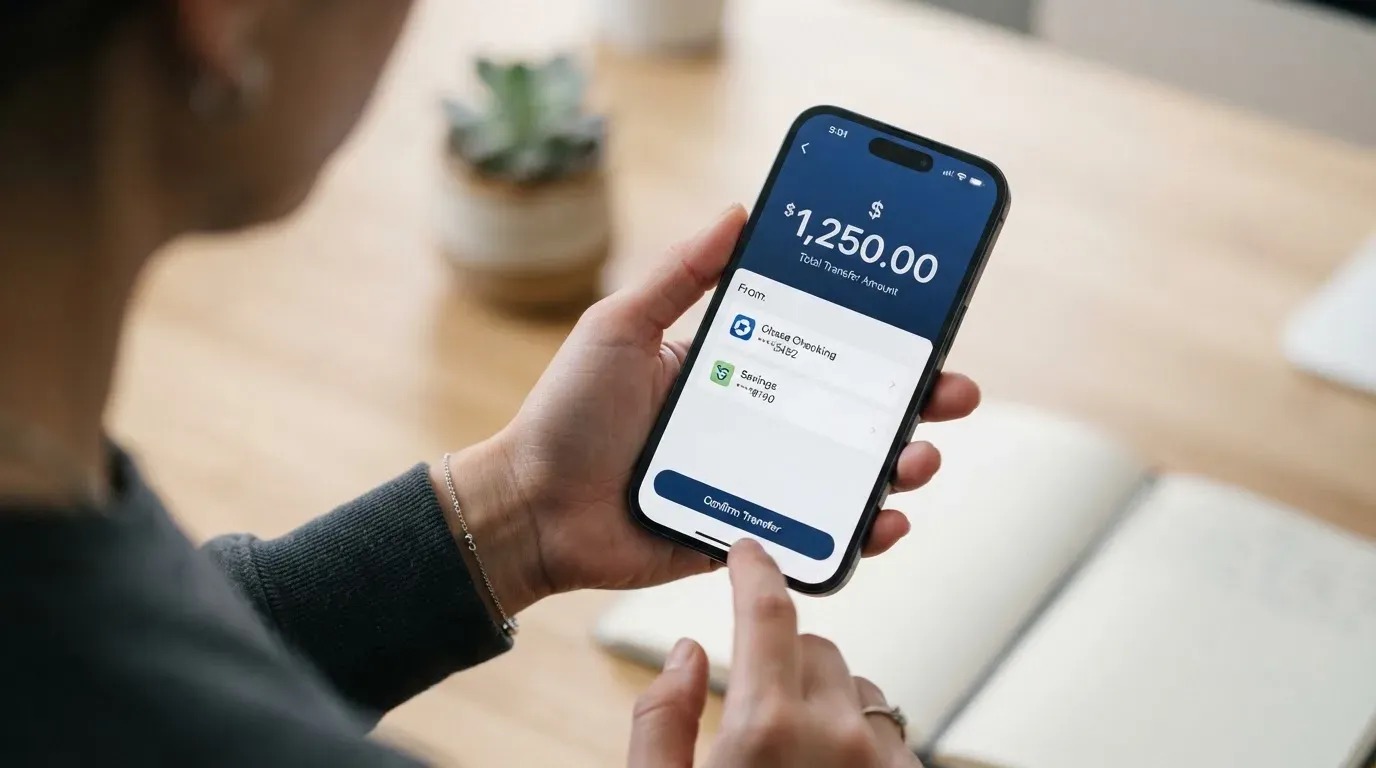
The card programme is backed by stablecoin collateral from a linked wallet. The card page does not list which stablecoins, which networks, the deposit fee, or the minimum top-up, so practical instructions for sending specific crypto assets are not published. If you plan to fund by sending crypto, the steps Whop itself shows you at the moment of funding are the only reliable source.
Because the network and coin details are not stated, two routine risks deserve a mention before you ever click send. First, blockchain transfers are irreversible, and a deposit on a network the card provider does not support, or to an address belonging to a different network, can be lost or stuck in manual support recovery with no guarantee of return. Second, a stablecoin balance is not the same as a US dollar in a bank account. Stablecoins are designed to hold a peg but are not necessarily stable in the literal sense, and published history includes both the TerraUSD collapse in May 2022 and a temporary USDC depeg in March 2023 during the US banking crisis. For a card whose headline is “spend from a stablecoin balance”, that is a material caveat that the marketing page does not repeat.
Paying with it every day
The card works wherever Visa is accepted online and in stores, and you can add it to Apple Wallet or Google Wallet for phone payments. The published list of blocked merchant categories is long, and it is worth reading before you assume the card will do what a normal debit card does.
Blocked categories include wire transfers and money orders (MCC 4829), ATM and cash (6010–6011), quasi-cash (6051), securities brokers (6211), gambling (7995) and related betting codes (7800–7802 and 9754), adult content and dating services (7273), and direct marketing (5960–5969). Whop also publishes a list of named merchants it blocks, including Wise, Skrill, Neteller, MoonPay, eToro, Blockchain.com Europe, CEX.IO and Fortnite, so spending on those specific brands will not work even if the category itself is allowed. If your normal spend sits in any of those buckets, this is the section to check first.
The reward on offer is a 5% cashback at select merchants, with Uber named as a current partner and “more planned” on the card page. The payout currency and the qualifying conditions for the cashback are not stated, so the headline rate is real but the small print is missing. There is no published cashback programme beyond the 5% partner line, and no annual bonus, points system, or staking-for-rewards feature appears on the card page.
On the security and support side, Whop’s documentation lists per-card spending limits, a PIN lockout after too many wrong PINs, a fraud risk engine, 3-D Secure and Address Verification Service (AVS) checks. The company asks you to contact support if a decline looks wrong, but it does not publish the support channels, languages or hours. One user report (Trustpilot, October 2026) describes an unexplained $29 dispute fee and refunds that did not arrive; Whop’s card documentation itself does not state a dispute fee or a dispute process, so this remains an unofficial report rather than a confirmed policy. The mobile app listing could not be checked at the time of writing, so the experience of managing the card on a phone rests on what Apple Wallet and Google Wallet expose, plus the Whop app itself.
What can go wrong
Three risk buckets deserve your attention: the company behind the card, the design of the product, and the wider behaviour of the platform.
The card is run by Whop Inc. The card programme is powered by stablecoin-card issuer Rain, based on launch coverage. The issuing bank and the licences the programme operates under are not named on the public card pages. The company behind the card is therefore disclosed, but the legal and regulatory chain that backs your balance is not.
On Trustpilot, the Whop platform (not the card specifically) shows 3,052 reviews as of the read on 21 October 2026, with 65% five-star and 30% one-star, giving an average of 3.5. The official TrustScore display was hidden at the time of reading, with Trustpilot citing a “breach of our guidelines”. Themes in the recent reviews up to October 2026 are frozen or paused payouts, account suspensions after “fraudulent activity” flags, support that reads as mostly AI-driven, and refunds that did not arrive. These are unofficial third-party data points, not Whop’s own statements, and they describe the platform rather than the card, but they are the only public window into the kind of experience a Whop customer has had with money movement on the platform. Treat them as signals, not verdicts.
The product design has its own sharp edges. The card is a prepaid-style line drawn from your Whop balance, so it cannot overdraw, which is a useful guardrail; the trade-off is that the issuer of a prepaid-style card can change the terms, freeze the programme, or wind it down, and a programme closure typically gives a notice period, stops loading, then stops spending. You generally need to withdraw the remaining balance in that window. The official pages do not name the issuer or describe the safeguarding of customer funds, so it is not clear whether your balance sits in a segregated account, an insured custody account, or something less protective. Several large crypto platforms have failed in the past (Mt. Gox in 2011–2014, Coincheck in 2018, Ronin Network in 2022), so the question of who holds the balance and under what protection is one worth asking before you load meaningful funds.
There is also a pattern the card page makes very visible: a long list of blocked merchant categories and named blocked merchants. If the merchant you most want to pay is on the list, the card simply will not work there, and the published rules do not describe an unblock path for individual users.
What to take instead
If the Whop card’s gaps — opaque fees, narrow US consumer footprint, blocked merchant categories — push you to compare, the table below puts three alternatives side by side. The figures are copied from each alternative’s public documentation, so you can weigh them against Whop’s published numbers (or, in Whop’s case, its absence of numbers).
| Card | Score | Card type | Cost (published) | Fees (published) | Funding (published) | Rewards (published) |
|---|---|---|---|---|---|---|
| Whop | 5.2 / 10 | Visa; virtual/physical not stated; spending from a Whop balance | “No extra fees” headline; issuance, monthly, conversion, FX, ATM amounts not stated | Not stated | Whop balance; backing by stablecoin collateral from a linked wallet (coins/networks not stated) | 5% cashback at select merchants (Uber named) |
| International Visa Card | 6.7 / 10 | US-issued Platinum Visa; virtual; pays in USD; physical “coming soon” | Virtual issuance $5 one-time; no maintenance fee. Plans: Classic free, Pro $9.00/month, Max $19.00/month | USD card use free; foreign currency “Visa exchange rate + 2% FX fee”; no deposit fee | USDC/USDT into the USD account, free at 1:1; also USD, EUR, SEPA, SWIFT, FedNow deposits | None stated |
| UNi Card | 6.1 / 10 | Mastercard; multicurrency; spends from the UNi.Global account balance; physical/virtual not stated | “No annual fee”; issuance fee not stated | “No annual fee or foreign transaction fee”; assets converted at “live OTC rates”; “no hidden exchange fees” | Not stated | Spend-to-Earn rewards up to 3% with UNi Card |
| Stella | 6.5 / 10 | Visa; virtual and physical; works at “over 40 million VISA merchants globally” | Not stated | Not stated officially | Deposit crypto into the in-app account, which automatically tops up the card | None stated on the card page |
Two practical reads come out of that table. If published fees and US dollar funding are what you care about, the International Visa Card is the only option that lists both an FX mark-up and a free USDC/USDT funding path with a real number beside it, even though it shares Whop’s long list of unsupported countries and the same purchase blocks in places like Russia, Ukraine and Venezuela. If a multicurrency Mastercard and a stated absence of foreign-transaction fees matter more than disclosed funding steps, UNi Card fits. If you want a Visa with virtual and physical forms and a custodial crypto wallet that tops the card up, Stella is the closer match, though the cost and fee rows in its column are not stated in the official materials.
Who I would recommend it to
A narrow, well-defined reader is the right match for the Whop card. If you run a Whop business or sell through Whop, sit in one of the 31 US states the consumer card serves (or one of the additional 10 where businesses qualify), and want a Visa number you can drop into Apple Wallet or Google Wallet to spend your platform balance at everyday merchants, the Whop card does that job with a familiar flow. The 5% cashback at Uber adds a small sweetener if Uber is in your routine.
If you are outside the United States, do not assume availability. The card page is silent on most non-US countries, and the published block list covers Russia, Belarus, Mainland China, Cuba, Hong Kong, India, Iran, Iraq, Israel, Myanmar, Nepal, Nicaragua, North Korea, Syria, Turkey, Ukraine, Venezuela and Vietnam. If you want to live off FX-free travel spending, ATM access, or published fee numbers to compare against another card, look elsewhere: this card’s strengths are not in those directions. And if your day-to-day spend leans on any of the blocked categories — gambling, securities, money orders, adult content, or one of the named blocked merchants — the card will simply not work where you most want it to.
In one line: a reasonable Visa debit add-on for a US Whop seller, and a poor choice as a primary travel or everyday card for anyone else.
Frequently asked questions
What is the Whop card?
The Whop card is a Visa debit card you issue from inside a Whop account and spend directly from your Whop balance. The card works online and in stores wherever Visa is accepted, and the card programme is powered by stablecoin-card issuer Rain per launch coverage.
How does the Whop card work?
You create a card from your Whop account in seconds, add it to Apple Wallet or Google Wallet, and pay. Spends are pulled from your Whop balance, which is backed by stablecoin collateral from a linked wallet. Pending balance becomes usable as soon as a payment arrives in your Whop account.
Is Whop a bank?
Whop is not a bank. The card is run by Whop Inc., the programme is powered by Rain, and the issuing bank and the licences the programme operates under are not named on the public card pages. The balance is therefore not the same as a US-dollar bank deposit.
Who owns Whop?
The card product is owned and operated by Whop Inc. The card programme itself is powered by stablecoin-card issuer Rain, based on launch coverage. The issuing bank behind the card is not stated.
Is the Whop card available in my country?
For consumers, the card is open in 31 US states (the full list is in the eligibility section above). Outside the United States, the card page is silent. The published list of unsupported countries is Belarus, Mainland China, Cuba, Hong Kong, India, Iran, Iraq, Israel, Myanmar, Nepal, Nicaragua, North Korea, Russia, Syria, Turkey, Ukraine, Venezuela and Vietnam; for businesses, Russia and Belarus are also called out as unsupported.
How do I get the Whop card?
You create a card from inside your Whop account, and the page says this takes seconds. The card’s own pages do not state the KYC checks, the activation flow, the delivery time, or whether the card is virtual, physical, or both, so the practical steps are whatever Whop walks you through at signup.
Does the Whop card require KYC?
The card’s public pages do not state the KYC steps. A Whop account and a presence in an eligible US state are the published preconditions, but the verification checks, the documents accepted, and any tiered KYC for higher limits are not published.
How do I top up the Whop card?
You do not top up the card in the usual sense: it spends from your Whop account balance. Pending balance is usable as soon as a payment arrives, and standard bank withdrawals and transfers use settled funds. Underneath, the card is backed by stablecoin collateral from a linked wallet, but the coins and networks supported for that funding are not published.
What fees does the Whop card charge?
The card page says “no extra fees”, but does not publish amounts for issuance, monthly service, conversion or FX. ATM is off by default; when enabled, the cap is $250 per transaction with no more than three attempts in 24 hours, and the fee is not stated. Confirm the actual numbers with Whop before relying on them.
Is the Whop card safe?
Whop’s documentation lists per-card spending limits, PIN lockout, a fraud risk engine, 3-D Secure and AVS checks. The balance is not described as bank-deposit-protected, the issuing bank and licences are not named, and the platform’s Trustpilot reviews include reports of frozen payouts, account suspensions and undelivered refunds. Treat those as unofficial signals rather than confirmed policy.
App and neobank cards in the catalogue – cryptocardcatalog
Content created by the «cryptocardcatalog» team