
Spending Bitcoin from a euro balance: what wavecard does well, what it charges, and who should look elsewhere
 Available in US
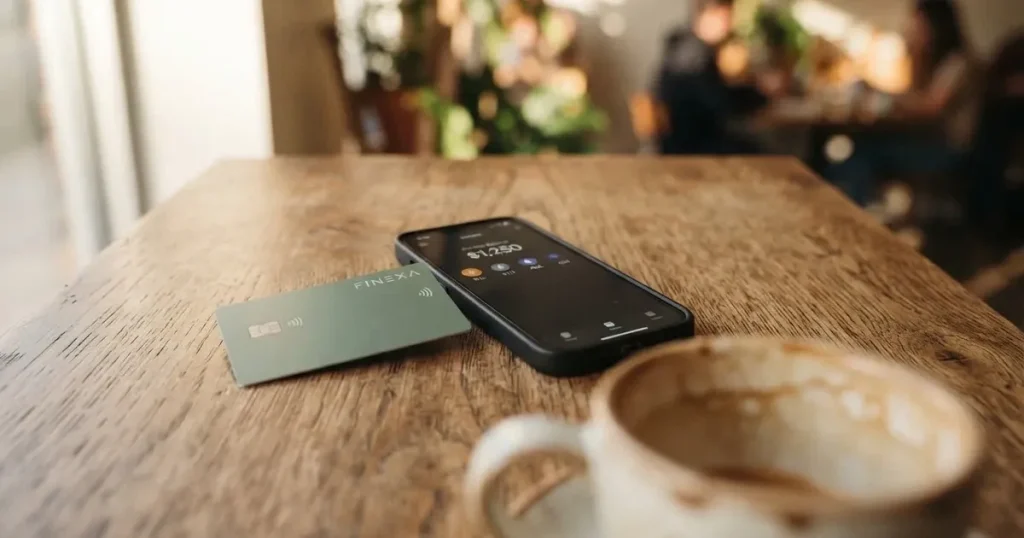
wavecard is a Visa debit card that spends a bitcoin balance, aimed squarely at people in the European Economic Area who want to pay with BTC without sitting through a crypto exchange checkout. It comes as an instant virtual card and as a physical Visa card delivered to an EEA address, it tops up with bitcoin over the Lightning network or on-chain, and it hands you a personal euro vIBAN so you can receive money in euros and buy bitcoin with it. That combination is genuinely rare, and it is why the card is worth a careful look rather than a quick dismissal.
My score for it is 6.3 out of 10. That is not a bad score; it is a middling one, and the reasons are visible in the breakdown below. The everyday mechanics are excellent — this is the strongest single part of the card. The weak points sit elsewhere: it is bitcoin-only, it sits in a white-label arrangement where the issuer is a partner and the distributor is a small Lithuanian company, and the reviews include an account freeze with money held. Read the risk section before you load it, not after.
The conditions described on this page are current as of October 28, 2026.
Verdict: 6.3 / 10, a good daily card wrapped around a narrow, one-asset idea
Here is where I land, criterion by criterion, with the marks exactly as I scored them.
| Criterion | Mark | Why |
|---|---|---|
| Who can get it | 5 / 10 | Any resident of the EEA aged 18 or over — 30 countries, by place of residence, not citizenship. Wide reach on paper, but the funding model narrows who will actually enjoy it. |
| Cost | 7 / 10 | Virtual card EUR 2.99, physical EUR 29.99, no monthly fee, no FX fee between fiat currencies. Bitcoin conversion 1%, roughly 0.5% spread in the BTC price, ATM 3% plus EUR 2. |
| Top-up options | 6 / 10 | BTC on-chain, BTC over Lightning, euro to a personal vIBAN to buy BTC, and a self-custodial PRO option connecting a Lightning wallet via NWC. No stablecoins. |
| Reliability and complaints | 6 / 10 | Wave Space Exploration UAB in Lithuania, with services from Lightspark Payments Europe AS in Tallinn and the card issued through a white-label arrangement with a third-party partner. Trustpilot 4.3 from 25 reviews, and one report of an account block with funds held in January 2026. |
| Everyday use | 8 / 10 | Instant virtual card, physical Visa debit, Google Pay and Samsung Pay on by default, ATM withdrawals up to EUR 350 a day. Apple Pay only through the Curve app. |
| Total | 6.3 / 10 | A card that works well for a specific person, and is wrong for most other people. |
Who this suits, in one line: an EEA resident who is paid in euros, holds or earns bitcoin, and wants to spend it directly without selling to an exchange first. The vIBAN is the quietly important part — it is a euro account in your name, which most crypto cards in this category cannot offer, and it means you can be paid in euros by someone who has never heard of cryptocurrency.
Who it does not suit: anyone whose main money is in stablecoins, because there is no stablecoin support at all. Anyone who wants Apple Pay without installing a third-party app. Anyone who needs a long paper trail of cardholder protections, since no chargeback process is described. And anyone who is uneasy about the structure — a card issued by a partner you will never interact with, marketed and distributed by a company that does not publish its licence details in the pages I read.
Who they will give the card to
They will give it to you if you are 18 or over and live in the European Economic Area. The card’s own wording is “All residents (18+) within the EAA (European Economic Area)”, and it qualifies that list by residence rather than citizenship.
That is 30 countries, and here they are in full so you can check your own:
- Austria, Belgium, Bulgaria, Croatia, Cyprus, Czechia
- Denmark, Estonia, Finland, France, Germany, Greece, Hungary
- Ireland, Italy, Latvia, Lithuania, Luxembourg, Malta
- Netherlands, Poland, Portugal, Romania, Slovakia, Slovenia
- Spain, Sweden, Liechtenstein, Norway, Iceland
Two things worth pausing on. First, the rule is residence. A citizen of one of these countries living in, say, the United States is outside the list, and so is a resident of one of these countries who holds a passport from elsewhere — the address decides. Second, the list does not mention any country exclusions, unlike some cards in this category that name a blocklist. That is a point in the card’s favour on paper.
What I could not find on the public pages: anything about what happens if you move out of the EEA, or whether a temporary address is accepted. Not stated, so I am not going to guess.
How to get it
You start with a verified wave.space account. The card states that sign-up and verification take under five minutes, that KYC is free of charge, and that the verified account is what unlocks the personal vIBAN and the card. Age 18+ is the only stated requirement.
Where I want to be straight with you: the public pages do not state which documents you will be asked for, whether proof of address is collected, or what the full verification flow involves. Not stated. That is normal for a card of this size, but it means your verification could still take longer than “under five minutes” if your case needs a second look. Keep an eye on your email.
You then choose a card:
- Virtual card — issued instantly, priced at EUR 2.99.
- Physical card — a Visa debit, priced at EUR 29.99.
Both draw on the same bitcoin balance, and you can create more than one card if you need to.
Physical delivery comes in two flavours. Standard is 5 to 9 working days at EUR 0 with tracking. Express is 2 to 3 working days at EUR 30 in the terms. Both ship to the EEA countries listed above. The physical card must be activated on arrival. Replacement cost is not stated, so if you lose it in a foreign city, do not assume a free replacement.
One detail on verification levels that most people never see: only “Tier 2 KYC” is mentioned anywhere, and the only thing it does is raise monthly spending to EUR 15,000. There are no other tiers described, no processing times, and no stated rejection reasons.
Fees: what it really costs
The headline numbers are good. The everyday numbers are where your money actually goes, so I want to show you both — first the full table, then three real payments walked through.
| Fee or limit | Value |
|---|---|
| Virtual card issuance | EUR 2.99, paid in BTC |
| Physical card issuance | EUR 29.99, paid in BTC (confirmed in the terms) |
| Monthly fee | Free |
| Bitcoin conversion on spend | 1% |
| BTC price spread | About 0.5%, described as “already baked into the BTC price” |
| FX fee between fiat currencies | None; “0% FX fees” |
| Card payments per the terms | 1% |
| Crypto-to-euros swaps per the terms | 1% |
| ATM cash withdrawal | 3% + EUR 2 (“at cost”); terms phrase it as “EUR 2 + 3.00% fee” |
| Free ATM allowance | Not stated |
| Daily spend limit | EUR 10,000 |
| Monthly spend limit | EUR 10,000, up to EUR 15,000 with Tier 2 KYC |
| Daily ATM limit | EUR 350 |
| Monthly ATM limit | EUR 3,000 |
Notice the structure underneath. The card charges nothing to hold and nothing to convert between fiat currencies, so euro-to-euro is free. It charges in two places when you touch bitcoin: The 1% conversion fee, plus the 0.5% spread that is already baked into the bitcoin price. Add them together and your effective cost on spending is 1% plus 0.5% — which, for a card, is ordinary, and better than many.
There is one product tier, and it is not a premium tier. There is no paid plan with better rates or higher limits; the only upgrade path is Tier 2 KYC, which is verification, not a subscription.
Now three everyday payments, because abstract percentages are easy to nod at and hard to notice.
A EUR 40 grocery shop. You are in Berlin, the card is virtual, and the balance is in bitcoin. The shop charges EUR 40. wavecard sells your bitcoin at that moment, takes 1% — EUR 0.40 — and the price of the bitcoin itself included a 0.5% spread, so roughly another EUR 0.20. The 0% FX fee does not help you here, because nothing was converted between two fiat currencies. Your real cost is about EUR 40.60, which includes the 1% conversion fee and 0.5% spread. No ATM fee obviously, no monthly fee, no flat per-transaction charge.
A EUR 30 subscription. Same maths: about EUR 0.30 in conversion fee and roughly EUR 0.15 in spread. What I want you to notice is the merchant side. If the subscription is gambling or an adult site, it may be declined. The card’s blocked categories are not stated, but many issuers in this category block by merchant category code, and a declined payment can leave a hold on your balance for several days — typically up to seven. That hold does not cost you a fee, but it does tie up money you might be counting on.
A EUR 100 ATM withdrawal. The most expensive thing on this list, by a distance. You take EUR 100 out and pay EUR 2 plus 3% — EUR 5.00 — so EUR 107 changes hands, and you are left with EUR 100 of it. Add the daily cap of EUR 350 and the monthly cap of EUR 3,000: three full withdrawals in a day is the most the card will allow, which is why it functions as a backup for emergencies rather than a way to live.
How to top it up
There are four routes, and which one is right for you depends almost entirely on how you already hold bitcoin.
On-chain BTC. You send bitcoin to an address and the card holds it until you pay. Straightforward, but on the slower and costlier side — network fees are charged by the blockchain, not by wavecard, and a confirmation can take a while.
Lightning. This is the card’s real niche. You pay by Lightning invoice or LN address, which is fast and cheap, and there are Lightning-focused users who have asked for it in public reviews. It is the feature that most separates wavecard from the rest of the field.
EUR to your personal vIBAN, to buy bitcoin. This is the route for someone who does not hold bitcoin at all. Money lands in a euro account in your name, and wavecard uses it to buy BTC. The terms put the conversion at 1%.
PRO, self-custodial. You connect a Lightning wallet to wavecard via NWC — Alby is the recommended wallet — and the bitcoin stays in your own wallet until the moment of payment. This is the option for anyone who does not want a custodian holding their coins.
What the card does not do: hold stablecoins. None. If your balance is in USDT or USDC, there is no direct route from stablecoin to this card, and you would have to convert to bitcoin first — taking one price move, one conversion, and one set of fees before you can spend anything.
A few gaps to know about. The deposit fee is not stated. The minimum top-up is not stated. Network withdrawal fees may apply to on-chain transfers, since those are paid to the blockchain. And a wrong-network transfer is the classic way to lose money here: blockchain transfers are irreversible, so a deposit sent on a network the provider does not support can be lost entirely or need manual support recovery with no guarantee attached.
Withdrawing works in the reverse direction. Refunds come back “converted back to BTC at the available market rate” — note that, whatever you paid in, you receive bitcoin, not euros. Closing the account is done by email to [email protected]; the balance on closure is not described. And accounts inactive for 365 days may be closed, or may attract a maintenance fee.
Paying with it every day
This is the part the card does best, and I scored it 8 for a reason.
The virtual card is instant. If you need to pay something right now, you have a usable card number before the page finishes loading. That alone puts wavecard ahead of most cards in this category.
Wallets are on by default rather than added as an extra: Google Pay, Samsung Pay, Fitbit Pay and Garmin Pay. Apple Pay is the exception — the card’s own words are “Direct Apple Pay support is coming soon”, and the route today is through the Curve app. That is an extra install and an extra step at checkout, and if Apple Pay is how you pay for everything, it is a genuine irritation.
It is a Visa debit card, so wherever Visa is accepted, this works. The card currency is not stated; fiat is handled in euro through the vIBAN, and there are no FX fees between fiat currencies, though multi-currency balances are not described. You can create more than one card, which is useful for keeping spending separate.
Three things that are not stated and that you should not assume:
- No rewards of any kind. No cashback is mentioned anywhere.
- No chargeback process is described. Card matters are referred to the Card Issuer’s Terms, and claims are answered within two business days. That is a response time, not a dispute process.
- No blocked-category list.
For a quick comparison of the everyday picture:
| Everyday feature | What wavecard offers |
|---|---|
| Virtual card | Instant |
| Physical card | Visa debit, Standard 5–9 working days free or Express 2–3 working days at EUR 30 |
| Wallets by default | Google Pay, Samsung Pay, Fitbit Pay, Garmin Pay |
| Apple Pay | Through the Curve app only; direct support stated as coming soon |
| Rewards | Not stated |
| Chargeback process | Not described; card matters go to the Card Issuer’s Terms |
| Claim response time | Within 2 business days |
| App | Web app at app.wave.space; no App Store or Google Play rating read |
One detail that deserves attention rather than a footnote. The card allows a pseudonymous name on it. For many people that is the entire reason they are looking at a card like this. For others it is a reason to pause — the name on your statement is not the name on your ID, which can cause complications with some merchants, some landlords and some employers. It is your call, but make it deliberately.
What can go wrong
I want to spend real space here, because this is where a 6.3 lives.
The structure is unusual and you should read it twice. Wave Space Exploration UAB, company number 306727148, is based in Lithuania. The terms say that licensable financial services are provided by Lightspark Payments Europe AS, company 16298772, registered in Tallinn, Estonia. And the terms say the wavecard “is issued through a white-label arrangement with a third-party provider, Wave Space acts as the distributor”. The licence type is not stated, and the contract is governed by Lithuanian law. In plain terms: you are dealing with a marketing and distribution company in Lithuania, whose card is produced by a partner you never contract with directly, with regulated services sitting behind that. That arrangement is not unusual in this industry, but it does mean the entity holding your money is not the brand you signed up with.
The complaint that should worry you most is a freeze with money held. A Trustpilot review from 15 January 2026 describes an account being blocked after money was sent, with the funds kept. The company replied on 18 March 2026 that the account was suspended for compliance reasons and that a full refund was offered. Whether or not you believe the reply, the shape of the problem is the one that matters: with bitcoin involved, an account freeze can leave your balance sitting still while a compliance review runs. There is no chargeback route here to appeal it.
On the Trustpilot picture generally: a TrustScore of 4.3 from 25 reviews, read on 21 October 2026, though the star graphic showed 4.5. Twenty-five reviews is a small sample — one bad month moves it a long way. The themes are account freeze with withheld funds (January 2026), a claim that reviews are fake (23 June 2025, disputed by the company), requests for Lightning support and a physical card (January to August 2025), and slow bitcoin confirmations (January 2025).
With bitcoin, the usual custodial risks apply in the usual way. Control of your coins belongs to whoever holds the private key. With a custodial wallet that is wavecard, so you must trust them completely. Transfers are typically irreversible, and a stolen key has no built-in recovery — the network cannot freeze or return funds. This is not a warning specific to wavecard; it is the category’s standing risk, and it has a history: Mt. Gox (about US$350 million reported stolen, 2011–2014), Coincheck (about US$400 million, 2018), Ronin Network (US$625 million, 2022). The PRO option with NWC is the direct answer to it, because your coins never leave your wallet.
Regulatory change is running underneath all of this. MiCA, the EU’s markets-in-crypto-assets regulation, took legal effect in June 2023; its rules on stablecoins applied from 30 June 2024 and the remaining provisions, including crypto-asset service provider rules, from 30 December 2024. The transitional period lets providers already operating under national law continue only until 1 July 2026 or until they receive or are refused a MiCA authorisation, whichever comes first. A card is regulated separately as a payment service, so a crypto card often depends on two licences at once. If wavecard’s arrangement changes during that transition, the practical effect on your card is not something the current pages promise to explain.
Small, specific ways you can get hurt. A declined online payment can leave a hold on funds for up to seven days. Some merchants refuse prepaid or foreign-issued cards because the card’s issuing country is visible in its first six or eight digits, which is why a card issued in one country can look foreign in another. Address verification — the check that compares the street number in your billing address with the issuer’s records — is generally unavailable for foreign-issued cards, which causes declines. And if the account sits unused for 365 days it may be closed or charged.
What you can control. Freeze the card instantly in the app, change your limits there, set up recovery codes and a 3-D Secure password, and use the self-custodial PRO option if you want to keep your own keys. Safeguarding of funds is not stated, so do not assume deposit-guarantee protection.
Support runs on live chat via Telegram, at t.me/wavespacecommunity, by email at [email protected] and [email protected], plus an FAQ and a live support widget, with a stated response time of within 2 business days.
What to take instead
I compared wavecard against three other cards in this category, and the honest finding is that they solve different problems.
International Visa Card scored 6.7 / 10 — slightly ahead of wavecard overall. It is a U.S.-issued Platinum Visa card, virtual only, with the physical card “Coming soon”, paying in USD. Issuance is $5 one-time with no maintenance fee, and plans are Classic free, Pro $9.00/month and Max $19.00/month. Card use in USD is free on all plans; foreign currency costs “Visa exchange rate + 2% FX fee”. Deposits are free, and you can fund with USDC or USDT as well as USD, EUR, SEPA, SWIFT and FedNow. Its exclusion list is long and explicit — no residents or legal registrants of Belarus, mainland China, North Korea, Cuba, India, Iraq, Iran, Israel, Myanmar, Nepal, Nicaragua, Russia, Syria, Turkey, Ukraine, Venezuela or Vietnam, with FATF grey-list countries reviewed case by case, and purchases blocked in North Korea, Cuba, Iran, Russia, Syria, Ukraine and Venezuela. Its rule is by residence or registration; citizenship is not mentioned. If stablecoins are your money and USD spending is what you do, this one is built for you and wavecard is not.
UNi Card scored 6.1 / 10 — just below wavecard. A multicurrency card on the Mastercard network, spending from the UNi.Global account balance, with physical and virtual form not stated and who can get it not stated. “No annual fee”, no foreign transaction fee, assets converted at “live OTC rates” with “No hidden exchange fees”, and “Spend-to-Earn rewards” up to 3%. How you fund it is not stated.
Whop Cards scored 5.2 / 10 — the weakest of the four. Visa, working anywhere Visa is accepted, spending from a Whop balance, with the coins and networks behind that balance not stated and the page claiming “No extra fees” without listing any amounts. It does have 5% cashback at select merchants, currently Uber. Its reach is U.S.-only: 31 states for consumers and 41 for businesses, with unsupported consumer countries including Belarus, mainland China, Cuba, Hong Kong, India, Iran, Iraq, Israel, Myanmar, Nepal, Nicaragua, North Korea, Russia, Syria, Turkey, Ukraine, Venezuela and Vietnam, and unsupported corporate countries including Russia and Belarus. Whether the basis is citizenship or residence is not stated.
| wavecard | International Visa Card | UNi Card | Whop Cards | |
|---|---|---|---|---|
| Score | 6.3 / 10 | 6.7 / 10 | 6.1 / 10 | 5.2 / 10 |
| Network | Visa debit | Visa, U.S.-issued Platinum | Mastercard | Visa |
| Asset it spends | Bitcoin only | USD, funded with USDC/USDT and cash rails | Multicurrency account balance | Whop balance, stablecoin-collateral backed |
| Issuance | EUR 2.99 virtual / EUR 29.99 physical | $5 one-time | Not stated | Not stated |
| Ongoing fee | None | None on Classic; $9.00 Pro, $19.00 Max | No annual fee | “No extra fees”, amounts not listed |
| Foreign currency | No FX fee between fiat | Visa rate + 2% FX fee | No foreign transaction fee | Not stated |
| Rewards | Not stated | Not stated | Up to 3% | 5% cashback at select merchants |
| Who can get it | EEA residents 18+, by residence | Excludes residents/registrants of 16 named countries | Not stated | 31 U.S. states for consumers |
Two gaps in that table deserve a second look. The International Visa Card’s excluded-country list includes several European countries — Turkey and Ukraine among them — and its rule is by residence or registration, so where you live rather than what you hold decides. And wavecard remains the only one of the four that gives you a euro-denominated IBAN in your own name, which no other card here can claim.
Who I would recommend it to
If you live in the EEA, are 18 or over, and your money is bitcoin — you are the person this card was built for. You get an instant virtual card, real Lightning support, no monthly fee, no FX fee, wallets already enabled, and a euro vIBAN that lets ordinary euros in. If you have been meaning to spend bitcoin without converting it on an exchange, this is a clean way to do it, and the Lightning support alone puts it ahead of most of the field.
I would not recommend it if your balance is in stablecoins, because there is no stablecoin support and you would take an extra conversion and an extra price move. I would not recommend it if Apple Pay is your only method. And I would think twice if a frozen account with money held is the kind of risk you cannot absorb — the review from January 2026 is exactly that shape, and with bitcoin on the balance there is no chargeback route to appeal it.
My own order of preference, if I were choosing: use PRO with a self-custodial Lightning wallet so the coins stay in your own wallet until the moment you pay. That removes the counterparty risk the freeze complaint illustrates, and it costs you nothing in convenience.
Frequently asked questions
What is wavecard?
wavecard is a Visa debit card that spends a bitcoin balance, offered by Wave Space Exploration UAB, a company registered in Lithuania. You get an instant virtual card or a physical Visa card, plus a personal euro vIBAN. It is aimed at residents of the European Economic Area aged 18 or over who want to pay with BTC directly, without selling to a crypto exchange first. Payment services sit with Lightspark Payments Europe AS in Tallinn.
How does wavecard work?
You hold bitcoin with wavecard, or connect your own wallet, and when you pay, wavecard sells the bitcoin at that moment and your card is charged in euro. The conversion fee is 1%, plus the 0.5% spread that is already baked into the bitcoin price. Between fiat currencies there is no FX fee. It behaves less like a bank debit card and more like a prepaid card with a bitcoin balance behind it.
Is wavecard a bank?
No — the public pages do not describe it as a bank. Wave Space Exploration UAB is the distributor, and the card “is issued through a white-label arrangement with a third-party provider”. The terms say licensable financial services are provided by Lightspark Payments Europe AS, of Tallinn, Estonia. The licence type is not stated, and the terms are governed by Lithuanian law. It behaves like a prepaid card, not a current account.
Who owns wavecard?
The operator is Wave Space Exploration UAB, company number 306727148, registered in Lithuania. Behind it sits Lightspark Payments Europe AS, company 16298772, registered in Tallinn, Estonia, for licensable financial services, and an unnamed third-party provider that actually issues the card under a white-label arrangement. One Trustpilot review from 23 June 2025 alleged the reviews were fake; the company disputed that.
Is wavecard available in my country?
Availability follows residence in the European Economic Area, not citizenship. The 30 countries are Austria, Belgium, Bulgaria, Croatia, Cyprus, Czechia, Denmark, Estonia, Finland, France, Germany, Greece, Hungary, Ireland, Italy, Latvia, Lithuania, Luxembourg, Malta, Netherlands, Poland, Portugal, Romania, Slovakia, Slovenia, Spain, Sweden, Liechtenstein, Norway and Iceland. You must be 18 or over. No country exclusions are listed on the card’s pages.
How do I get the card?
Register and verify a wave.space account first, which the card says takes under five minutes and is free of charge. That verified account is what unlocks the personal vIBAN and the card. Then choose a virtual card at EUR 2.99, issued instantly, or a physical Visa card at EUR 29.99, delivered Standard in 5 to 9 working days free, or Express in 2 to 3 working days at EUR 30. The physical card needs activating on arrival. Which documents are required is not stated.
Does wavecard require KYC?
Yes, a verified account is required, and the card says KYC is free of charge. Only one level is described anywhere, “Tier 2 KYC”, and its single stated effect is raising monthly spending to EUR 15,000 from EUR 10,000. Other tiers, the processing time for individual checks and the reasons a check might be refused are not stated. Expect a sanctions and identity screening as with any regulated provider.
How do I top up wavecard?
Four ways: send bitcoin on-chain, pay by Lightning invoice or LN address, send euros to your personal vIBAN so wavecard can buy bitcoin with them, or use the PRO option to connect a self-custodial Lightning wallet via NWC, with Alby recommended. The deposit fee and the minimum top-up are not stated, and on-chain network fees are paid to the blockchain. No stablecoins are supported at all.
Is wavecard safe?
It depends on what you mean by safe. The card gives you real controls: instant freeze, adjustable limits in the app, recovery codes and a 3-D Secure password, and a pseudonymous name allowed on the card. But funds held with a custodial provider carry counterparty and hack risk, a Trustpilot review from 15 January 2026 describes an account frozen with funds kept, and safeguarding of funds is not stated. For fewer of those risks, use the self-custodial PRO option.
Is wavecard free?
There is no monthly fee, so keeping the card costs nothing. You pay to start: EUR 2.99 for a virtual card or EUR 29.99 for a physical one, both priced in bitcoin. Spending costs 1% for the bitcoin conversion, with roughly 0.5% more embedded in the bitcoin price, and there is no FX fee between fiat currencies. ATM withdrawals cost 3% plus EUR 2. No cashback or rewards of any kind are mentioned.
App and neobank cards in the catalogue – cryptocardcatalog
Content created by the «cryptocardcatalog» team