
A stablecoin card with broad country reach and an unclear price tag
 Available in US
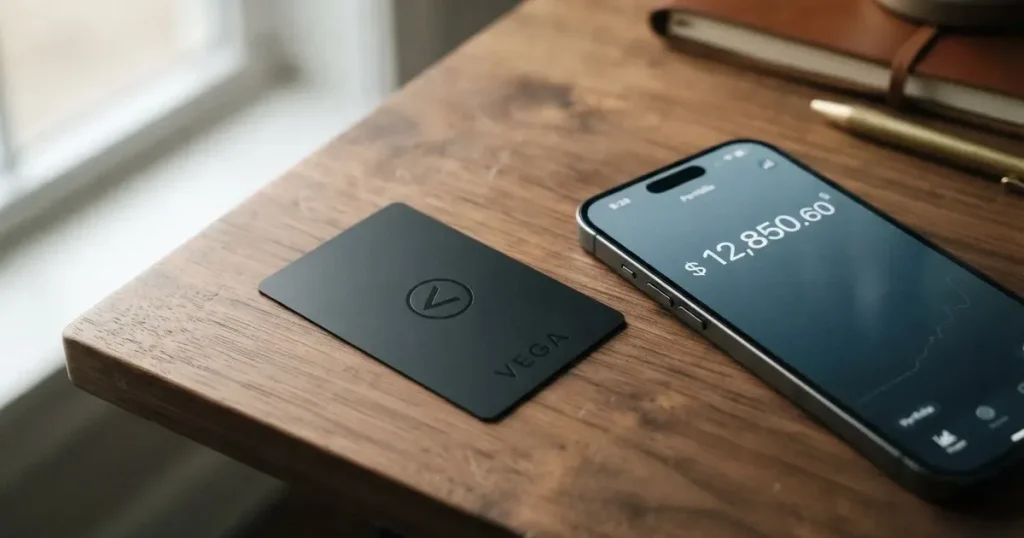
If you have been hunting for a payment card that draws on a crypto balance, Wasabi is one of the names that comes up. The pitch is a stablecoin-funded card, virtual and physical, with support across a large number of countries. The reality, once you read the terms and look at user feedback, is a product that says quite a lot about what it does, and very little about what it charges.
In this Wasabi card review I go through who the card is for, what it costs, how you fund it, and what can go wrong. I have pulled facts from Wasabi’s own pages and help-centre articles, and I flag anything that came from third-party sources. Conditions are current as of October 28, 2026.
Verdict
Wasabi earns 6.4 out of 10. The reach is the strongest part: a long list of eligible countries, both a virtual and a physical card, and a clear focus on stablecoin spending. The weaknesses are equally clear. Fees are listed by type in the terms but without figures. The company is described as a financial-technology firm rather than a bank, and the issuer and licences are not named on the pages I read. A single Trustpilot review, dated 8 July 2026, talks about setup fees of “$15,000 and up” aimed at businesses, which does not match the “anyone can apply” impression the site gives.
If you live somewhere that makes it hard to get a regular bank card, the broad country coverage and Apple Pay binding are genuinely useful. If you want to know exactly what a coffee will cost, or you want a regulator named on the homepage, the gaps in the published information will frustrate you.
The score breaks down as follows.
| Criterion | Mark | Reason |
|---|---|---|
| Who can get it | 9 / 10 | Starting data says 200+ countries and regions, with closed jurisdictions listed only by category |
| Cost | 5 / 10 | Terms name the fee types but not the amounts, and the monthly fee is not disclosed |
| Top-up options | 6 / 10 | Stablecoin funding is the headline; only USDT on TRC20 and BEP20 is named in unofficial sources |
| Reliability and complaints | 4 / 10 | Wasabi Ltd, “not a bank or custodian”; one Trustpilot review flags high setup fees and card limits |
| Everyday use | 8 / 10 | Virtual card with instant Apple Pay binding, physical card accepted at ATMs worldwide |
The total is 6.4 / 10.
Will they give you the card
Wasabi’s own pages say the service is available in 200+ countries and regions, which is one of the wider reach claims in the crypto-card space. The pages I read do not include a list, so you cannot check a specific country by name without going through the application. The terms close that door in the usual way: you must not be located in or be a resident of “any prohibited or sanctioned jurisdiction.” That wording is residence-based, which matters if you are a citizen of one country but living in another. The card programme treats the address, not the passport, as the gate.
For the application itself, the company says users must “successfully complete any required identity verification (KYC/KYB) procedures.” That means a government-issued ID, proof of address and a selfie for individuals, or registration documents and beneficial-ownership information for companies. The terms warn that failing verification can lead to suspension or termination. The minimum age is not stated on the pages I read; a KYC guide article exists in the help centre, but the substance is procedural rather than a list of eligibility numbers. A KYC level, with documents at one tier and higher limits at another, is not stated.
The product itself is described as a stablecoin-linked card, available in virtual and physical form. The virtual card supports “instant binding” to Apple Pay. The card network (Visa or Mastercard) and the card’s base currency are not stated on the pages I read; starting data suggests Visa or Mastercard with a USD balance. If network and currency matter for the merchants you use, that is a question to put to support before you apply.
How to get it
Sign-up is web-based, through the Wasabi web app at app.wasabicard.com. There is no native app listing in the usual stores mentioned on the pages I read, and no separate ratings to weigh. You create an account, complete the identity check, and then order a virtual card, which is typically issued immediately, or a physical card for delivery. Delivery times are not stated, so you should not plan around a specific date. The help centre has a KYC guide and a Telegram channel (t.me/wasabicard_official) where updates are posted; the live chat and email support both sit on the same site.
The interesting question is who this product is really for. The marketing talks about virtual and physical cards for individuals, but the single Trustpilot review I found (1 star, 8 July 2026) describes a service aimed at businesses, with setup fees of “$15,000 and up” and heavily restricted cards. That single review is not a track record, but it is worth weighing against the broad country claim, because the two messages are not the same.
Fees and costs: what a Wasabi payment really costs
The honest answer is that the published terms list every fee type you might run into, and then decline to give you a number for any of them. The terms name card issuance, foreign exchange, cross-border transaction, ATM withdrawal, chargeback handling and replacement card. There is no published monthly fee, and no conversion rate or percentage. That is unusual; even crypto cards with limited fee pages usually put a number on the conversion.
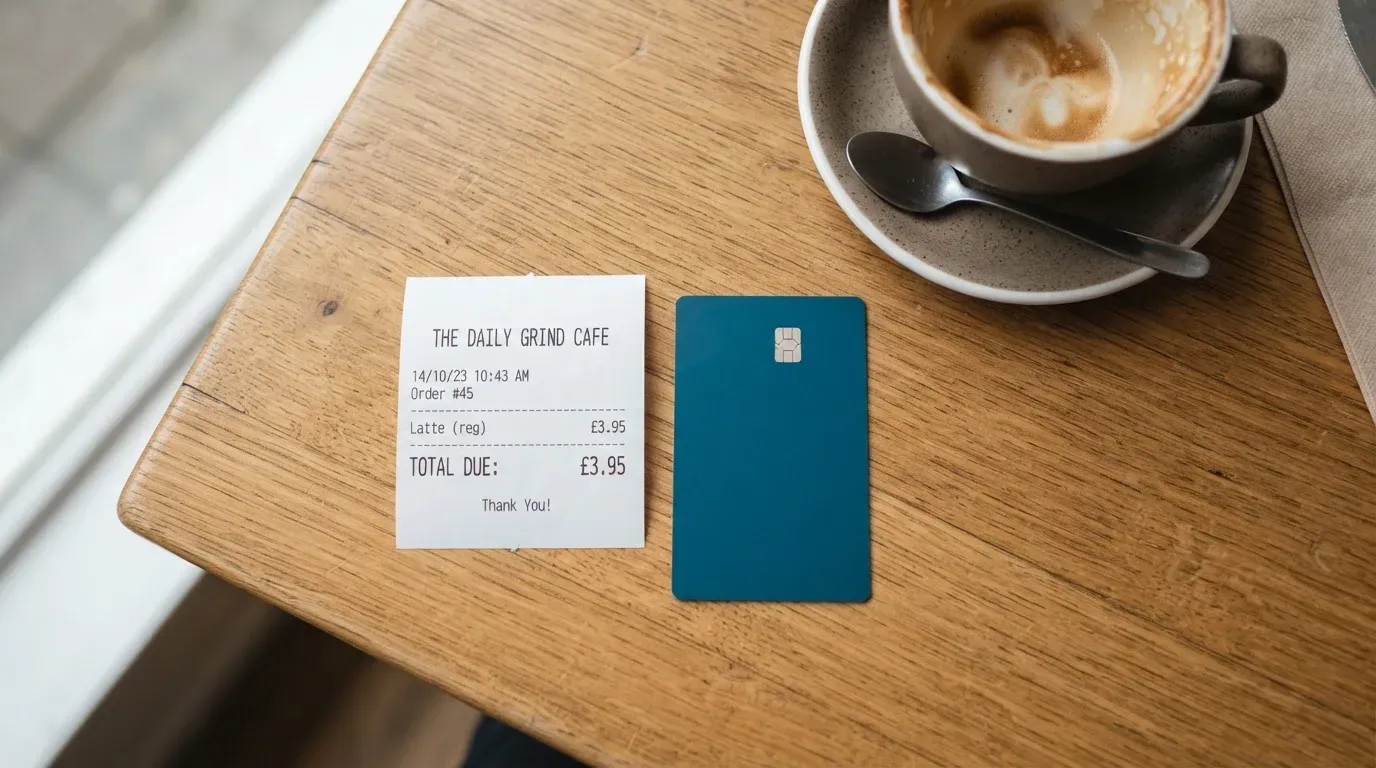
The product pages say you can “withdraw cash from millions of ATMs worldwide with competitive rates.” Again, “competitive” is doing the work, not a number. There is no ATM allowance and no per-transaction ATM fee. The site mentions sending money in 7+ currencies, but the card’s own base currency is not stated.
Spending limits are only partially disclosed. The virtual card is said to come with a “card limit up to 10,000 USD.” The physical card has “flexible spending limits,” without a value. Tiers, with higher limits at higher fees, are not stated.
A few everyday payments show where the silence bites.
- Coffee paid in your home currency with a USD card. You will see a foreign exchange fee, listed as a fee type but without a number. Whether that is 0.5% or 3% is something you will only find out after a transaction, from the receipt, not the homepage.
- ATM cash withdrawal abroad. The card works at ATMs worldwide per the site, but the cross-border fee, the FX margin and any ATM-specific charge are all unnamed.
- Online subscription in a different currency. A cross-border transaction fee is listed in the terms, again without a figure.
| Fee or limit | Amount |
|---|---|
| Card issuance | not stated |
| Monthly fee | not stated |
| Currency conversion | not stated (rate applies) |
| Foreign exchange | not stated |
| Cross-border transaction | not stated |
| ATM withdrawal | not stated |
| Chargeback handling | not stated |
| Replacement card | not stated |
| Virtual card limit | up to 10,000 USD |
| Physical card limits | “flexible” (no value) |
For a reader who needs to budget, the table is the point. The most important row is the currency conversion row, because that is the fee you will pay on virtually every transaction, and it is the one the company has chosen not to publish.
How to top up Wasabi
Funding is the part of the product that the company does describe clearly. The headline feature is called “Spend with Stablecoin,” which means the card is loaded by sending stablecoins in, not by linking a bank account. The pages I read name stablecoins as the funding source but do not list which ones, and they do not list the networks they accept. Starting data, which is not confirmed by the card itself, mentions USDT on TRC20 and BEP20. If you only have USDC, or only have USDT on ERC-20, you should check support before sending anything.
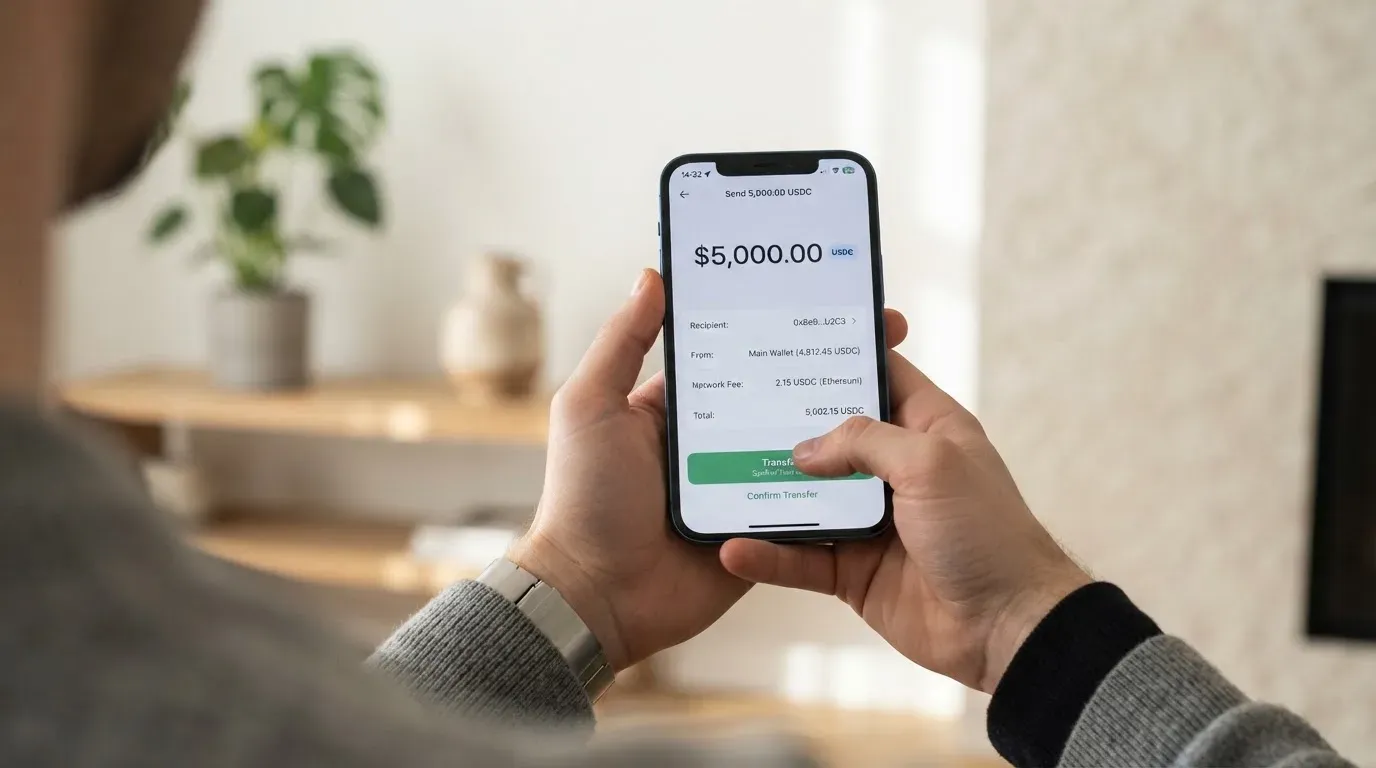
This matters more than it sounds. Crypto transfers are irreversible, and the network the provider accepts has to match the network you send on. If you send USDT on a network Wasabi does not support, or to an address that is for a different network, the funds can be lost or stuck pending manual support, with no recovery guarantee. USDC is a useful counter-example: Circle stopped supporting USDC on Tron in February 2024, so even if you see “USDC” advertised, the available networks are a smaller set than you might assume.
The terms also include a clause that says “funds may be temporarily withheld pending investigation.” That is standard language, but it is worth knowing in advance, especially if you are topping up just before a planned payment.
Withdrawal of funds from Wasabi back out is not stated on the pages I read. The terms are silent on a withdrawal method, a fee, or a processing time. If getting money back out is part of how you plan to use the card, that is a question for support before you load.
Paying with the Wasabi card every day
Day-to-day, the card is built around two form factors. The virtual card is the one you can use immediately, including through Apple Pay with what the site calls “instant binding” — the moment you have a virtual card number, you can add it to Apple Pay and tap to pay. The physical card can be added to Apple Pay as well. Google Pay is not stated, and the blocked-merchant categories, the things the issuer will not let you spend on, are not stated either. If you routinely buy from a specific type of merchant and want to know in advance whether the card works there, support is the only source.
ATM cash access is part of the pitch. The site says you can withdraw from millions of ATMs worldwide, with “competitive rates,” which is the same phrasing as on the fees page. The practical experience will depend on the rate the card gives you at the ATM, the cross-border fee, and any ATM operator fee, none of which are published.
The product has a cashback programme and a referral programme. The rate and the conditions for both are not stated, which is the same pattern as the rest of the fee disclosure. If a meaningful part of the value of the card for you is the cashback, that is another number to ask for before you commit.
Disputes and refunds are handled in the usual way. The site says refunds may take up to 30 business days to be reflected, and chargebacks need supporting documentation. Recovery is not guaranteed. That is not unusual for a card, but it is a reminder that even where the network is Visa or Mastercard, the dispute process for a card from a non-bank issuer can be slower and harder than for a mainstream bank.
What can go wrong
The risks with Wasabi fall into three groups: what is not disclosed, what the company is, and what a single user has reported.
What is not disclosed. The single biggest risk for a reader is that the fees are not published. If you do not know what the conversion rate or the cross-border fee is, you cannot know in advance what a payment will cost, and you cannot compare it to another card. There is no published monthly fee, and no published ATM fee. The virtual card’s 10,000 USD ceiling is published; the physical card’s limits are not.
What the company is. Wasabi describes itself as Wasabi Ltd, a financial-technology company, “not a bank or custodians.” OTC and card-issuing services are stated as “provided in partnership with licensed institutions or banks.” The issuer and the licences are not named on the pages I read. A “Licenses and Compliance” page exists at /en/licenses-compliance, so the information is somewhere on the site, just not on the product pages a new user will read first. The lack of a named issuer and a named regulator on the main product pages is the kind of detail that matters if a programme is suspended, because a card-issuing programme can be wound down by the network or by the licensed partner. That has happened before, including Visa’s 2018 suspension of WaveCrest that closed several crypto card programmes in Europe.
What users have reported. A single Trustpilot review, dated 8 July 2026 and rated 1 star, says the provider is aimed at businesses, charges high setup fees (“$15,000 and up”), and the cards are restricted. The Trustpilot TrustScore is 3, calculated from that single review. That is not a pattern, but it is the only public review of the product I could find, and it is in tension with the broad country and individual-user marketing. The company also has a live chat, an email support that promises a reply “within 24 hours,” a phone line, and a Telegram channel, so the surface area for getting an answer is there if you want to ask about the gap between the marketing and the review.
On the security side, the company talks about “Security by Design” — the ability to create, delete and isolate funds per card, and the description of custody as non-custodial. Two-factor authentication is not stated, and the help centre has a KYC guide but the substance is procedural. Treat the security story as plausible but under-described until you have read the underlying documentation.
What to take instead
If the gaps in the Wasabi story put you off, three cards in the same broad category are worth comparing. None is a direct replacement, and each has its own gaps. The point of the comparison is to see which trade-offs you are willing to live with.
| Card | Score | Network | Funding | Notable detail |
|---|---|---|---|---|
| Cardex | 5.6 / 10 | VERVE, Visa, Mastercard, UnionPay | USDT, USDC, BTC | Real-time crypto-to-fiat conversion at payment |
| CardFlow | 4.9 / 10 | Mastercard (virtual USD) | BTC, USDT, ETH, Naira bank transfer | Virtual card creation stated as free |
| HyperCard | 4.7 / 10 | not stated | USDT, BTC, ETH (USD or EUR balance) | Works in “more than 176 countries” for acceptance |
Cardex is the closest peer in the sense of multi-network and multi-coin funding. Its conversion story, an “AI-Powered Conversion Rate” that picks the best rate at the moment of payment, is a different way of dealing with the conversion question, but the actual fee percentage is not stated. The App Store listing is Naira-focused, so the product page tells a slightly different story from the public-facing one.
CardFlow is a Nigeria-focused card platform that is open to “Nigerians and global users.” The headline is a free virtual USD Mastercard created in about three minutes, funded by Bitcoin, USDT, ETH or a Naira bank transfer. Monthly fees are not stated. The appeal is the speed and the free creation; the gaps are the same as the rest of the category.
HyperCard is a prepaid card in USD or EUR, with no published fees on the App Store page, funded by deposits of USDT, BTC or ETH that are converted to the card’s fiat balance. The “176 countries” figure on the App Store is about acceptance, not eligibility, and the network is not stated.
The honest summary is that every card in this comparison has the same problem in a slightly different shape. Fees are either not stated, or stated in a way that does not let you do a like-for-like comparison. Networks are sometimes not stated. The Wasabi story is on the better side of this set on country reach and on the clarity of the stablecoin-funded pitch, and on the worse side on fee transparency and on the trust signals an issuer normally provides.
Who I would recommend Wasabi to
The card fits a particular reader. If you live in a country where ordinary bank cards are hard to get, and you already hold stablecoins, the broad country coverage and the “spend with stablecoin” framing are useful. If you want a virtual card to bind to Apple Pay within minutes, the virtual card plus instant Apple Pay binding is a good fit.
The card does not fit a different kind of reader. If you want to know the conversion rate before you tap to pay, the published information does not give you that. If you want a regulator’s name on the homepage, you will need to dig into the Licences and Compliance page. If you want a card whose setup cost and ongoing fee are visible before you apply, the single Trustpilot review suggests that for some users the setup cost is several thousand dollars, which is at odds with the broad “anyone can apply” language.
My own take is that Wasabi is a reasonable product to look at, but only after you have asked support three things in writing: the conversion fee as a percentage, the monthly fee or its absence, and the name of the issuing partner and the regulator. The answers to those questions will tell you whether the card is right for you, and the company’s response time will tell you whether the support story is real. Until you have those answers, treat the published fee list as a list of fee types, not a price.
Frequently asked questions
What is the Wasabi card?
The Wasabi card is a payment card linked to a stablecoin balance. Wasabi markets both a virtual and a physical card, with the virtual card designed to be added to Apple Pay straight away. The card is offered by Wasabi Ltd, a financial-technology company that describes itself as “not a bank or custodian.”
How does the Wasabi card work?
You fund the card with stablecoins; at the time of payment, the stablecoin balance is converted to the currency of the merchant. The card behaves like a prepaid card: you can only spend what you have loaded, so it cannot overdraw. A virtual card is available immediately after the account is set up, and a physical card is sent for delivery.
Is Wasabi a bank?
No. Wasabi states it is a financial-technology company, “not a bank or custodians.” Card-issuing and OTC services are stated as being provided in partnership with licensed institutions or banks; the issuer and the licences are not named on the product pages, although a Licences and Compliance page exists on the site.
Who owns Wasabi?
The company is named as Wasabi Ltd. Ownership, parent company and registered jurisdiction are not stated on the product pages I read; for confirmation, the company filings in its registered jurisdiction are the place to look.
Which countries is the Wasabi card available in?
Starting data says 200+ countries and regions. The pages I read do not include a country list or a list of excluded jurisdictions. The terms restrict the card to people who are not located in or residents of “any prohibited or sanctioned jurisdiction.” If your country is on such a list, the application will be refused.
Does the Wasabi card require KYC?
Yes. The terms require users to “successfully complete any required identity verification (KYC/KYB) procedures.” For individuals, that means a government-issued ID, proof of address and a selfie; for companies, registration documents and beneficial-ownership information. Failing verification can lead to suspension or termination.
How do I top up the Wasabi card?
You fund the card by sending stablecoins to a Wasabi-controlled wallet. The supported coins and networks are not listed on the pages I read; starting data mentions USDT on TRC20 and BEP20. Because transfers are irreversible, it is worth confirming the network and address with support before sending a meaningful amount.
Is the Wasabi card free?
The terms list several fee types — card issuance, foreign exchange, cross-border transactions, ATM withdrawals, chargeback handling and replacement cards — but the amounts are not published. There is no published monthly fee. A single Trustpilot review, dated 8 July 2026, describes setup fees of “$15,000 and up.” That review is not confirmed by the card, and it may describe a business plan, not the consumer plan.
How do I add the Wasabi card to Apple Pay?
The virtual card is described as supporting “instant binding” to Apple Pay. The physical card can also be added to Apple Pay. Google Pay is not stated on the pages I read.
Is the Wasabi card safe?
The company describes a “Security by Design” approach, with the ability to create, delete and isolate funds per card, and describes the custody model as non-custodial. Two-factor authentication is not stated on the pages I read. The main risk for a user is that the issuer and the regulator are not named on the product pages, which matters if a programme is suspended by the network or by the licensed partner; that has happened to crypto cards before, including the 2018 WaveCrest suspension in Europe.
Virtual cards in the catalogue – cryptocardcatalog
Content created by the «cryptocardcatalog» team