
Wafee card review: a euro IBAN and a Visa, with more questions than answers
 Available in US

Wafee is a young crypto-finance product that pairs a euro IBAN account with Visa cards (physical and virtual) and tells you it works in “160+ Countries.” On paper that combination is genuinely useful for people who hold crypto and want a normal payment card and a European bank account attached to it. In practice, after going through the public pages, the picture is uneven. The site talks about its features in broad strokes, but it does not publish the numbers most readers will want to know: which coins and networks it accepts, what the issuance and monthly fees are, what the FX markup is, what the ATM limit is, and which regulator or bank stands behind the card programme.
The information on this page is current as of October 28, 2026. Card terms, fees and country coverage can change without notice, so treat the figures below as a snapshot of what the public site states today, and verify on wafee.co before you act on them.
My overall score for Wafee is 6.5 out of 10, which puts it in the middle of the pack. The strong points are the breadth of countries it claims to serve, the euro IBAN with SEPA, and the everyday-payment features (Visa contactless, Apple Pay, Google Pay). The weak points are the missing fee schedule, the missing coin and network list, the missing card currency, and the fact that the app store buttons on the public page go nowhere useful. The verdict in a sentence: it looks promising for a crypto holder who wants a euro account, but you are buying on trust, not on disclosed terms.
Verdict
Before going through the details, here is the score breakdown. The marks come from the public Wafee site and from the absence of information on it; every row is a short reason, and the total is the simple sum, as Wafee presents it.
| Criterion | Mark | Reason |
|---|---|---|
| Who can get it | 9 / 10 | “Available in 160+ Countries” with no country list; the site shows flags for Brazil, Argentina, Mexico, Egypt, Nigeria, Jamaica, Turkey and the UAE, and availability of products is decided by Wafee. |
| Cost | 5 / 10 | Only “competitive exchange rates” are mentioned; issuance, conversion, FX and ATM fees are not disclosed. |
| Top-up options | 5 / 10 | Crypto can be spent anywhere Visa is accepted, but the supported coins and networks are not named; the euro account supports SEPA, SWIFT and P2P. |
| Reliability and complaints | 5 / 10 | The company is Wafee Ltd in Nevis; the FAQ links to “Walletto Terms & Conditions” and a “Walletto Annex Prohibited Activity List” (Walletto appears to be the card partner, but its role is not explained), no licences are named, and no independent reviews were found. |
| Everyday use | 8 / 10 | Visa, physical and virtual cards, Apple Pay and Google Pay; ATM limits are not disclosed, and the App Store and Google Play buttons on the public site link to “#” (no destination). |
| Total | 6.5 / 10 | A euro IBAN plus a Visa in many countries, balanced by thin public disclosure of fees, coins, networks and licences. |
Who it suits: a crypto holder who wants a euro-denominated account with SEPA, a Visa card that works in shops and online, and broad country coverage, and who is comfortable taking a young provider on trust while details are still missing.
Who it does not suit: a reader who needs to see exact fees, supported coins, supported networks, the card’s base currency, the ATM limit, the issuing bank or the regulator before they hand over any document or any crypto.
Who will they give you the card
The headline claim on wafee.co is “Available in 160+ Countries,” but the site does not publish a list. The only geography the public page confirms is the row of country flags in the marketing material: Brazil, Argentina, Mexico, Egypt, Nigeria, Jamaica, Turkey and the UAE. That is a useful hint about which markets Wafee is aiming at, but it is not the same as a list of supported countries, and it tells you nothing about excluded territories.
What the site does not say is just as important. There is no list of accepted identity documents, no statement about the minimum or maximum age, no residency test, and no note about whether the card is available to citizens of a country if they live elsewhere. The Wafee FAQ does not explain whether a reader in, say, Germany or the Philippines is eligible; it just leaves the question of “which products you can use in your country” to Wafee itself. In other words, the public-facing answer to “am I allowed to have this card?” is “ask Wafee.”
If you are reading from one of the countries the marketing flags, you are at least in the audience the site is talking to. If you are reading from anywhere else, treat the “160+” claim as a marketing ceiling, not as a guarantee. And before you upload a passport, ask support for a written answer about eligibility in your country of residence, with the specific product (the euro IBAN, the physical card, the virtual card) named.
How to get it
The public site does not walk you through a step-by-step sign-up, and the verification process is not stated on the pages I could read. There is no “what documents will I need” section, no description of an identity check, no mention of a video or selfie step, and no note about how long approval takes. The two app store buttons on the public site (App Store and Google Play) link to “#”, which is the placeholder character a developer uses when the link is not yet filled in, so as of this writing the public site does not actually take you to a download page. Web sign-in is at app.wafee.co, which is a separate domain from the marketing site, and that is the most concrete sign-up path the public pages point to.
What the public site does tell you about the card itself is modest. It says you can “seamlessly connect physical and virtual cards to your account,” that the cards are Visa, and that the account is a euro IBAN. The card’s base currency is not stated: Wafee says cards are “loaded and spent at competitive exchange rates” abroad, but it does not say whether the card settles in EUR, USD or another currency, or whether you can choose.
Delivery time, the cost of issuance, the activation flow, the PIN policy and what you do if the card is lost in the post are all not stated. That is a real gap for a reader who is used to a normal bank card: with a Visa, the absence of an activation story is the kind of thing you only discover when you have the card in your hand, or when you do not.
What I would do, before I started a sign-up, is send a short email to [email protected] asking four things: the list of countries where the card is actually issued, the documents they want for KYC, the card’s base currency, and the expected delivery time for the physical card. The answers to those four questions tell you almost everything you need to know about whether the sign-up is worth your time.
What it really costs — Fees
The honest answer to “what does Wafee cost?” is that the public site does not tell you. Wafee says you get “competitive exchange rates” and that you can “exchange between crypto and fiat in the app,” but it does not publish the spread, the FX fee, the issuance fee, the monthly fee, the ATM fee or any of the daily or monthly limits. The plan asks for a costs table, and the table below is honest about that gap: the value column is filled with “not stated” wherever Wafee’s pages do not give a number, rather than a guess.

| Fee or limit | Value |
|---|---|
| Card issuance | not stated |
| Monthly / maintenance fee | not stated |
| Crypto-to-fiat conversion fee | not stated |
| Foreign exchange (FX) fee | not stated (only “competitive exchange rates”) |
| ATM withdrawal fee | not stated |
| Daily spending limit | not stated |
| Monthly spending limit | not stated |
| Minimum top-up | not stated |
| Tiered plans (free / paid) | not stated |
A few everyday examples will make the gap concrete. Imagine you top up €500 worth of a stablecoin and pay for a €40 dinner in a eurozone restaurant. Wafee’s own pages do not tell you what that costs you: the spread between the mid-market rate and the rate Wafee applies, plus any explicit fee, is invisible. Now imagine the same €40 dinner is charged in Swiss francs because you are in Zurich: the FX path runs from crypto to euro, then from euro to CHF, and the site does not state either leg. Finally, imagine you withdraw €100 from an ATM: the site does not state a fee and does not state a daily limit, so you do not know whether the ATM will decline the transaction or quietly charge you.
For comparison, two of the alternatives below (International Visa Card and UNi Card) publish at least a basic fee schedule: International Visa Card charges a $5 issuance, no maintenance fee, USD spending is free and there is a 2% FX fee on non-USD spending; UNi Card says “no annual fee or foreign transaction fee.” Against those, Wafee’s silence is the more expensive option in terms of uncertainty, even if the actual rate turns out to be competitive.
The way to handle the silence is to ask. A support email asking for the spread on EUR conversion, the FX fee on a non-EUR card transaction and the ATM fee should take a few sentences, and the answer is the difference between a card you understand and a card you do not.
How to top it up — Top up
Wafee’s pitch is that you “spend crypto anywhere Visa is accepted,” and the account side is a euro IBAN. Together that gives you two ways to fund the card: by converting crypto inside the app, and by receiving fiat into the euro account.
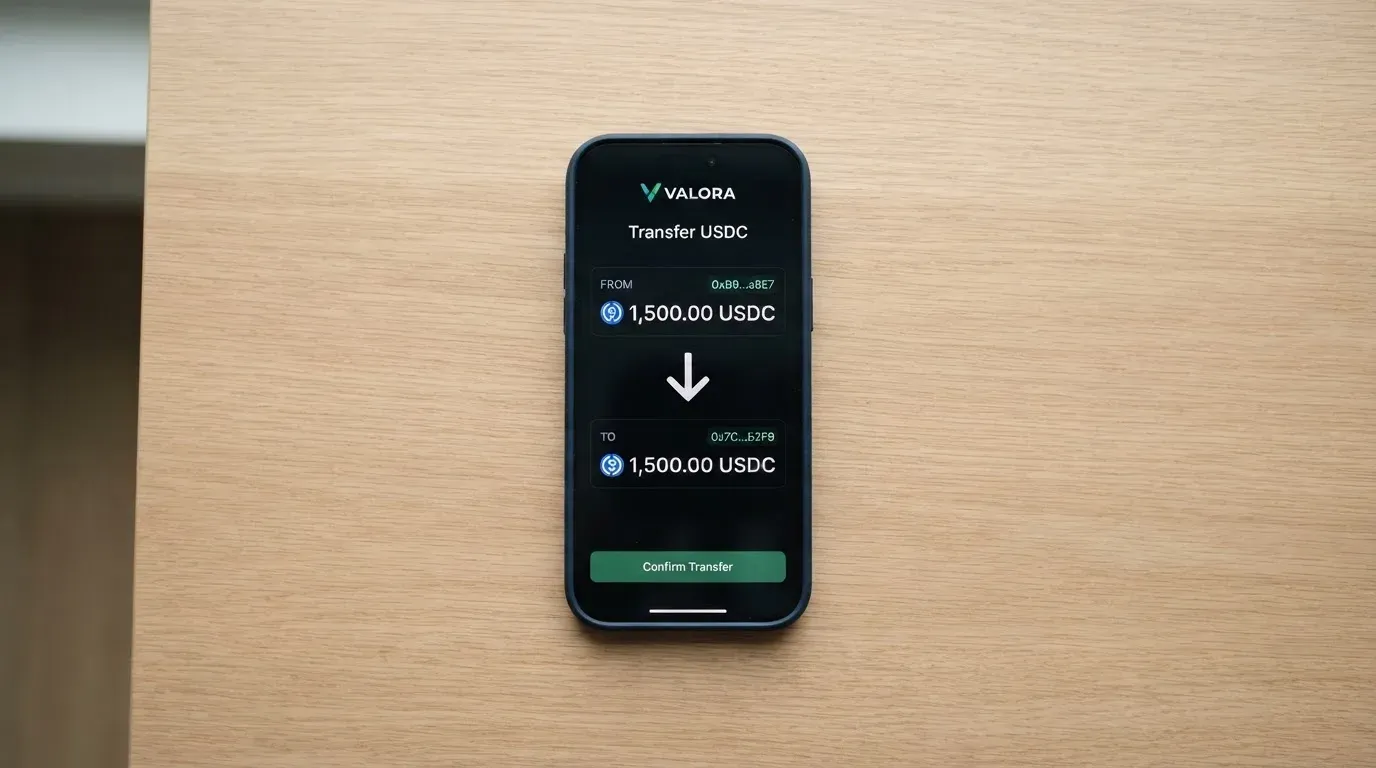
The crypto side is light on specifics. The site does not list the supported coins, the supported networks, the minimum top-up or the deposit fee. In a market where the difference between sending USDC on Ethereum, USDC on Solana and USDT on Tron can be the difference between a $2 fee and a $20 fee, the absence of a coin and network list is the single most practical gap in the public material. The same gap makes a mistake very expensive: blockchain transfers are typically irreversible, and a deposit on a network the card provider does not support, or to an address of another network, can be lost or sit in limbo until manual support recovers it.
The fiat side is more concrete. The euro account is an IBAN, so you can receive SEPA transfers, send SEPA transfers, send SWIFT transfers and make P2P transfers to other Wafee users. The marketing line for outgoing transfers is that you can “cash out your crypto and convert it into traditional currency whenever you need it with our instant conversion feature.” The site does not state the SEPA fee, the SWIFT fee, the conversion spread or the cut-off time.
In practice, the safest pattern with a card like this is to start with a small test. Send the smallest amount the provider will let you in (if there is a minimum, ask support; if there is not, send a token amount), wait for it to land, and only then send the rest. The cost of the test is one network fee; the cost of skipping the test, on a non-refundable blockchain transfer, can be the whole amount.
Paying with it every day
For everyday use, the public site is more forthcoming. The cards are Visa, both physical and virtual, and the site explicitly says contactless payments work through Apple Pay and Google Pay. Tokenised mobile wallets are a real plus: the card number is replaced with a device-specific number held in the Secure Element of the phone, each payment uses a one-time dynamic code, and the issuer can restrict a tokenised number to specific channels (for example, blocking magnetic-stripe fallback) without reissuing the plastic.
What the site does not say is also worth knowing. Blocked merchant categories (for example gambling, which many issuers block by policy rather than by law) are not stated. Cashback or rewards are not stated. The dispute process, the chargeback path and the time limits for raising a problem are not stated. The app rating, the app’s last update, the languages it ships in and whether it supports biometric login are all things you can only check once the app is in your hand, and the public site does not make that easy because the store buttons currently link to “#”.
The Visa acceptance question is the part that does work in your favour. “Spend crypto anywhere Visa is accepted” is a strong statement, and for a reader who travels or shops online, it means the card is not a special-purpose tool but a normal one. The Apple Pay and Google Pay support means the phone in your pocket is the way most people will actually pay, and tokenised wallets tend to fail less often at unattended terminals (parking, transit, vending) than magnetic-stripe cards do. The one thing to keep in mind is that merchants can decline a foreign-issued or prepaid-style BIN, and Address Verification Service (AVS) is largely a US/Canada/UK product, so a card from a small issuer is more likely to be challenged on a foreign checkout than a card from a big bank.
What can go wrong
The first thing to say is what I could not find: a Trustpilot page for Wafee, a Reddit thread about Wafee, or any independent user reviews. That is not the same as “no complaints” — it is more like “no public place where complaints would show up,” which for a young product is normal. But it does mean that the picture you have of Wafee is mostly the picture Wafee paints of itself.
The company side is the place to start. Wafee Ltd is registered in Charlestown, Nevis, with the registration number C 57790 and an address at Suite 1, A.L. Evelyn Ltd Building, Main Street. Nevis is a common offshore company domicile, and registration there is not a regulatory authorisation: it is a corporate filing. The site does not name a banking licence, an e-money licence, a MiCA authorisation, a FinCEN registration or any other regulatory status. For a product that handles both your crypto and your euro balance, the absence of a named regulator is the part to push on.
The card side has its own tell. The Wafee FAQ links to “Walletto Terms & Conditions” and to a “Walletto Annex Prohibited Activity List.” Walletto is not introduced on the page, but the title and the prohibited-activity list strongly suggest Walletto is the card partner that actually issues the Visa or runs the programme. The role is not explained, and that matters: if the issuing bank or programme manager is Walletto, the regulatory standing of the card depends on Walletto’s licence, not on Wafee’s corporate registration. A reader who cares about the safety of the balance on the card needs to know that licence.
Security on the Wafee side is described in general terms: “cutting-edge encryption,” multi-factor authentication and security audits, with a “Custody Note” PDF linked from the page. The custody model itself (whether the crypto is held by Wafee, by Walletto, by a sub-custodian or in some self-custody arrangement) is not stated on the public page. With a custodial product, that is the central question: who holds the private key, and what happens to the funds if that party fails? With a self-custody-linked product, the answer is different, but it is still the central question. Either way, the Custody Note PDF is the document to read carefully before funding.
The support side is thin. Contact channels are an email address ([email protected]), a contact form, an FAQ page, and social links to X, Facebook, Instagram, Discord and Telegram. The Telegram icon on the public page actually points at the Discord invite, which is a small but telling detail: the social icons are not all set up correctly. Hours of operation, supported languages and the expected response time are not stated.
The “what can go wrong” list, then, has three layers. The first is the everyday card-failure pattern: a closed programme, a suspended issuer or a banking-partner change can end a card product with notice, and the closed programmes of 2018 (WaveCrest in Europe) and 2022 (the FTX US debit card, after Visa terminated its global agreements) are the precedents. The second is the regulatory layer: if Wafee or Walletto does not hold a relevant licence in your jurisdiction, your protections as a customer are limited. The third is the operational layer: a small team, an offshore corporate domicile and a public site with placeholder links are not, on their own, signs of trouble, but they are signs that you should not commit more than you can afford to lose while the product matures.
What to take instead
If the gaps above are the gaps you cannot live with, three other products are worth a look. They are not perfect substitutes (each has its own rough edges), and they are presented as the alternatives Wafee itself would point you at, given the broad shape of “crypto card with an account.”
| Card | Score | Who it suits | The shape of the offer |
|---|---|---|---|
| International Visa Card | 6.7 / 10 | A user who wants a published fee schedule and a US-issued Visa | $5 one-time virtual card issuance, no maintenance fee, USD spending free, 2% FX on non-USD; physical card “coming soon”; blocked in several sanctioned and restricted countries (the rule is by residence or registration, not citizenship). |
| UNi Card | 6.1 / 10 | A user who wants a multicurrency Mastercard with no annual or FX fees | “No annual fee or foreign transaction fee”; assets converted at “live OTC rates”; Spend-to-Earn rewards up to 3%; physical/virtual and residency rules not stated. |
| Whop Cards | 5.2 / 10 | A US user who wants a Visa with stablecoin cashback and team-card features | 5% cashback at select merchants (Uber and more planned); consumer availability in 31 US states and corporate availability in 41 states; unsupported country list includes Belarus, mainland China, Cuba, Hong Kong, India, Iran, Iraq, Israel, Myanmar, Nepal, Nicaragua, North Korea, Russia, Syria, Turkey, Ukraine, Venezuela, Vietnam; coins and networks not stated. |
The table is honest about the trade-offs. International Visa Card has the cleanest fee disclosure of the three, but it is US-issued and is blocked in a number of countries. UNi Card has a friendly fee story but is silent on residency and on coins. Whop Cards has the most concrete cashback and team features, but it is the most limited on residency and the most vague on funding. None of them is a perfect Wafee substitute, and Wafee’s “160+ countries” plus euro IBAN is a real differentiator if you live outside the US and the EU’s main corridors; the alternatives tend to be more useful inside the US than outside it.
A short way to read the comparison: Wafee is the broadest in geography, the thinnest in disclosure, and the most interesting as a euro IBAN product. International Visa Card is the most disciplined in pricing but the most restrictive in geography. UNi Card is the most generous in everyday fees but the most opaque in residency. Whop Cards is the most rewarding on selected merchants but the most limited in country coverage.
Who I would recommend it to
If you are a crypto holder who wants a euro IBAN with SEPA and a Visa that works in shops, online and on the phone, and you live in a country outside the usual EU/US corridors where the bigger brands do not serve you, Wafee is a serious candidate. The combination of “160+ countries,” a euro IBAN, SEPA in and out, and Visa with Apple Pay and Google Pay is a real product, not a marketing slide, and for the right reader it solves a real problem.
If you are a reader who needs the numbers first — the spread, the FX fee, the ATM fee, the supported coins and networks, the card currency, the issuing bank and the regulator — Wafee is not yet for you. The public site does not publish those numbers, and the alternative products above do a better job of laying their fees on the table. The honest answer is to wait, or to ask Wafee directly and only sign up once those numbers are in writing.
One last thought, and it is the one I would weigh most heavily. The Wafee FAQ points at Walletto’s terms and prohibited-activity list, which is the cleanest signal that the card programme is run by a partner. Before you put any meaningful balance on the card, ask Wafee, in writing, who the issuer is, which regulator supervises that issuer, and what happens to your balance if either Wafee or the issuer fails. The answers, more than any feature list, will tell you whether this is the right card for you.
Frequently asked questions
What is the Wafee card?
Wafee is a crypto-finance product that combines a euro IBAN account with physical and virtual Visa cards, lets you spend crypto where Visa is accepted, and supports SEPA, SWIFT and P2P transfers from the account. The company behind it is Wafee Ltd, registered in Nevis.
How does the Wafee card work?
You hold a crypto balance in Wafee, convert it to fiat inside the app, and the Visa card spends the resulting balance. The site also offers a euro IBAN account that can be funded by SEPA, so the card and the account are connected rather than separate products.
Is Wafee a bank?
Wafee does not describe itself as a bank. It is a company registered in Nevis (Wafee Ltd, C 57790), and the FAQ links to Walletto’s terms and prohibited-activity list, which suggests Walletto is the card partner. The site does not name a banking or e-money licence.
Who owns Wafee?
The public site does not name the owners or the management team. The legal entity is Wafee Ltd, registered in Charlestown, Nevis, and the card partner is referenced as Walletto, but ownership and shareholder structure are not disclosed on the pages I could read.
Is the Wafee card available in my country?
Wafee says it is “Available in 160+ Countries” but does not publish a country list. The marketing material shows flags for Brazil, Argentina, Mexico, Egypt, Nigeria, Jamaica, Turkey and the UAE. The most reliable way to confirm is to email [email protected] with your country of residence and ask.
Does the Wafee card require KYC?
The sign-up process and the documents required for KYC are not stated on the public site. As with any regulated card product, expect an identity check, a proof of address and possibly a source-of-funds step; the specifics need to be confirmed with Wafee before you upload documents.
How do I top up the Wafee card?
You top it up by converting crypto inside the app to fiat on the euro IBAN, and the card spends that balance. The site also lets you receive SEPA, SWIFT and P2P transfers into the euro account. The supported coins, supported networks, fees and minimums are not stated on the public pages.
How do I add the Wafee card to Apple Wallet?
Wafee says the cards work with Apple Pay and Google Pay for contactless payments. The standard flow in a tokenised wallet is to open the wallet app, add a card, scan or type the card details and verify with the issuer; the Wafee app’s actual steps will be clearer once you have signed in at app.wafee.co.
Is the Wafee card safe?
Wafee describes “cutting-edge encryption,” multi-factor authentication and security audits, and links a “Custody Note” PDF. The custody model, the issuing bank, the regulator and the insurance on customer funds are not stated on the public pages, so a precise answer requires reading the Custody Note and the Walletto terms directly.
How do I close my Wafee account?
The close-account process is not described on the public site. The standard pattern is to withdraw any remaining fiat balance by SEPA or SWIFT, convert any remaining crypto to fiat, withdraw that as well, and then contact support to request closure; the support email on the site is [email protected].
App and neobank cards in the catalogue – cryptocardcatalog
Content created by the «cryptocardcatalog» team