
A cheap virtual Visa and Mastercard, but thin on disclosure
 Available in US
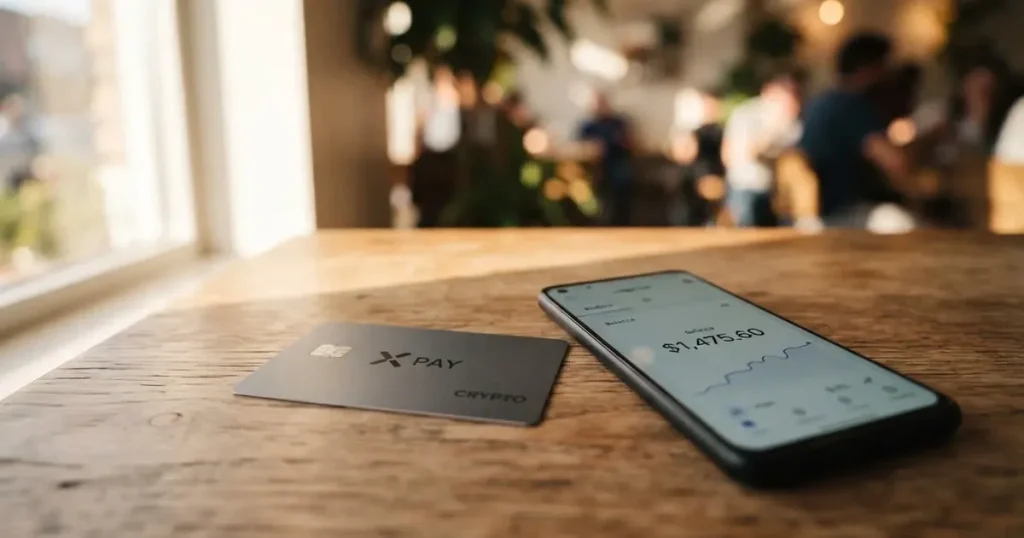
VCCHQ is not a bank, and it does not present itself as one. It is a small card programme that sells prepaid virtual Visa and Mastercard cards, funded by transferring USDT to a wallet address, with no identity verification at signup. That is the whole product in one sentence, and the appeal is obvious: no documents, no credit check, a card number in your hands, and money you already hold in crypto rather than money you have to borrow. The card reads as a tool for spending a balance, not for building a relationship with a financial institution — and if that is what you are after, the pitch is clean and fast.
The difficulty is everything the public pages do not tell you. No legal entity is named. No address. No issuer. No monthly fee figure, no FX fee, no ATM terms, no stated currency, no age requirement, no app, no stated Apple Pay or Google Pay support. The site footer carries a copyright line running from 2018 to 2026 and that is the only hint of longevity you get. Support exists on Telegram, WhatsApp and email, which tells you how you will be answered if something goes wrong, but not by whom or under which law.
So: a genuinely simple mechanism wrapped in almost no disclosure. My score is 4.9 / 10. It is not a bad card; it is an opaque one, and opacity is what you are actually buying when you sign up.
The conditions described here are current as of October 28, 2026.
The score, criterion by criterion
| Criterion | Mark | Why |
|---|---|---|
| Who can get it | 9 / 10 | Advertised as “Global” with no country list and no stated exclusions, no KYC, and delivery by post for the physical form |
| Cost | 2 / 10 | Standard issues at $3, Premium at $6, Ultra BIN 428842 at $15; a top-up adds $2 plus 8%, so the page’s own example — a $30 top-up costing $34.40 — is the number to hold on to |
| Top-up options | 6 / 10 | USDT only, on TRC20 or BEP20, to a wallet address issued per order, with a minimum load of $5 on Standard and $30 on Premium and Ultra |
| Reliability and complaints | 4 / 10 | No legal entity, address or issuer named; Trustpilot sits at 3.5 from 5 reviews, with one negative report from December 2021 about a delayed order |
| Everyday use | 3 / 10 | Virtual only, on Visa or Mastercard, issued immediately after a transaction hash is checked; no app, and Apple Pay, Google Pay and ATM use are not disclosed |
Total: 4.9 / 10.
Read the two strongest rows and the two weakest together and you get the shape of the card. Accessibility is excellent — nobody is excluded on paper, which is genuinely rare. Cost is poor in absolute terms because 8% on every load is not a rounding error. Everyday use is the weakest row and it is the one that decides whether the card is a curiosity or a tool: a virtual card with no stated mobile wallet support, no stated ATM access and no app is a card for online payments, and online payments are exactly where declines bite hardest.
Who it suits: someone who already holds USDT, spends online, wants a card number quickly, and does not want to hand over identity documents to anybody. Who it does not suit: anyone who needs a physical card, who spends in person day to day, who needs Apple Pay or Google Pay, who wants to see a named company with a regulator behind it, or who plans to load meaningful sums. On a 2% plus 8% load fee structure, meaningful sums stop making sense fast.
Will they give you the card?
They say the answer is everywhere: the word used is “Global”, and there is no country list and no list of exclusions published. That is a strong accessibility claim, and I want to be careful about what it does and does not mean. It means no one has published a rule that keeps you out. It does not mean you will clear every internal risk check, because a provider that publishes nothing also publishes no criteria by which you could predict the outcome.
This is the single largest gap in the whole card, and it is worth pausing on even if you never read the rest of this review. In the EU, customer due diligence for a regulated firm covers name, address, date of birth, nationality and identity documentation, a sanctions check, the purpose of the relationship, and whether you are a politically exposed person. In the US, the customer identification programme requires name, date of birth, address and an identification number. Nationality is recorded and screened separately from residence, because sanctions screening and issuer risk policy are applied to citizenship and country of birth as well as to country of address.
Those regimes bind the licensed institutions in this chain, not the brand in front of you. A card number carries an issuer identification number at the front — six or eight digits that identify the institution that issued it, which merchants can look up to see which institution and country issued the card, and which may prompt extra scrutiny when the issuer country differs from the billing address. That is why a card issued in one country can look foreign to a shop in another, and it is why an unnamed issuer here is not a technicality. You cannot check a register for a company that does not name itself.
I am not going to tell you how to get around any of this. I am telling you that the absence of a stated eligibility framework means you are applying blind, and that the person who decides is not published.
How to get it
The signup path is short, which is the product’s real feature:
- Choose your card tier.
- Enter an email address.
- Pay USDT.
- Submit the transaction hash (TXID).
- Support verifies it.
That is the whole sequence, and it is genuinely quick. There is no KYC — the card states it plainly — and there are no KYC levels, no tiered verification ladder, and no upgrade path. A minimum age is not stated.
What you get is a virtual Visa or Mastercard. Premium and Ultra Premium carry BIN 428842; the card currency is not stated. Delivery is virtual, and the site advertises “Instant Delivery” once the transaction hash has been verified.
Three tiers exist:
| Tier | What the card says distinguishes it |
|---|---|
| Standard | The entry tier; BIN not described |
| Premium | “Enhanced Approval BINs” |
| Ultra BIN 428842 | “Elite Flagship BIN” |
Those tier descriptions are marketing phrases, and I would not build a plan on them. “Enhanced Approval” and “Elite Flagship” tell you how the issuer would like to be seen, not what approval rates you will experience at any particular merchant. The one concrete technical fact in the whole table is BIN 428842, and a BIN is just the front of the card number — it identifies the issuing institution and country, which is useful precisely when you want to know who issued the card.
Since there is no app, “instant delivery” means you receive card details after a human check, and the only account surface described is support on Telegram, WhatsApp or email. You are asking a stranger to verify a hash, then handing over the number that spends your money. That is a real dependency, and it is worth being honest with yourself about it.
Fees: what it really costs
Here is where the card stops looking cheap. Issuance is $3 on Standard, $6 on Premium and $15 on Ultra BIN 428842. On top of that, every load costs $2 plus 8%.

| Fee or limit | What the card states |
|---|---|
| Issuance, Standard | $3 |
| Issuance, Premium | $6 |
| Issuance, Ultra BIN 428842 | $15 |
| Monthly fee | Not stated |
| Top-up fee | $2 plus 8% |
| Conversion fee | Not stated separately; the 8% load fee is what is stated |
| FX fee | Not stated |
| ATM fee | Not stated |
| Minimum load, Standard | $5 |
| Minimum load, Premium and Ultra | $30 |
| Maximum, daily or monthly limits | Not stated |
| Card currency | Not stated |
| Network fees on deposit | Not stated |
| Withdrawal | Not stated |
Let the card’s own example do the work. A $30 top-up costs $34.40. That is $2 plus 8% of $30, and it means that for every hundred dollars you move onto the card, eight dollars of it never spends. This is not a percentage that hides in a footnote — it is the headline cost of using the product.
Now three everyday payments, so the shape of the thing becomes concrete.
A $12 subscription. You need at least the $5 minimum on Standard, so you would load $30 to cover it and pay $34.40 for $12 of spending. The fixed $2 has eaten a sixth of the subscription before you use it.
A $50 night out, paid online. To spend $50 you must have loaded at least $50. The load costs $4 in percentage terms alone, plus the $2 if you topped up from empty. Around $56 of your money becomes $50 of card balance.
A month of small purchases, say $200 total. Split into whatever loads you choose, the 8% alone is $16, and every load adds another $2. Five $40 loads cost $22 in fees — eleven percent of what you were trying to spend.
The reason this matters so much is what is missing from the table. The FX fee is not stated, and if you spend a card whose currency you do not know while holding a balance denominated in something you also do not know, the conversion cost is exactly the number you would want most and cannot find. The ATM fee is not stated, so I cannot tell you whether cash withdrawal works at all, let alone what it charges. Network fees on deposit are not stated either — those are charged by the blockchain, not by the card provider, so they pass through to you. A withdrawal function is not stated at all.
Top up: USDT, two networks, one address
Funding is narrow and specific. You send USDT on TRC20 or BEP20 only, to a wallet address issued per order. The fee is $2 plus 8%, and the page’s example reads “$30 Top-Up = $34.40”. Network fees are not stated.
Two things about this deserve your attention. First, the address is per order, which means it is not a standing address you memorise — you get a fresh destination each time and must send to the one that was just issued. That is a sensible design; it is also one more place for a mistake to happen, because the wrong address is not a mistake anyone can undo.
Second, understand what you are sending. Blockchain transfers are typically irreversible. A deposit sent on a network the provider does not support, or to an address belonging to another network, can be lost or need manual support recovery with no guarantee. USDT is a stablecoin — a token aiming to hold a stable value against a currency — and “despite the name, stablecoins are not necessarily stable”. Tether, which issues USDT, describes it as a token built on multiple blockchains with reserves intended to back it one-to-one, and USDT has been issued on networks including Ethereum, Tron, Solana, Polygon and Avalanche. Circle, which issues USDC, stopped supporting USDC on Tron in February 2024 — so if you are holding USDC and assume “Tron means USDC”, that assumption is wrong at the source.
A stablecoin promise is a claim about reserves, not a guarantee. Stablecoins can depeg: TerraUSD collapsed in May 2022, and USDC temporarily lost its peg in March 2023 during the US banking crisis. Tether also says it disables tokens in wallets on the OFAC sanctions list and has frozen funds tied to illicit activity, so stablecoins are not censorship-proof. None of that is a knock on USDT specifically; it is what you are holding when the card’s whole balance sits in one token.
Circle’s USDC, by contrast, says it is redeemable 1:1 for USD and fully backed by cash and cash equivalents with monthly reserve attestations — a useful contrast if you have a choice of what to hold, though this card takes only USDT.
And the smallest number in this section is the one that constrains you most: a $5 minimum on Standard, $30 on Premium and Ultra. If you wanted a card to spend a little occasionally, the minimums decide against it before the fee does.
Paying with it every day
Day to day, this is a virtual card number, on Visa or Mastercard, spending a prepaid balance. That last point is the structural fact to hold on to. A prepaid card draws on a stored balance, while a standard debit card asks the cardholder’s bank to withdraw funds from a linked account at the time of purchase. Many crypto cards behave like prepaid cards, and this one clearly does: in the pre-loaded balance model you convert or top up first, and the card spends only that balance, so the card cannot overdraw. That is a genuine safety property — no overdraft, no debt, no interest — but it also means you are spending down a bucket, not drawing on an account.
Everything else about daily use is unstated. There is no app. Apple Pay, Google Pay and ATM access are not disclosed. Wallet support is not stated. Rewards are not stated. A Refund Policy appears in the footer, but its text is not available to read.
The missing app is the one I feel most. Without it, you have no spending limits to set, no instant freeze, no notifications, no in-app top-up — the standard safeguards that come with mainstream cards. Typical safeguards look like app-based two-factor authentication, an instant card freeze, spending limits, 3-D Secure confirmation and tokenised mobile wallets. What you have instead is a card number and a Telegram thread.
Nor is there a stated 3-D Secure position. That matters, because 3-D Secure adds an identity check to online payments — the issuer assesses risk and either approves frictionlessly or challenges you, for example with a one-time code or biometric. Visa’s brand is Visa Secure and Mastercard’s is Identity Check. Whether this card runs it is not something the public pages answer.
Two merchant-side behaviours will affect you more than the card’s own settings. A merchant category code is a four-digit number classifying a business by goods or services, and MCC 7995 covers gambling — casinos, betting, lotteries. Many issuers block it on specific cards by policy rather than by law, and the blocked list varies by issuer. This card’s policy is not published. And address verification compares numeric parts of the billing address a buyer typed with issuer records; it is mainly offered in the US, Canada and the UK, and is generally unavailable for foreign-issued cards, which can cause declines. On a virtual card from an unnamed issuer, assume some online checkouts will simply not work.
Also worth knowing: a declined authorisation may leave a hold on your funds that can remain for several days, typically up to seven. That is a real possibility with a prepaid balance and a small balance.
If a payment goes wrong, a chargeback is a refund ordered by the card issuer to settle a dispute, with reason codes such as fraud, duplicate billing or goods not received. Whether you can use one here is not stated — and note that prepaid-card coverage varies and should not be assumed.
What can go wrong
Nothing bad has happened publicly. There is no official incident on record. That is worth saying plainly, because in this category absence of a scandal is not the same as a track record — there is very little track record to have a scandal in.
What exists is thin. Trustpilot shows 3.5 from 5, with none of the reviews in the last twelve months as of when I read it on 21 October 2026, and one complaint from December 2021 about a delayed order — a user report, not an adjudicated fact. Five reviews in total is not a sample; it is closer to an anecdote with a rating attached.
The bigger risk is structural, and it is the one no amount of good reviews would fix. The company behind this is not stated: no legal entity, no registered address, no named issuer. The only corporate signal is a footer copyright line reading “© 2018 – 2026 VCCHQ”. A copyright line is a statement about a document, not a corporate filing. Compare that with what a regulated provider gives you, where you can check ESMA’s interim register of authorised crypto-asset service providers, white papers and non-compliant entities, or national registers, before you ever send money.
This matters because a card programme is not one institution but a chain. The card network routes messages and sets the rules; the issuer — a bank or e-money institution licensed to issue under the network’s licence — holds the card programme; the crypto brand is often only a programme manager or front-end that markets the card. Visa and Mastercard do not issue crypto cards to consumers themselves; they license issuers, and they can suspend a programme. In November 2022 Visa said it had “terminated our global agreements with FTX”, and the FTX US debit card programme was wound down by its issuer. In 2018 WaveCrest, a Visa issuer that supplied crypto card brands, was suspended by Visa in Europe, closing all WaveCrest-issued Visa programmes.
The pattern to learn from those is not “crypto cards fail”. It is that programmes close, and what happens to your balance then depends on the paperwork. Programme closures typically give a notice period, then stop spending and loading, then ask users to withdraw remaining balances. If the entity holding your funds is not named, you do not know who would be obligated to return it.
Three further gaps. Security arrangements are not stated — no disclosure of how card details are stored, who can see them, or whether staff can view a balance. Support is a Telegram account (@worklinkx), a WhatsApp number (+44 7723 833291) and an email ([email protected]), with hours and languages not stated, so there is no published service level when your card stops working. And there is no news or announcements section disclosed, so you would have no warning of a policy change.
Add the fee structure and the arithmetic starts to bite. On a 2% plus 8% load, a year of moderate use quietly costs a meaningful share of your spending. Add an 8% pegged-token exposure and a virtual card with no mobile wallet, and the realistic failure modes are: a load that arrives on the wrong network, a merchant that declines the BIN, a support channel that is slow when you need it, and an unnamed counterparty if any of it goes wrong at the company level.
One last category point, because it applies to you whether or not you ever touch this card. A seed phrase is typically 12 to 24 words and is an unencrypted form of the private key — anyone who obtains it can restore the wallet and spend its funds. With a custodial provider the credentials are held by them, so you must trust them completely; transfers are typically irreversible and a stolen key has no recovery, because the network cannot freeze or return funds. Custodial platforms have a real record of losses: Mt. Gox (about $350 million reported stolen, 2011–2014), Coincheck (about $400 million, 2018), Ronin Network ($625 million, 2022).
What to take instead
None of these is a recommendation, and none is a like-for-like swap — they differ on geography, currency and fee structure. They are here so you can see what the same general idea looks like where more is published.
| VCCHQ | Cardex | CardFlow | HyperCard | |
|---|---|---|---|---|
| Score | 4.9 / 10 | 5.6 / 10 | 4.9 / 10 | 4.7 / 10 |
| Reach | “Global”, no list or exclusions stated | “One crypto card, 200+ countries”; no list or exclusions; App Store listing is Naira-focused | Aimed at Nigeria, “Nigerians and global users” | No country list on official pages; App Store says the card works in “more than 176 countries” (acceptance, not eligibility) |
| Card | Virtual Visa and Mastercard; Premium and Ultra BIN 428842 | Debit crypto card on VERVE, Visa, Mastercard and UnionPay; virtual and physical; card currency Naira per listing | Virtual USD Mastercard, created in about 3 minutes | Prepaid “HyperCard”; network not stated on the App Store page; balance in USD or EUR |
| Cost | $3 / $6 / $15 issuance; $2 plus 8% per load | Not stated | “Creating a virtual card is completely free” (site FAQ) | Not stated; App Store page lists no fees |
| Fees | 8% on loads; FX and ATM not stated | Real-time crypto-to-fiat conversion at payment, with an “AI-Powered Conversion Rate” claimed to scan global rates; no percentage stated | Not stated | Not stated on the pages available |
| Funding | USDT only, TRC20 or BEP20, address per order | USDT, USDC and BTC wallets; networks not stated | Bitcoin, USDT, ETH or Naira bank transfer; networks not stated | Deposit crypto such as USDT, BTC, ETH in the app, converted to USD or EUR; networks not stated |
| Rewards | Not stated | Not stated | Not stated | Not stated |
Three honest observations from that table.
Cardex is the only alternative with physical cards and a multi-network lineup including UnionPay, and it scores highest at 5.6. Its conversion claim is unverifiable from the outside — no percentage is published — and its App Store listing is Naira-focused, so it reads as a different product aimed at a different market.
CardFlow is closest to VCCHQ in shape: a virtual USD Mastercard created in 3 minutes, free to create, aimed at Nigeria with a stated wider ambition. It scores the same 4.9. Its fees are not stated, which means the comparison with VCCHQ’s published 8% cannot be completed.
HyperCard is a prepaid card with a USD or EUR balance, funded by depositing crypto in the app. Its network is not stated on the App Store page, and “more than 176 countries” describes where the card is accepted, not who can get one — a distinction worth holding on to across this whole category.
None of them publishes a legal entity on the pages I could read either. That is the category’s condition, not VCCHQ’s alone.
One regulatory note for European readers, since it shapes what “regulated” means here. MiCA, the EU’s markets-in-crypto-assets regulation, took legal effect in June 2023; its rules on asset-referenced and e-money tokens applied from 30 June 2024, and the remaining provisions, including crypto-asset service provider rules, from 30 December 2024. Under MiCA, e-money tokens may be issued only by a credit institution or an electronic money institution. Providers already operating under national law can continue only until 1 July 2026 or until they are authorised or refused authorisation, whichever comes first. Note that a card is a payment service regulated separately — e-money and payment-services law — while MiCA covers the crypto side, so a crypto card often depends on two licences. An EMI can issue e-money, payment cards and wallets but cannot lend, and must safeguard customer funds in dedicated accounts or by insurance; those funds are not bank deposits and may not sit under a deposit guarantee scheme. In the US, FinCEN guidance treats administrators and exchangers of convertible virtual currency as money transmitters, while ordinary users buying things are not.
Who I would recommend it to
I’d recommend this card to a narrow person with a clear head: you already sit on USDT, you spend online, you have no access to an ordinary bank card or no intention of using one, and you treat whatever you load as money you are willing to lose. If that is you, the mechanism works, the signup takes minutes, and the 8% is the price of the convenience rather than a trap.
I’d tell everyone else to pass. Specifically, I would not touch it if you need a physical card, if your week involves paying in shops, if you live on Apple Pay or Google Pay, if you intend to load more than a modest amount, if you need to know what a foreign-exchange fee is, or — most importantly — if being unable to name the company holding your money is something you cannot accept. That last one is not caution on my part; it is the single fact that moves this from a 6 to a 5.
The card scores 4.9 out of 10. Its strongest features are access and speed; its weakest are cost, disclosure and everyday usability. Access to a payment card is genuinely hard for some people, and this route exists without paperwork, which has real value. But the price of that access is 8% on every top-up, a virtual-only product with no stated mobile wallet or ATM support, and a provider that names no entity, no address and no issuer. You are not buying a banking relationship here. You are buying a card number and a promise made by someone whose legal identity you cannot look up.
If your reason for wanting this card is that ordinary cards have closed on you, that reason deserves a better answer than this one. If your reason is curiosity about spending crypto directly, this is a clean and honest way to try it — with small sums, and understanding that the balance you load is the balance you stand to lose.
Frequently asked questions
What is VCCHQ card?
VCCHQ is a prepaid virtual card service. You choose a tier, pay with USDT, submit the transaction hash, and support verifies it before issuing card details. The cards are virtual Visa and Mastercard, plus a Premium and Ultra tier using BIN 428842. No app is provided, and no legal entity, address or issuer is named on the public pages. Treat it as a spending tool, not a bank account.
Is VCCHQ a bank or a regulated company?
Not on the evidence published. No legal entity, registered address or issuing institution is named anywhere on the public pages; the only corporate detail is a footer copyright line reading “© 2018 – 2026 VCCHQ”. A bank or licensed e-money institution would normally be identifiable in a register. Because you cannot look up who stands behind it, you also cannot check what safeguards apply to money you have loaded. That is the central risk here, and it is why my score lands where it does.
Does VCCHQ require KYC?
No. The card states “NO KYC”, and there are no KYC levels or upgrade tiers. Signup asks for an email, a payment and a transaction hash. A minimum age is not stated. Note that the absence of a KYC requirement on the brand’s side does not remove obligations from any licensed institution in the issuing chain, and no issuer is named for you to check.
What does it cost to get and use the card?
Issuance is $3 on Standard, $6 on Premium and $15 on Ultra BIN 428842. Each top-up costs $2 plus 8%, so the page’s own example shows a $30 top-up costing $34.40. On $200 of spending spread over five loads you would pay about $22 in fees. The monthly fee, FX fee, ATM fee and network fees are all not stated, so the full cost of a year of use cannot be calculated from public information.
How do I top up the VCCHQ card?
You send USDT on TRC20 or BEP20 only, to a wallet address issued for that order, then submit the transaction hash for verification. The minimum load is $5 on Standard and $30 on Premium and Ultra. Because blockchain transfers are typically irreversible, sending on an unsupported network or to an address of another network can mean losing the funds or needing manual recovery with no guarantee. Check the address and network against the order every time.
Can I use VCCHQ with Apple Pay or Google Pay?
The public pages do not say, and there is no app. Apple Pay works by replacing the card number with a device-specific number stored in the Secure Element, with a one-time dynamic security code per payment, so support depends on the issuer enabling tokenisation. Since no issuer is named and no wallet support is disclosed, assume it is unavailable. If tap-to-pay in stores is essential to you, this card is the wrong shape.
Is VCCHQ card safe to use?
Nothing bad is on the public record — there is no official incident, and Trustpilot shows 3.5 from 5 reviews with none in the last twelve months, the single negative report being a delayed order from December 2021. That is too small a sample to be a track record. Against that, no legal entity is named, security arrangements are not stated, and support runs through Telegram, WhatsApp and email with no published hours. Load only what you can afford to lose.
Can I use the card in my country?
The card says “Global” and publishes no country list and no exclusions, so nobody is excluded on paper. But no eligibility criteria are published either, and a merchant can look up the card’s issuing institution and country and apply extra scrutiny, while some shops decline prepaid or foreign-issued cards. A declined authorisation can also leave a hold on your funds for several days, typically up to seven. Availability of merchants is a separate question from acceptance of your application.
How do I withdraw money or get a refund?
Withdrawal is not stated at all — there is no published function, limit or fee, so do not assume you can cash out through the card. A Refund Policy is listed in the site footer but its text is not available to read. If a purchase goes wrong, a chargeback is a refund ordered by the issuer, with reason codes such as fraud, duplicate billing or goods not received; whether prepaid coverage applies here varies and should not be assumed.
Is it worth it, and what should I check first?
Worth it for one situation: you already hold USDT, you shop online, you cannot or will not use an ordinary bank card, and you treat the balance as disposable. Not worth it if you need a physical card, cash, mobile wallets, or a named counterparty. If you do proceed, check four things before sending anything — that you are on the correct network and address for your order, that you have read the 8% plus $2 load fee, that you have looked for a legal entity and issuer name beyond the footer, and that you have loaded the smallest amount that works.
Virtual cards in the catalogue – cryptocardcatalog
Content created by the «cryptocardcatalog» team