
The Binance Card in 2026: A Solid Everyday Card for Brazilian Crypto Holders, and Little Use for Anyone Else
 Available in US
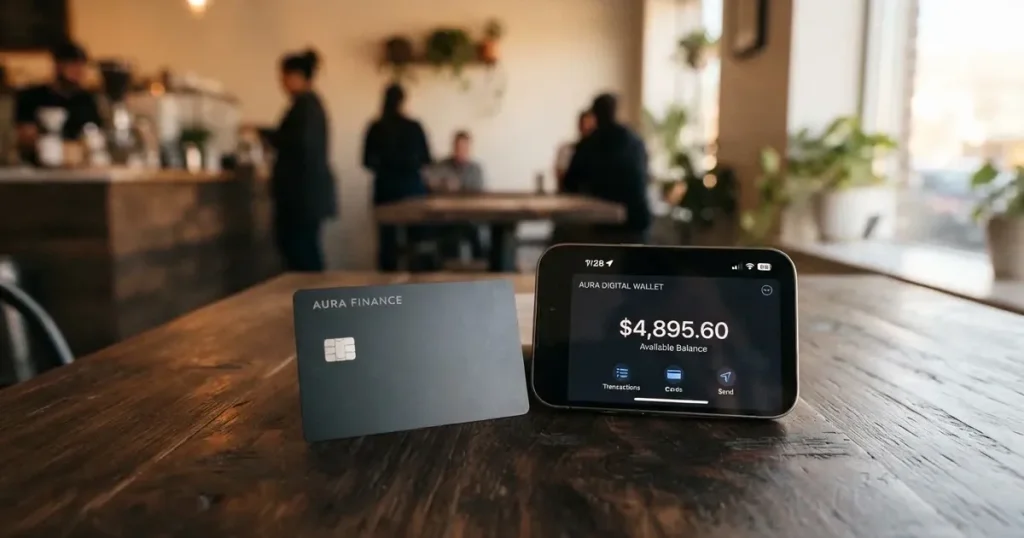
If you have come here wondering whether the Binance Card is a good idea, you are probably already holding some crypto, and you are probably outside the United States, Europe or the United Kingdom. That instinct is correct, and it is worth acting on early. The Binance Card is, on its own official pages, a Brazil product. Everything else you have read — that it works across Europe, that it is available in dozens of countries, that you can use it anywhere in the world — comes from third-party sites, and some of it no longer matches the official record at all. Below I walk through what the card’s own materials actually say, then what the unofficial sources add on top, then whether any of it is worth your time.
The conditions described here are current as of October 28, 2026.
Verdict: 5.7 out of 10 — a good card in one country, nothing outside it
The Binance Card scores 5.7 out of 10. That is not a polite number, and I am not going to soften it. It is the arithmetic of a product that is genuinely excellent for a narrow group of people and close to irrelevant for everyone else.
Who it suits: Brazilian residents who already keep their crypto on Binance and want to spend it in everyday life — groceries, a coffee, a taxi. If that is you, the card does its job well, and at 9 out of 10 it is the strongest everyday-use offering in this whole comparison. Who it does not suit: anyone hoping for a worldwide travel card, anyone who wants to avoid conversion friction, anyone whose bank blocks crypto-linked cards, and anyone who plans to hold large balances on a prepaid product. This card is a Brazilian spending tool first and a crypto product second.
Here is how the score breaks down, criterion by criterion.
| Criterion | Mark | Why |
|---|---|---|
| Who can get it | 3 / 10 | Officially one country: Brazil. Unofficial sources add Australia, New Zealand and Peru; EEA and UK support ended in December 2023 |
| Cost | 6 / 10 | Officially conversion 0.9%, FX 1–2%. Unofficial sources say issuance and monthly fees are 0, FX 2%, two free ATM withdrawals a month then 1.50 |
| Top-up options | 7 / 10 | Binance Funding and Spot balances, with a wide range of assets and an order setting to choose which 3–12 assets are spent first |
| Reliability and complaints | 5 / 10 | The 2023 launch release named Dock as issuer; unofficial sources name Immersve and Pomelo in Brazil. Trustpilot disabled Binance’s rating over fake reviews |
| Everyday use | 9 / 10 | Virtual and physical in Brazil, Apple Pay and Google Pay, ATM with two free withdrawals a month |
The pattern is obvious once you look at it. The card is not weak; it is narrow. Everything that scores well is about how it performs inside Brazil, and everything that scores badly is about being available, portable and trusted. If your question is “is this the best card for spending crypto in Brazil?”, the answer leans yes. If your question is “is this the best card for me, wherever I am?”, the answer is almost certainly no.
Will they give you the card?
Officially, one country: Brazil. That is the line the card’s own launch coverage draws — open to Binance users in Brazil with a valid national ID. It is a narrow statement, and it is the only one the official material supports.
Everything else is unofficial, and I am flagging it as such. Third-party card directories report Brazil, Australia, New Zealand and Peru as verified regions, and they also note that EEA and UK card support ended in December 2023, with the US never joining at all. Another aggregator lists Armenia, Brazil, Colombia, Mexico and Peru as available, with most of Europe restricted. Read those as other people’s pictures of the card, not as the card’s own promises. They disagree with each other — that alone should tell you how much weight to put on them.
The practical test is simple, and you can run it before you spend ten minutes on an application: open Binance’s card page for your country. If your country is not Brazil, the honest answer is that you should not plan around this card. Assuming otherwise is how people end up rejected at the KYC stage after uploading documents.
How to get it
The official record on the application process is thin. The card’s public pages say KYC is required as part of registration by the card issuer, involving photos and documents, and that is essentially the whole official story. Levels, how long verification takes, proof of address, age requirements — the official pages do not state any of it. I want to be straight with you about that rather than filling the gap with guesses.
What unofficial sources describe for Brazil is more concrete: a CPF, a photo ID and a selfie. That is a standard Brazilian identity stack, and it is consistent with how the country’s regulated payment institutions normally onboard customers.
The card itself is described in the official 2023 launch release title as a “prepaid crypto card”. Whether it is virtual or physical, and which currencies it comes in — the official pages do not say. Unofficial sources fill in the rest: the global programme is virtual-only in USD, while the Brazil version is virtual and physical and denominated in BRL. Delivery timing, again, is not stated officially; unofficial sources put the Brazilian physical card at about 14 days and the virtual card as instant.
So the sequence you would expect in Brazil is: register on Binance, complete KYC with CPF and photo ID, pass the verification, then add the card to your Apple Pay or Google Pay straight away if you want to use it before the plastic arrives. Treat every step of that as unofficial, because that is what it is.
Fees: what it really costs you
This is the section where I would push hardest, because the official material is unusually quiet and the unofficial material is unusually confident — and those two facts together are a warning.
Officially, two numbers are given: a conversion fee of 0.9%, and an FX fee in the range of 1–2%. The launch release adds that BRL payments carry a zero fee, and that the 0.9% conversion applies when you pay with crypto. Issuance and monthly fees, spending and ATM limits, and supported currencies are all — not stated. The card’s public pages are effectively empty of fee detail.
Here is what the unofficial sources add, and what I believe of each.
| Fee or limit | Official | Unofficial (third-party, unconfirmed) |
|---|---|---|
| Card issuance | not stated | 0. The Brazilian physical card is free with a balance of about 10 USDT equivalent; 30 BRL if cancelled within the first year |
| Annual / monthly fee | not stated | 0 |
| Crypto conversion fee | 0.9% | 0.9%, with 0.1% for USDC |
| FX fee | 1–2% | 2% in Brazil and most countries; 3% in New Zealand; 1–2% on non-BRL |
| ATM withdrawal | Zero promised at launch; footnote says third-party and network fees may apply; current terms not stated | Two free withdrawals a month, then 1.50 each. Brazil limit 3 per day and 30 per month; daily BRL 3,000 |
| Daily spend | not stated | Brazil by KYC level 1/2/3: 25,000 BRL |
| Monthly spend | not stated | Brazil by KYC level 1/2/3: 50,000 / 50,000 / 150,000 BRL |
| Yearly spend | not stated | Brazil by KYC level 1/2/3: 200,000 / 450,000 / 600,000 BRL |
One more unofficial detail that has a real cost attached: fees are not refunded, and refunds are paid in USDC. If you pay with crypto, spend a little, and then cancel the purchase, you do not get your conversion fee back in the same currency you spent in.
Now the part I actually want to walk you through — three everyday payments, so you can see the fees attach to real moments rather than abstractions.
Paying in reais with a BRL balance. This is the cheapest path, and it is the one the launch release pointed at: zero fee on BRL payments. If you top up in BRL and spend BRL, the 0.9% conversion never enters the picture. In practice this means holding some reais balance alongside your crypto.
Paying for a coffee with crypto. The card converts your crypto to pay the merchant, and the 0.9% conversion fee applies. That is 0.9% of the transaction on top of whatever spread sits in the conversion rate. Spend it daily and it adds up; a 30% cashback rate elsewhere would be irrelevant here because this card’s rewards are far smaller (see below).
Paying in a shop abroad, or in dollars. Now the FX fee lands, unofficial 2% in most countries and 1–2% on non-BRL. And this is exactly the scenario where a Brazilian BIN can be refused: merchants look up the issuer country from the card number, and a card issued in one country can look foreign to a shop in another. Address Verification Service, which compares the billing address a buyer types with issuer records, is mainly offered in the US, Canada and the UK and is generally unavailable for foreign-issued cards — which causes declines. A prepaid card from another country is also, by definition, the kind some merchants decline. So for travel spending, this card is at best uncomfortable.
My honest read on cost: 6 out of 10. Zero issuance and zero monthly fees are genuinely good, and paying in reais costs nothing extra. But a 0.9% conversion plus an FX fee on top, on a prepaid product with no deposit protection, is not a bargain — and the fact that the card’s own pages will not confirm the fee schedule is the reason this section feels thin.
Top up: where the money comes from
The official pages say nothing about this. Not the funding source, not the top-up methods, not how you move money off the card back out. That is a real gap, and I would not paper over it.
Unofficial sources describe the picture as follows. The card draws on your Binance Funding and Spot balances — Flexible Earn in some versions of the app. The assets listed as usable include BNB, BTC, ETH, USDT, USDC, FDUSD, SOL, ADA, LTC and LINK, plus XRP. You can choose between 3 and 12 assets for the card to spend in the order you pick.
That last detail is the one I find genuinely useful, and it is worth understanding before you are standing in a shop. If you hold several assets and set USDC first, the card spends your USDC and leaves your BTC alone. Get the order wrong, and every coffee quietly eats a slice of a position you meant to keep.
The warnings from the wider category apply here with force. A blockchain transfer is irreversible. If you deposit on a network the provider does not support, or to an address belonging to a different network, the funds can be gone — or need manual support recovery with no guarantee of success. So check the network before you send. Also worth knowing: on Ethereum, fees are paid only in ETH, so a wallet holding USDT and no ETH cannot send; Tron fees are paid through bandwidth and energy, and Circle stopped supporting USDC on Tron in February 2024, so “USDC over TRC20” is not a native option any more.
Paying with it every day
This is where the card earns its best mark, 9 out of 10 — with the caveat that almost all of what makes it good comes from unofficial sources.
In Brazil, unofficial sources list Apple Pay and Google Pay support, alongside Mercado Pago and 99Pay. That is the practical daily-use story: link the card to your phone’s wallet once, then pay by touch or by face. The official pages say nothing about wallets, nothing about the app, and nothing about merchant acceptance. Worth noting in passing that the app itself is rated 4.7 out of 5 on the App Store across 117.4K ratings — but that is the Binance app, not a card-specific rating, so do not read it as a verdict on the card.
Rewards are the other half of daily life, and here the official number is “up to 3% cashback”. The 2023 launch release said up to 8% crypto cashback, and that figure is outdated; the card’s own material tells you to verify the current rate in the app. Unofficial Brazilian breakdown: 1.5% below 500 BRL a month, 2% between 500 and 4,999.99 BRL, and 3% from 5,000 BRL, capped at 500 BRL a month and paid in BRL. Other unofficial sources instead describe USDC at 1.5 / 2 / 3% across three tiers with crediting by the 10th, and up to 3% in BNB for Brazil and several other regions, with up to 2% across Latin America.
Do those two descriptions not agree? They do. So treat the cashback as “up to 3%, conditions vary, check your own app” rather than as a number you can plan a budget around.
One thing about prepaid card limits generally, because it bit me once and you should expect it: a declined authorisation can leave a hold on your funds that stays for several days, typically up to seven. A hotel deposit or a car hire pre-authorisation can therefore quietly reduce your available balance for the rest of the week.
If a transaction goes wrong — unauthorised, duplicate, goods not received — the official route is Binance Support: contact them at once with an explanation, transaction records and receipts. The card transactions FAQ points to Customer Support for disputes and refunds. The time frames are not stated. And note the Binance Terms position, which is not in your favour: you are liable for credited amounts in the event of a chargeback, and a chargeback can lead to your account being suspended or restricted. Debit card reversal rights and credit card rights differ between jurisdictions, and prepaid-card coverage varies, so do not assume you have the same protection a credit card holder would.
What can go wrong
Let me put the uncomfortable material in one place, because it belongs together rather than scattered.
The issuer picture is unsettled. The official 2023 release named Dock as the issuer, on the Mastercard network. Unofficial sources name Immersve Limited for the global programme under Mastercard Global Reach, and Pomelo Instituição de Pagamento Ltda in Brazil; one of them places Immersve in New Zealand. These contradict the official line, and the official line itself is from 2023. If you are being asked to trust an issuer identity, know that the public sources do not agree. Binance’s own ADGM entities — Nest Exchange Limited, Nest Clearing and Custody Limited, Nest Trading Limited, the last regulated by the FSRA — are listed on binance.com, but the page does not say which entity serves the card. Card-specific official news is not stated.
Complaints are documented, not sensationalist. Trustpilot disabled Binance’s TrustScore after detecting fake reviews — that is Trustpilot acting, not users shouting. There is a report from August 2025 about a payment partner charging for a failed crypto purchase. And complaints collected on Reclame Aqui, as reported by a third-party directory, cite uncredited promotions, unauthorised charges and dispute handling. Those are allegations, not findings — but they are the right allegations to know about, given that dispute handling is exactly where a prepaid card user is weakest.
Support for the card specifically is unclear. The cards page shows “24/7 Chat Support” and a Support Center link, but that is general Binance support, not a card desk. Unofficial sources say no dedicated card support channel is listed at all. For a product where the issuer is unclear and the support path is unclear, an emergency becomes an email.
The category risks apply in full. Custody means trust: whoever holds the credentials holds your funds. Transfers are irreversible. Stablecoins are not, despite the name, reliably stable — TerraUSD collapsed in May 2022, and USDC briefly lost its peg in March 2023 during the US banking crisis. And the crypto-card category has a history of disappearing: Visa terminated its global agreements with FTX in November 2022 and the FTX US debit card was wound down; WaveCrest, a Visa issuer that supplied crypto card brands, was suspended by Visa in Europe in 2018. Programmes close, and when they do, the pattern is a notice period, then spending and loading stop, then you are asked to withdraw what is left. Treat your card balance as spend-it-soon money, not savings.
And the ban list problem. A merchant category code of 7995 covers gambling — casinos, betting, lotteries. Many issuers block it on specific cards by policy rather than by law, and the blocked list varies by issuer. If that is something you rely on, ask rather than discover at the till.
What to take instead
Three alternatives from this comparison, and none of them is a clean win either. I am listing them so you can see the trade-offs rather than pick blind.
Bybit Card — 6.0 out of 10. This is the broadest of the three by a distance, and it is the one to look at if your problem with Binance is availability. Its official help centre lists card regions including Argentina, AIFC (Kazakhstan), Georgia, Kazakhstan, Australia, Mexico, Brazil, Peru and Asia Pacific. It is virtual and physical, with regional networks and currencies (ARS in Argentina, MXN in Mexico, BRL in Brazil, PEN or USD in Peru, USD across much of the rest). Virtual issuance is free in all regions until further notice, and physical issuance is 29.99 USD in Australia, 5 USDT in Argentina and Asia Pacific, 29.99 USDT in Georgia and Kazakhstan, and free in Brazil and Mexico. The crypto conversion fee is 0.9% in most regions and 0.5% in Argentina; FX is 2% in Australia, Asia Pacific, Georgia and Mexico, 1.5% in Brazil, 1% in Peru, and 7% in Argentina.
What makes Bybit the more serious option here is its funding and rewards model. The card has no balance of its own: it draws on the Funding Account and Flexible Easy Earn balance, fiat first, and sells crypto only if fiat runs short. Supported assets are BTC, ETH, XRP, USDT, USDC and GRAM, with a reorderable default priority. And its tier structure is published — Base at 2%, Alpha at 4% from 3,500 USD of monthly spend, up to Omega at 8% from 12,500 USD — with cashback in USDT, and from 2026-10-05 only crypto-funded transactions earn. Two caveats you should not skip: it explicitly says the product is not meant for European Economic Area customers and that all EEA participation is strictly prohibited; and in Argentina it carries VAT of 21% on foreign digital services, 30% tax on foreign transactions, and provincial gross-income tax of 1–13.2%. So for someone in Brazil or Mexico wanting a card, Bybit is a live option where Binance is not — with a similar conversion fee and a published rewards ladder.
MSX — 6.4 out of 10. The highest score of the three, and the thinnest documentation of the three. On the official pages I could read, eligibility, card type, cost, fees and funding are all not stated. There is essentially nothing to evaluate here yet, which is itself the finding: a card with no public fee schedule and no stated eligibility cannot be compared responsibly.
Young Card — 5.7 out of 10. Same score as Binance, but on a different profile. Its official pages also leave eligibility, card type, cost, fees and card-specific funding unstated. What it does publish is the rewards mechanic, and this is the part to read carefully: cashback is paid in YNG tokens, at a rate set by club tier — Essential 0.1%, Gold 1.8%, Platinum 3.6%, with Bronze and Silver not stated. Paying you in the platform’s own token is a different proposition from paying you in reais or dollars. It is exposure to their token dressed as a reward, and you should value it that way.
A quick summary of the comparison:
| Card | Score | Where it is documented as available | Headline cost |
|---|---|---|---|
| Binance | 5.7 / 10 | Brazil officially; more regions unofficial | 0.9% conversion, FX 1–2% official; 0 issuance and monthly unofficial |
| Bybit Card | 6.0 / 10 | Argentina, AIFC, Georgia, Kazakhstan, Australia, Mexico, Brazil, Peru, Asia Pacific; EEA excluded | 0.9% conversion in most regions, 0.5% Argentina; FX 1%–7% by country |
| MSX | 6.4 / 10 | Not stated officially | Not stated officially |
| Young Card | 5.7 / 10 | Not stated officially | Not stated officially; cashback paid in YNG tokens |
Who I would recommend it to
To be specific, because a recommendation that could mean anyone is not a recommendation.
I would recommend the Binance Card to a resident of Brazil who already holds crypto on Binance, spends in reais most days, and wants one card for the phone in their pocket rather than a second bank account. If you also link it to Apple Pay or Google Pay and pay in BRL, you are in the best case this product offers: no conversion fee on the payment, no issuance cost, and a card that handles the ordinary rhythm of shopping.
I would not recommend it to you if any of the following is true. You are outside Brazil and are counting on this card for travel or for daily spending where your crypto is not the main currency. You want predictable, published fees — the card’s own pages will not give you a complete schedule, and you should read that as a warning. You need real dispute protection and a clear issuer, because the public record names three different issuers. You intend to hold a meaningful balance on it, because a prepaid product offers no deposit guarantee and its balance is not a bank deposit. Or you would rather not have your identity checked at all, in which case no card in this category is for you anyway — KYC is a legal requirement for regulated businesses, including ongoing monitoring and suspicious-activity reporting, and it is not a formality you can decline.
If you are in Brazil and hesitant, the fairest summary is this: the daily-use experience is excellent, the cost of using it well is low, and the trust you are placing in an undocumented issuer is the price of admission. That is a reasonable trade for someone already inside the Binance ecosystem. For anyone else, the 3 out of 10 on availability is the whole answer.
Frequently asked questions
What is the Binance Card?
The Binance Card is a prepaid card that spends crypto or a stablecoin balance you hold on Binance. Rather than paying from a bank account, the card converts your crypto balance at the moment of payment and charges a 0.9% conversion fee officially. The 2023 launch release described it as a “prepaid crypto card”, which means it draws on a stored balance rather than a linked current account.
How does the Binance Card work?
You pay, the card network routes the transaction to the issuer, and the balance behind it is converted or drawn down to cover it. Officially, you pay a 0.9% conversion fee when paying with crypto, while BRL payments carry a zero fee. Unofficially, the card draws on Funding and Spot balances and spends assets in a priority order you can set for between 3 and 12 assets.
Is Binance a bank?
No. Binance is a cryptocurrency exchange and, in some jurisdictions, a regulated crypto-asset service provider — the cards page is not stating that it is a bank, and I am not going to call it one. The card itself is issued by a separate licensed institution. Note the important difference: EMIs must safeguard customer funds by segregating them or insuring them, but those funds are not bank deposits and may not be covered by deposit guarantee schemes.
Which countries can use the Binance Card?
Officially, Brazil only. Third-party sites additionally list Australia, New Zealand and Peru as verified, and one lists Armenia, Colombia and Mexico; the same sources report that EEA and UK card support ended in December 2023 and the US never joined. Treat all of those as unofficial and unconfirmed. If your country is not Brazil, check the card page for your own country before you plan anything around it.
Does the Binance Card require KYC?
Yes, and you cannot opt out. The card’s own material says KYC is required as part of registration by the card issuer, with photos and documents. Unofficial sources specify CPF, a photo ID and a selfie for Brazil. In the EU the checks cover name, address, date of birth, nationality, identity documentation, a sanctions check and politically-exposed-person status; if due diligence cannot be completed, rules require the institution to decline or end the relationship.
How much does the Binance Card cost?
Officially, a 0.9% conversion fee and an FX fee of 1–2%; issuance and monthly fees are not stated on the public pages. Unofficial sources say issuance and the monthly fee are 0, with the Brazilian physical card free against a balance of about 10 USDT equivalent and 30 BRL if cancelled in the first year. FX is reported as 2% in Brazil and most countries, 3% in New Zealand.
Can I use the Binance Card in Apple Pay or Google Pay?
Unofficial sources say yes, in Brazil, along with Mercado Pago and 99Pay — but the official pages say nothing about wallets. There is a practical reason to do it. Apple Pay replaces your card number with a device-specific number stored in the phone’s Secure Element, never on Apple servers, and each payment uses a one-time dynamic security code, which is meaningfully safer than handing over plastic.
How do I top up the Binance Card?
The official pages do not describe top-up methods at all. Unofficial sources say the card is funded from your Binance Funding and Spot balances, using assets including BNB, BTC, ETH, USDT, USDC, FDUSD, SOL, ADA, LTC, LINK and XRP. Check the network before sending anything: blockchain transfers are irreversible, and a deposit on an unsupported network or to the wrong address can be lost entirely.
Is the Binance Card safe?
There are real safeguards and real gaps. Prepaid balances cannot overdraw, mobile wallet tokenisation and spending limits reduce exposure, and freezing the card instantly is standard. Against that, the issuer identity is publicly unsettled — the 2023 release said Dock, unofficial sources say Immersve and Pomelo — no dedicated card support channel is listed, and Trustpilot disabled Binance’s rating after detecting fake reviews.
Where can I use the Binance Card?
Anywhere Mastercard is accepted, in principle, with real practical limits. About 90% of stablecoin market capitalisation sits in USDT and USDC, so those are the assets most likely to convert smoothly. But merchants can see your issuer country from the card’s first digits, and some decline prepaid or foreign-issued cards outright. Address verification is generally unavailable for foreign-issued cards, which causes declines. For a Brazilian card abroad, expect friction.
Exchange cards in the catalogue – cryptocardcatalog
Content created by the «cryptocardcatalog» team