
Trocador card, reviewed: a prepaid card bought with crypto, weighed against the alternatives
 Available in US
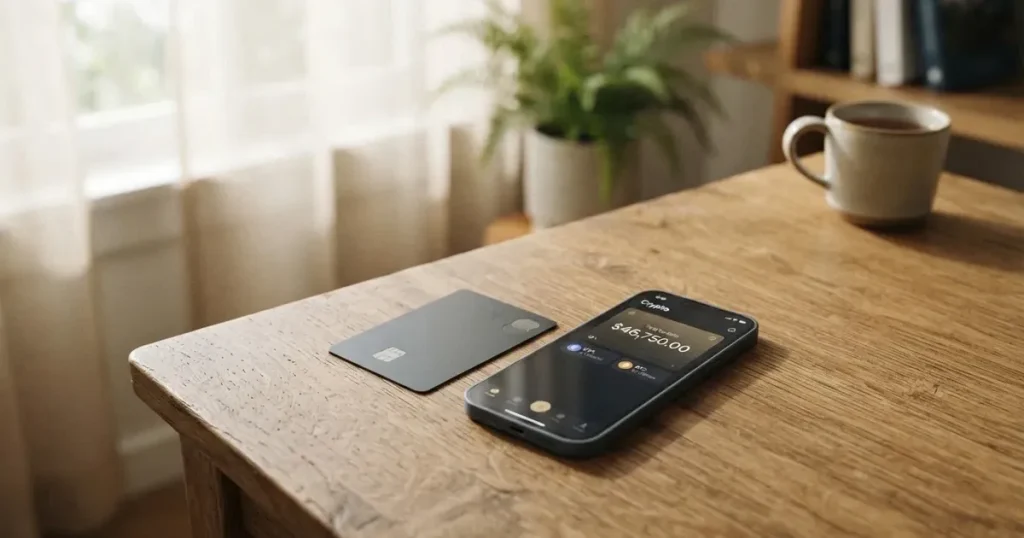
The Trocador card is not a bank product in the usual sense. It sits somewhere between an exchange and a prepaid gift card: you pay with cryptocurrency, the operator converts it, and a prepaid Mastercard or Visa from one of several partner programmes lands in your account. There is no app, no loan, no overdraft, and no monthly statement in the way a bank would issue one. That shape is exactly what draws a certain kind of reader, and it is also where most of the friction lives. This review walks through who actually gets one, what it costs in practice, how the top-up works, and where the alternatives fit.
Conditions are current as of October 28, 2026.
Verdict
Trocador scores 5.4 out of 10. The card earns its keep for one specific reader: someone who already holds crypto, wants a prepaid card they can spend at a normal shop or online merchant, and either cannot or does not want to go through a full bank-style onboarding. It is not the right product for someone who wants a debit card tied to a salary, a card with rich travel insurance, or anything resembling a primary bank account.
The verdict breaks down across five criteria, each scored and explained in the table below.
| Criterion | Score | Why it scored this way |
|---|---|---|
| Who can get it | 8 / 10 | Country availability is broad and varies by partner provider, with unofficial sources putting coverage near 164 countries. Reward and MyPrepaidCenter programmes are US-only. |
| Cost | 3 / 10 | Official fee tables are not published. Unofficial reports put the Trocador-side mark-up at around 3% plus a $2 service fee, with separate fees for Obsidian cards and a 2.75% charge on non-USD spending. |
| Top-up options | 7 / 10 | Cards are bought with crypto, and the starting data lists BTC, XMR, LTC and stablecoins, with other coins reachable through AnonPay. The full coin list is not confirmed. |
| Reliability and complaints | 5 / 10 | Reta Development Assets LLC operates the platform; cards are delivered by Reward, MyPrepaidCenter and Obsidian, with no issuing bank named. Reports around MyPrepaidCenter describe activation issues and slow support. |
| Everyday use | 4 / 10 | Virtual cards and the major mobile wallets usually work, but there is no physical plastic, no ATM, no reload, and any merchant that requires 3-D Secure will block the card. |
| Total | 5.4 / 10 |
The audience this card is built for is the privacy-minded user who wants to buy a prepaid card with crypto. If that sentence describes you, the rest of the review is worth reading carefully, because the everyday-use limitations are real. If it does not, the alternatives section is probably where you want to spend your time.
Who they will give the card to
Eligibility is the first thing to check, because the rules are not Trocador’s rules. Trocador is a marketplace and a wrapper; the actual prepaid card is delivered by one of three partner programmes: Reward, MyPrepaidCenter or Obsidian. The country you can use the card from, and the country whose regulations apply, depend on which partner you end up with.
Officially, Trocador does not publish a single country list. Its own pages say that country restrictions vary by provider. Unofficial reporting — third-party card directories, not Trocador itself — puts the combined availability at around 164 countries, with 11 countries excluded. The two US-based programmes, Reward and MyPrepaidCenter, are limited to US residents, which is a hard boundary you cannot negotiate around.
A practical reading: if you live outside the US and the country you are in is not on a sanctions list that any of the partner programmes screen against, you are likely to be served. If you are inside the US, you can still get a card, but the Obsidian path is the one that does not tie you to a US-only programme. None of this is published as a clean table on the card’s own site, which is part of the friction.
There is also no published information about the issuing institution. The card is, on paper, a prepaid Mastercard or Visa from one of the partner programmes; the bank or e-money institution behind the programme is not named in the materials the public can read. For a reader who cares about regulatory protection, that gap matters: in normal card products the issuer is the party that holds your money, runs the dispute process, and is licensed to do so.
How to get it
There is no mobile app, no signup form in the usual sense, and no identity-verification step described on the card’s own pages. The flow is closer to buying a digital gift card than to opening a current account.
You go to the Trocador card page, pick the partner programme and the card value, pay in cryptocurrency, and receive the card details. The exact steps for activation, billing-address binding and first use are handled inside whichever partner programme you end up in. Unofficial reviews of MyPrepaidCenter cards describe a process that includes a billing-address validation step and that can stall at activation if the address does not match the issuer’s records, which is worth knowing if you are tempted to use a slightly different address to where you actually live.
Because KYC requirements are not stated officially, the level of identity check you face depends on the partner. The minimum is “no documents at all” for some paths, and the maximum is whatever the partner programme enforces. None of this is on a single page you can read in advance, and delivery times are not stated officially either — the third-party reporting describes cards arriving in minutes for the virtual products and longer for the physical ones, but that is not the card’s own promise.
The honest summary is that the signup is fast, frictionless on the front end, and not very transparent underneath. You can be holding a working card number in well under an hour. You will not, at any point, see a complete terms document from the issuing bank.
What it really costs — fees, FX and the quiet add-ons
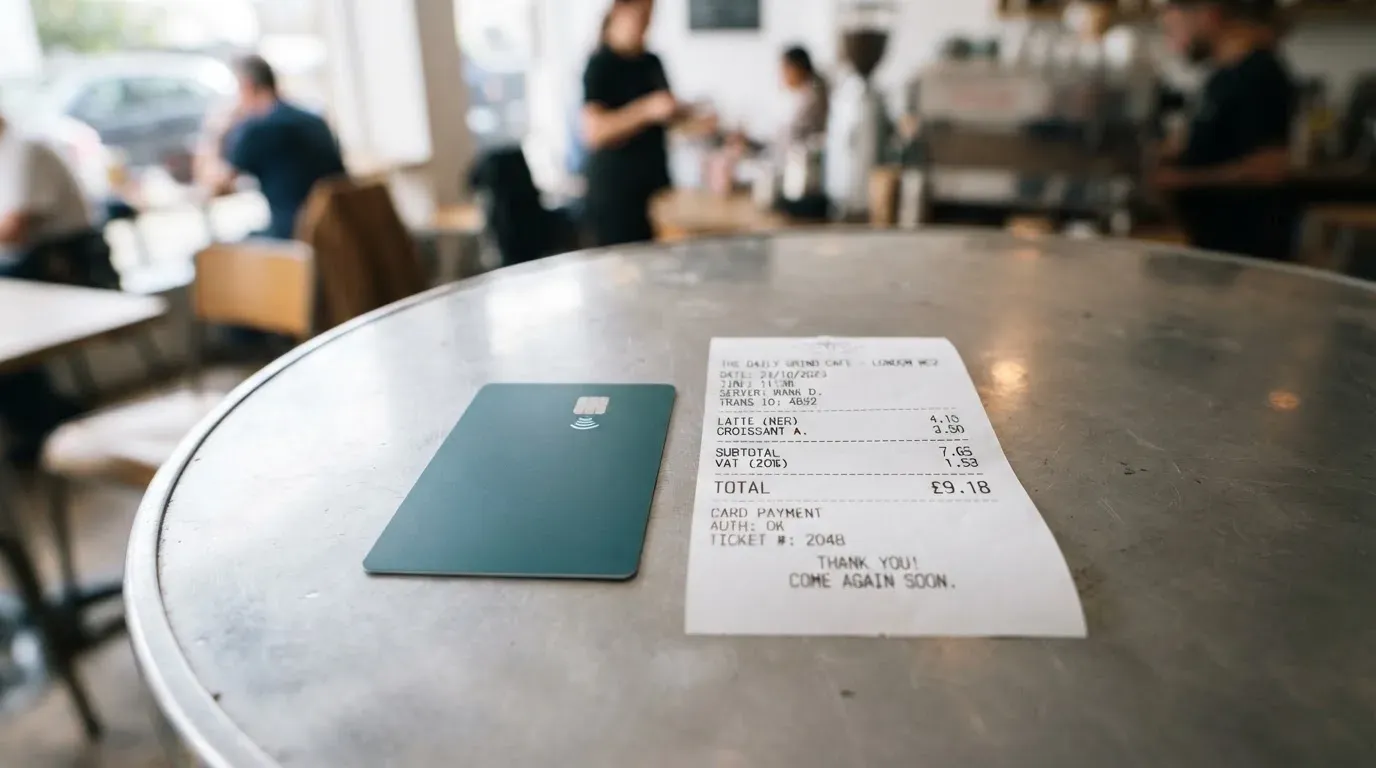
This is the section where the card is weakest, and where you have to read the unofficial material carefully because the official pages do not give you the numbers you would normally expect to see. There is no published fee schedule. The picture below is built from the unofficial numbers that have been reported by third-party directories, and it is worth treating each line as “this is what users have said they were charged” rather than “this is what the card promises.”
| Fee or limit | Amount (unofficial) |
|---|---|
| Issuance fee | Trocador side: about 3% of card value plus a $2 service fee |
| Obsidian monthly fee | $0.60 per purchase, plus $5 per month from the third month onward |
| Conversion fee on non-USD spending | 2.75% |
| ATM withdrawal | Not available |
| Daily spending limit | Not stated officially |
| Monthly spending limit | Not stated officially |
| Card-to-card top-up after purchase | Not available |
Two or three everyday situations make the picture concrete.
Buying a $100 virtual card with Bitcoin. You pay the BTC equivalent of roughly $105 in total, before the on-chain network fee for your Bitcoin transaction. The $5 is the 3% mark-up plus the $2 service fee. From that point on, the card holds $100 of fiat balance and there is nothing more to pay until you spend.
Spending $50 of that card in a shop in Europe. The card converts USD to EUR at the partner programme’s exchange rate, and the unofficial reporting puts that conversion mark-up at 2.75%. On $50 that is $1.38. The merchant sees a Visa or Mastercard authorisation, the network fee is what it always is, and what you actually lose is the FX margin, not a per-transaction surcharge.
Trying to use the card at an ATM. There is no ATM access. The card is prepaid, there is no cash withdrawal path, and trying to get cash from an ATM with a prepaid card of this shape is a non-starter regardless of the brand. If you need cash, you need a different product.
The honest reading is that the cost is reasonable for the value you get if you would otherwise have paid a similar mark-up to move crypto to a bank account and then onto a card, and steep if you have any alternative route to a normal debit card. The lack of a published fee table is, on its own, a reason to be cautious.
How to top up the card
There is no top-up in the sense a debit card user would expect. Each card is bought with a fixed fiat value, the crypto is converted once at purchase, and the resulting balance is what you spend. You do not load more crypto onto the same card later; you buy a new card.
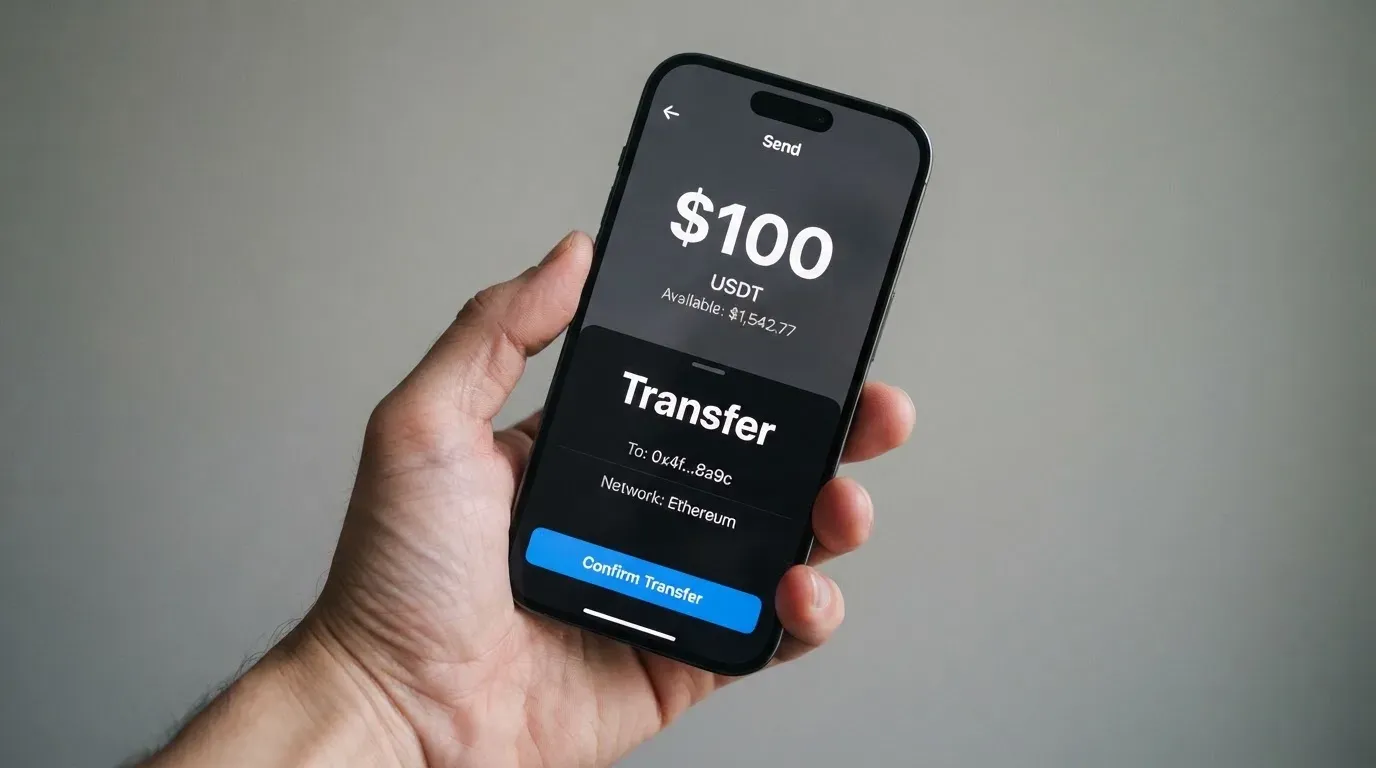
The starting data lists Bitcoin, Monero, Litecoin and stablecoins as accepted, with additional coins reachable through AnonPay. The exact list of supported coins is not confirmed officially, and the unofficial descriptions emphasise Monero as a route, which fits the privacy-oriented audience. Stablecoins are the cheaper option to send because the on-chain network fees are typically lower than BTC, and Monero is the option that is hardest to trace on a public blockchain.
The mechanics look like this. You pick a card value in fiat, the site gives you a deposit address, you send the crypto, and on confirmation the partner programme issues a card loaded with the fiat equivalent. Conversion happens once, at purchase, so the question of “what happens if the price moves between my deposit and the card being issued” is answered by “the conversion rate is locked the moment you start the order, subject to the standard confirmation window.” That is friendlier than a card that re-converts at swipe, and it is also a single point at which any FX or mark-up is applied.
The two things to be careful about are the network you send on and the address you send to. Stablecoins live on many networks, and sending USDT on a network the partner does not support, or sending to an address that is for a different token, can lose the funds. Crypto transfers are irreversible: there is no chargeback on a blockchain transaction. If the deposit goes wrong, you are relying on the support team to recover it, and the support experience is not the strongest part of this product.
Withdrawal in the usual sense — moving unspent balance back to a bank account or to crypto — is not stated officially. In practice, the card balance is spent or it sits there, and the unstated path is to use the card for what you would have otherwise paid another way.
Paying with it every day
The day-to-day picture is mixed. Where it works, it works like any other prepaid Visa or Mastercard: you tap, insert or type the number, and the merchant receives a normal authorisation. Where it does not work, the failure modes are worth knowing in advance.
Mobile wallets. Samsung Pay, Google Pay and Apple Pay usually work with the virtual card, according to the unofficial reporting. The card number is tokenised — replaced with a device-specific number stored in the phone’s secure element — and the merchant never sees the underlying prepaid card number. That is the same mechanism any other card uses when added to a wallet, and the “usually” qualifier is the part to notice. Tokenisation can be declined by the issuer for any reason, and a tokenised prepaid card is a more unusual profile than a tokenised debit card.
Online shopping. This is where the card hits its most predictable wall. 3-D Secure — the second-factor check that banks run on online payments — is required by many merchants, and a prepaid card from one of these programmes will not pass that step. Where 3-D Secure is optional, the card can go through. Where it is required, the transaction is declined. There is no workaround on the user’s side: this is set by the merchant and the issuer, not by the cardholder.
Gift card and prepaid card restrictions. Some merchants refuse prepaid cards by policy, and a few categories are excluded across the board. Gambling merchants, some subscription services, and merchants that require AVS matching — comparing the numeric parts of the billing address against the issuer’s records — can decline the card regardless of balance. AVS is mostly a US, Canada and UK phenomenon, and cards issued outside those markets tend to be declined more often.
Spending shape. There is no app, no notification, no real-time spending list, and no way to freeze the card from your phone. The only friction point is that there is no reload path: when the card is empty, it stays empty, and you buy a new one. For someone who treats the card as a small, fixed-amount prepaid product, that is fine. For someone who wants a primary spending card, it is not.
Rewards. Nothing is published about cashback, points or staking-based rewards. Treat the card as a flat prepaid product with no loyalty layer.
What can go wrong
The risks cluster into four areas, and it is worth taking them one at a time.
The partner programme you are assigned to. Trocador delegates the actual card to Reward, MyPrepaidCenter or Obsidian. Each has its own activation flow, its own support quality, and its own failure modes. Unofficial reporting on MyPrepaidCenter cards describes activation problems, billing-address validation that fails for legitimate addresses, mid-life declines, accounts that lock without an obvious reason, and slow support. None of this is the kind of risk you can insure against; it is the kind of risk that surfaces only when something has already gone wrong with a transaction.
The conversion mark-up. Because there is no published fee schedule, the price you pay is the price you pay. A 3% Trocador-side mark-up plus $2 is meaningful on small cards and tolerable on large ones. The 2.75% non-USD conversion is a separate drag. If you are moving money from crypto to a card because you cannot use a bank, the alternative path usually costs more in time and document friction; if you have access to a normal bank, the math favours the bank.
Regulatory and platform risk. The operator is Reta Development Assets LLC, and the card is delivered by partners that are not banks. There is no named issuing bank, no licence number to verify, and no deposit-style protection on the prepaid balance. In the EU, an authorised e-money institution would normally safeguard customer funds in segregated accounts, and the card would carry that protection. This card does not appear to offer that. If the platform or its partner has a bad quarter, the prepaid balance is at the same risk as any other unsecured claim.
Cryptocurrency-specific risks. Crypto transfers are irreversible, and a deposit sent to the wrong address, on the wrong network, or for the wrong token is gone. Stablecoins are not risk-free: Tether’s USDT and Circle’s USDC are the dominant dollar stablecoins, but stablecoins have depegged before (TerraUSD in 2022, USDC briefly in March 2023), and the value of your card at purchase is the value locked in, even if the wider market moves against the asset you sent.
Programme closure risk. A crypto card programme is only as durable as the issuer behind it. Visa and Mastercard can suspend programmes — the most cited example is WaveCrest in 2018, which closed every Visa programme it issued overnight. A more recent example is the FTX debit card, wound down by its issuer after Visa terminated the global agreement in November 2022. When a programme closes, the pattern is usually: new loads stop first, then spending stops, then a notice period for users to withdraw any remaining balance. If that happens, you are dependent on the partner programme to honour the residual balance, and the residual balance is not insured.
Support. Customer support for the cards is not described officially. What users report is that it is slower than they would like, especially for MyPrepaidCenter-related issues, and that dispute resolution is not a strong point of the product. There is no published chargeback process for card-funded transactions.
What to take instead
The honest reason to read this section is that none of these alternatives are obviously better — they are different shapes of trade-off. Two of them are aimed at the Nigerian market in particular, which is worth knowing if you are reading from elsewhere.
Cardex
Cardex scores 5.6 out of 10, a touch above Trocador, and positions itself as one crypto card usable in 200-plus countries. The card is a debit product on the VERVE, VISA, Mastercard and UnionPay networks, with virtual and physical options, and the app-store listing describes the card currency as Naira. Funding is from USDT, USDC and BTC wallets, networks not stated. The conversion is done in real time at the moment of payment, with the site describing an “AI-powered conversion rate” that picks the best rate across exchanges — a claim that is hard to verify from outside. There is no published fee percentage, and the absence of a fee schedule is a familiar gap.
The trade-off relative to Trocador: broader country reach on paper, and a more conventional debit product, but with the same opacity on cost and a regional focus that may or may not fit your situation.
CardFlow
CardFlow scores 4.9 out of 10, and is the most clearly Nigeria-focused of the three. The site describes itself as “Nigeria’s smartest fintech card platform” and targets Nigerians and global users. The product is a virtual USD Mastercard, created in 3 minutes, funded with Bitcoin, USDT, ETH or Naira bank transfer. The site says creating a virtual card is free, and it does not state a monthly fee or a per-transaction fee.
The trade-off relative to Trocador: faster to issue, free at the front end, and a USD balance that may suit a saver better than a Naira balance, but the country focus is real, the fee picture is not fully published, and the use case assumes you are either in Nigeria or comfortable with a Nigeria-centric product.
HyperCard
HyperCard scores 4.7 out of 10, the lowest of the three. The official pages do not publish a country list, and the app-store listing says the card works in “more than 176 countries,” which is an acceptance claim, not an eligibility claim. The card is prepaid, the network is not stated on the app-store page, and the balance is held in USD or EUR. Funding is in the form of crypto deposits — USDT, BTC, ETH in the app — which are converted to the card balance in USD or EUR. Networks are not stated, and no fees are listed on the pages the public can read.
The trade-off relative to Trocador: a mobile-app experience instead of a web purchase, and a balance held in fiat that the user can top up, but the lowest of the three scores, an opaque fee picture, and the same regulatory uncertainty.
Who I would recommend it to
I would recommend the Trocador card to a fairly specific reader. You hold crypto already, you are comfortable with the irreversibility of a blockchain transfer, you want a prepaid card you can spend at a normal merchant without going through a bank-style onboarding, and you understand that the partner programme behind the card is not a bank and that the prepaid balance is not insured. If you are that reader, the card does what it claims: it turns crypto into a working Visa or Mastercard number, it usually works in mobile wallets, and the cost is in the same ballpark as a single exchange mark-up.
I would not recommend it to a reader who wants a primary spending card, a card that survives 3-D Secure at every online shop, a card with cashback or staking rewards, a card with ATM access, or a card whose issuing bank they can name. The 5.4 out of 10 score is, in the end, a reflection of those limits. The card is a tool, not a relationship.
Before you spend meaningful money on one, check three things in this order: which partner programme you are being routed to, what the unofficial fee picture is for that specific programme (the table earlier is your starting point), and what the support story looks like for that programme right now. The third one is the part that is hardest to read in advance, and the part that matters most when something has already gone wrong.
Frequently asked questions
What is the Trocador card?
The Trocador card is a prepaid Mastercard or Visa you buy with cryptocurrency. The card is delivered by one of three partner programmes — Reward, MyPrepaidCenter or Obsidian — and the operator behind the platform is Reta Development Assets LLC. It is not a bank product and there is no published issuing bank.
How does the Trocador card work?
You pick a card value in fiat, send crypto to the address the platform gives you, and on confirmation the partner programme issues a card loaded with the fiat equivalent. The conversion happens once, at purchase, after which the card behaves like any other prepaid card at a merchant.
Is Trocador a bank?
No. Trocador is a platform that routes users to partner card programmes. None of the public-facing material names a bank as the issuing institution, and the prepaid balance is not described as protected by deposit-style safeguards.
Who owns Trocador?
The starting data lists Reta Development Assets LLC as the operator. The platform’s own pages do not publish ownership or licensing details in the form a regulated entity would, and the card partners — Reward, MyPrepaidCenter, Obsidian — are independent businesses.
Is the Trocador card available in my country?
Officially, country availability depends on the partner programme. Unofficial reporting puts the combined reach at around 164 countries with 11 exclusions, and the US-based Reward and MyPrepaidCenter programmes are limited to US residents. There is no single country list published on the card’s own pages, so the practical answer depends on which partner you end up with.
Does the Trocador card require KYC?
The official pages do not state a KYC requirement. In practice, the level of identity check depends on the partner programme, and some paths appear to require no documents while others can ask for a billing-address validation that occasionally stalls.
How do I top up the card after I have bought it?
You do not, in the usual sense. Each card is bought with a fixed fiat value, the crypto is converted once at purchase, and the balance is what you spend. When the card is empty, it stays empty, and the path is to buy a new one rather than reload the existing one.
How do I add the card to Apple Wallet or Google Pay?
Unofficial reports describe the major mobile wallets as “usually” working with the virtual card. Tokenisation is the standard mechanism: the wallet replaces the underlying card number with a device-specific number, and the merchant never sees the original. The qualifier to notice is “usually” — issuer policy can decline tokenisation on a prepaid card.
Is the Trocador card safe?
It is safe in the sense that crypto transfers and prepaid cards are safe: the technology works as described, and your card details are tokenised in mobile wallets. It is not safe in the sense that a bank-issued card is safe: there is no named issuing institution, no published safeguarding, and no insurance on the prepaid balance. The user reports worth reading are the ones about MyPrepaidCenter activation and support.
Is the Trocador card worth it?
For a privacy-minded user who already holds crypto and wants a prepaid card they can spend at a normal merchant, the cost is in the same range as a single exchange mark-up, and the value is real. For a user who has access to a normal bank card, the mark-up, the lack of an issuer, the 3-D Secure wall, and the absence of an app add up to a product that is hard to recommend. The 5.4 out of 10 score reflects that balance.
Virtual cards in the catalogue – cryptocardcatalog
Content created by the «cryptocardcatalog» team