
A virtual Visa for payroll, not a general spending card
 Available in US
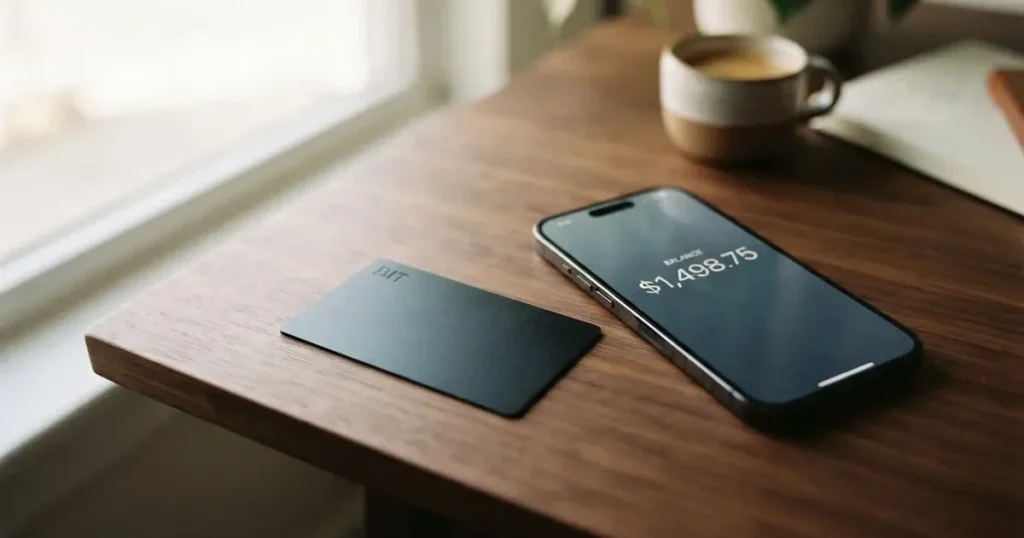
Thera Wallet is not the sort of crypto card you pick up from a shelf of options and start spending from anywhere. It is a virtual Visa issued inside a payroll platform, aimed at people whose salary already arrives through Thera, and it is deliberately narrow: online payments only, no cash machines, no shops, no plastic in the post. Read it as a spending accessory to a salary account rather than a replacement for a bank card, and the picture that emerges is coherent. Read it as an everyday debit card, and you will hit walls in the first week.
My score for it is 4.9 out of 10. That is not a verdict on whether it works — by its own narrow description, it does — but on how much of what people usually want from a card is simply absent, and how many of the numbers a shopper would need to decide are missing rather than published. For the freelancers in Latin America who get paid through Thera payroll, that narrowness is the point, and the card earns its place. For anyone else, it does not.
The conditions described here are current as of October 28, 2026.
Verdict: 4.9 out of 10, and it depends entirely on where you sit
The single most important thing about this card is not a fee or a feature. It is the audience. Thera is a payroll and payments platform, and the card is for employees and contractors paid through it. That constraint is not a technicality you can negotiate past; it is the shape of the product. The card support reads “Yes” in ten countries — Argentina, Bolivia, Brazil, Colombia, Dominican Republic, Ecuador, Guatemala, Mexico, Peru and the United States — and the availability is described as “based on local banking and regulatory availability”, which is a careful way of saying that the list can differ from what a given person actually experiences.
| Criterion | Mark | Why |
|---|---|---|
| Who can get it | 3 / 10 | Available in 10 countries — Argentina, Bolivia, Brazil, Colombia, Dominican Republic, Ecuador, Guatemala, Mexico, Peru, United States — but only for people paid a salary through Thera |
| Cost | 5 / 10 | Issuance cost and fees are not disclosed; foreign transactions “may incur FX fees” with no figure |
| Top-up options | 6 / 10 | Transfer from a Thera account to the wallet, then “Add Funds” to the card in 5-10 minutes; wallet payouts in USDC and USDT on Ethereum and Tron only |
| Reliability and complaints | 6 / 10 | Issuer and legal entity not named, KYC handled by partner AiPrise; Trustpilot 4.7 from 100 reviews, one complaint: a completed withdrawal never arrived, support slow |
| Everyday use | 5 / 10 | Virtual Visa with Apple Pay and Google Pay via card settings; online purchases only, no in-store use or ATM, plastic card planned |
| Total | 4.9 / 10 |
So: if you are a freelancer or contractor in one of those ten countries whose invoices are already settled through Thera payroll, this card removes a real friction — getting your pay spendable online without a separate bank application. If you are anyone else, the honest summary is that you cannot get it, and the rest of this review is largely irrelevant to you.
Will they give you the card?
They will, if two conditions are both true: you live in one of the ten supported countries, and you are paid through Thera payroll as an employee or a contractor.
That second condition is the one people miss. This is not a general retail product. You are not applying for a card in the ordinary way; the card comes attached to a payroll relationship, and the wallet is created inside the Payroll section of the platform. If your salary arrives from some other employer, or from a client who pays you directly, there is no route described here.
The ten countries, as the card states them: Argentina, Bolivia, Brazil, Colombia, Dominican Republic, Ecuador, Guatemala, Mexico, Peru, United States. Note how heavily this leans on Latin America — nine of ten. The card’s own caveat that availability is “based on local banking and regulatory availability” is worth taking seriously: support marked “Yes” describes a country’s framework, not a guarantee that every applicant in it will be approved.
The verification itself is handled by a partner named AiPrise, and it is mobile-only, run through a QR code you scan. The documents accepted are a driver’s licence, a resident ID, a voter ID, a national ID or a passport. You supply the document type and its issuing country, a photo of the front and back, and then a selfie. There are two checks — ID verification and the selfie — and each resolves to either “Verified” or “Declined”. A standard review takes a few minutes; 24-48 hours if extra verification is needed.
Two things the public pages do not tell you, and I would want to know before spending an afternoon on a selfie: why a rejection happened. Rejection reasons are not listed. Nor is there any mention of proof of address or an age requirement. If either of those matters to you, that is a question for support, not something to assume.
Tax paperwork is part of the flow and worth noting early, because it arrives before you can get money out, not after. Non-US residents complete form W-8BEN or W-8BEN-E; US tax residents complete W-9. Wallet creation sits under Payroll > Wallet, and approval “typically takes a few business days”.
How to get it
You do not apply for it in the conventional sense. The sequence is: you already have a Thera payroll account, you create a wallet under Payroll > Wallet, you complete the AiPrise identity check by phone, you wait the stated “few business days” for approval, and a virtual Visa appears.
Worth understanding why approval is not instant. The card’s own rule is that withdrawals are blocked until KYC is approved where the employer requires it — so there is a period where your wallet exists and money is in it, but you may not be able to take it out. Do not plan a withdrawal into that window.
The card you get is virtual. A Visa, usable for online purchases “where Visa is accepted”, and only that: no in-store use. A physical card is planned rather than available. The currency of the card is not stated. For most online subscriptions and services that will not matter much, but it is another of the blanks that make a total-cost calculation impossible.
Fees and costs: what it really costs you
This is the weakest part of the picture, and not because the fees are high — because they are invisible. Issuance cost is not stated. The crypto conversion fee is not stated. The FX fee is described but never numbered. Cash withdrawal is not addressed at all, and spending limits are not stated either. What I can give you is a table of what is disclosed and, more usefully, what is not.

| Fee or limit | What the card states |
|---|---|
| Issuance | Not stated |
| Monthly fee | Not stated |
| Crypto conversion | Not stated |
| Foreign exchange (FX) | “Foreign transactions may incur foreign exchange (FX) fees” — no figure |
| ATM / cash withdrawal | Not stated; the card cannot be used in-store and cash is not addressed |
| Card spending limits | Not stated |
| Withdrawal limit | Maximum 10 withdrawals in any rolling 30-day period |
| Card currency | Not stated; the wallet holds USDC/USDT and the payroll balance is in USD |
| Tiers | A single virtual card; no tiers |
Let me put three everyday payments through that table, because abstract gaps are easier to shrug off than concrete ones.
A monthly subscription in dollars. You pay through the virtual Visa online. Whether any fee applies depends on the conversion, and the conversion fee is not stated — so the true cost of the subscription is unknown to you, and unknown to me. If your balance is already in dollars from payroll, this may be clean; but “may” is doing a lot of work in a fee schedule.
A purchase priced in euros or pesos while your balance sits in USD. This is the case the card actually warns about: foreign transactions “may incur foreign exchange (FX) fees”, with no figure. You are told a cost exists and not told its size. In this category that matters more than it sounds, because the merchant-side price and the issuer-side conversion are two different numbers and you only ever see one of them on the receipt.
Taking money out. Ten withdrawals in any rolling 30-day period is the one hard limit published, and it is a real constraint if you were planning to move a salary out month by month. Fees for a withdrawal are not stated. On withdrawal counts, this is the single most useful sentence on the whole page, and it is buried in a limits section rather than in the onboarding.
None of this means the card is expensive. It means the card cannot be costed. I would treat every figure as “unknown” rather than “probably fine” — that is the difference between an absent number and a low one.
How to Top up the card
Top-up is a three-step internal movement, and all of it stays inside Thera until you choose otherwise. You transfer from your Thera account to Thera Wallet using “Transfer to Wallet”, then move from the wallet to the card with “Add Funds”. The card states that this takes 5-10 minutes to reflect.
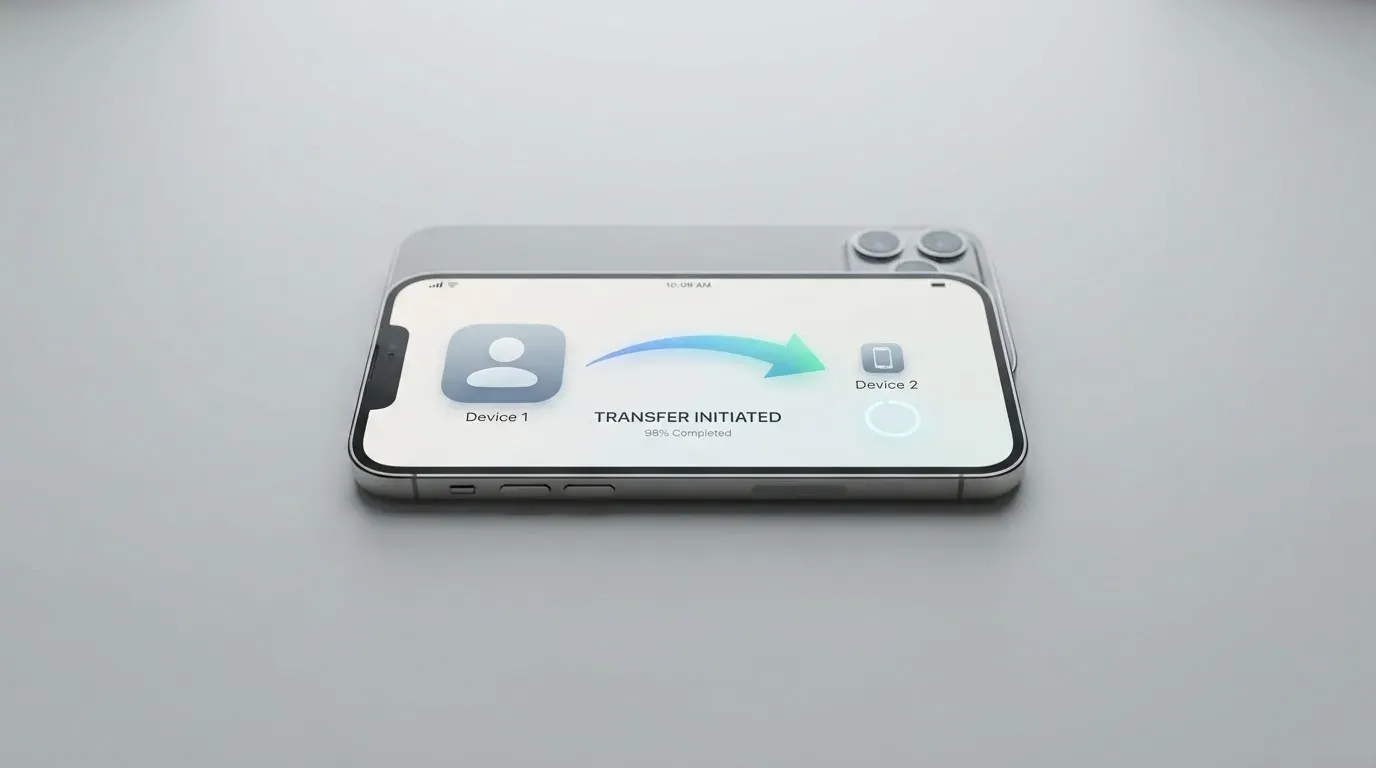
Five to ten minutes is fast enough that I would not plan around a margin of error, but slow enough that a payment made in the same minute will bounce. The realistic pattern is: top up, wait, then pay.
What is not stated: the fee for these transfers, the minimum, and what fiat top-up options exist. So while the mechanics are unusually clear for a crypto card, the cost of running them is not.
The other direction — money out of the wallet — is where the crypto specifics bite. A payout goes to an external crypto address, added through “Add Method”, and is available in USDC and USDT on the Ethereum and Tron networks only. Fees are not stated. Two warnings apply to that step. Blockchain transfers are irreversible, so a wrong address can mean permanent loss of the funds. And on networks in general: a transfer sent on a network the provider does not support can be lost or need manual recovery with no guarantee. Getting the network right is not advice about evading anything; it is just the single most common way people lose money in this category. What happens to a remaining balance if you close the wallet is not stated either.
Paying with it every day
Here is where the card’s limits become the whole story. You can add it to Apple Pay and Google Pay through the card settings, which covers a lot of everyday online buying neatly. You cannot use it in a shop. You cannot take cash out. You cannot send it to another person through a payment link — peer-to-peer transfers via payment links are blocked.
That is a short list of capabilities, and I would rather describe it plainly than dress it up. Card number, expiry and CVV appear in the Wallet section and auto-hide when you leave the page, which is a reasonable default. Whether specific merchant categories are blocked is not stated, and in this category that usually means gambling-type categories and similar, where issuers block by policy rather than by law and the list varies by issuer — but I am describing the general pattern, not something the card’s pages confirm.
Two features are not stated: whether rewards exist, and details of the app (there is a web dashboard, but app store ratings are not covered here). Also not stated: how disputes work. If a charge goes wrong, the card’s public pages do not describe a process, and you should not assume one exists.
What can go wrong
No official incidents have been reported from the company’s own side. The complaints picture is thin and mostly positive: on Trustpilot the rating is 4.7 from 100 reviews, all of them in the last twelve months as read on 21 October 2026, and the company has not replied to negative reviews. The single visible complaint, dated 6 August 2026, reports a withdrawal marked completed that never arrived, with support that was slow and repetitive.
One complaint is not a pattern, and I would not treat it as one. But it points at something worth naming: the flow that fails when it fails is the one where your money is already out of the platform. Internal transfers take minutes and are reversible in practice. An external crypto payout that stalls is a different category of problem, and it is the category where you have the least recourse.
The larger risk is structural rather than reputational. The card’s public pages do not name the legal entity behind Thera, the card issuer, or any licences. Thera is described as a payroll and payments platform, with AiPrise handling KYC. When a payment card’s issuing institution is not named on the public pages, you are being asked to take the counterparty on trust. Custody arrangements are not stated either, so whether your balance is held in an e-money structure safeguarded separately, or somewhere else, is not something these pages tell you.
A general note about this category, since it applies here as much as anywhere: card programmes do get shut down. Visa terminated its global agreements with FTX on 13 November 2022 and the FTX US debit card was wound down by its issuer; WaveCrest, a card issuer supplying crypto brands, was suspended by Visa in Europe in 2018 and all its Visa programmes closed. The pattern is usually a notice period, then loading and spending stop, then you are asked to withdraw what is left. A platform with a payroll business underneath it is more durable than a standalone card startup, and that is a point in Thera’s favour — but it is not the same as a named issuer with a licence you can look up.
Support options are not detailed on the card’s page, though the KYC guide points to email. On the safety side, card-level protections are in place: card details hide automatically on leaving the page, and the card relies on identity verification and mobile wallet tokenisation. No statement is publicly available regarding how funds are held or safeguarded.
What to take instead
Three alternatives came up against this card, and they are worth setting side by side. Scores are from the same review process: Thera Wallet 4.9, International Visa Card 6.7, UNi Card 6.1, Whop Cards 5.2.
| Thera Wallet | International Visa Card | UNi Card | Whop Cards | |
|---|---|---|---|---|
| Score | 4.9 / 10 | 6.7 / 10 | 6.1 / 10 | 5.2 / 10 |
| Card type | Virtual Visa, online only | U.S.-issued Platinum Visa, virtual; physical “Coming soon” | Multicurrency card on Mastercard | Visa, online and in stores |
| Cost | Not stated | $5 issuance, no maintenance; Classic free, Pro $9.00/month, Max $19.00/month | “No annual fee”; issuance not stated | “No extra fees”; no amounts listed |
| FX / conversion | “May incur FX fees”, no figure | Visa exchange rate + 2% FX fee | Live OTC rates, “no hidden exchange fees” | Not stated |
| Top-up | Thera account → wallet → card, 5-10 min | USDC/USDT 1:1 free, plus USD, EUR, SEPA, SWIFT, FedNow | Not stated | Whop balance; coins and networks not stated |
| Rewards | Not stated | No cashback stated | Spend-to-Earn up to 3% | 5% cashback at select merchants (currently Uber) |
| Who can get it | 10 countries, payroll recipients only | Not for residents or registrants of a listed set of countries | Not stated | 31 US states for consumers, 41 for businesses |
A few observations rather than a verdict on each.
International Visa Card publishes the most complete numbers in this group: a $5 one-time virtual card issuance, no maintenance fee, plans at Classic free, Pro $9.00/month and Max $19.00/month, USD spending free on all plans, foreign currency at “Visa exchange rate + 2% FX fee”, and deposits of any kind free. It also has the broadest funding line — USDC or USDT into the USD account, plus USD, EUR, SEPA, SWIFT and FedNow. Its access rules are stricter than Thera’s in a different way: the account and card are not available to residents or legal registrants of Belarus, mainland China, North Korea, Cuba, India, Iraq, Iran, Israel, Myanmar, Nepal, Nicaragua, Russia, Syria, Turkey, Ukraine, Venezuela or Vietnam, with FATF grey-list countries reviewed case by case with compliance approval, and purchases blocked in North Korea, Cuba, Iran, Russia, Syria, Ukraine and Venezuela. Note that the rule follows residence or registration, and citizenship is not mentioned.
UNi Card is the one that makes the strongest claim about hidden costs: “no annual fee or foreign transaction fee”, assets converted at “live OTC (Over-the-Counter) rates”, and “no hidden exchange fees”, with Spend-to-Earn rewards up to 3%. It is a multicurrency card on Mastercard spending from the UNi.Global account balance. But its pages do not state who can get it, what physical or virtual form it takes, or how you fund it — so the good news is all about costs you may not be able to reach.
Whop Cards is the one to look at if in-store payment is a requirement, since it works anywhere Visa is accepted online and in stores. For consumers it covers 31 US states; for businesses, 41. Unsupported consumer countries include Belarus, China (Mainland), Cuba, Hong Kong, India, Iran, Iraq, Israel, Myanmar, Nepal, Nicaragua, North Korea, Russia, Syria, Turkey, Ukraine, Venezuela and Vietnam; unsupported corporate countries include Russia and Belarus. Whether the rule follows citizenship or residence is not stated, as is the virtual or physical form, the card currency, and any conversion or FX amounts. It offers 5% cashback at select merchants, currently Uber, more planned. Note that accounts can also be issued to team members, so this is not purely a personal card.
Who I would recommend it to
I would recommend Thera Wallet to one person: someone already earning through Thera payroll in one of the ten supported countries, who spends most of their money on subscriptions, software and services, and who is comfortable that the balance sits inside a platform whose issuing entity and licences are not named on the public pages. For them, the card does one narrow job quickly, with funding visible in minutes and the wallet usable for USDC and USDT on Ethereum or Tron.
I would steer everyone else away, with two exceptions. If you need a card that works in shops, you need plastic, or you need cash, this is the wrong product — those things are explicitly out of scope rather than merely difficult. And if you are comparing on cost, you cannot: issuance, conversion, FX and withdrawal fees are all unstated, and a card whose price you cannot compute is not a card you should choose on price.
Before you commit, four checks. Whether the issuer and legal entity behind Thera are named on the card’s public pages. Whether proof of address or age requirements exist, since those are not stated. What happens to a payout that gets stuck, given the one visible complaint was exactly that. And whether USDC on Tron is what you actually hold, since Circle stopped supporting USDC on Tron in February 2024, so USDC over TRC20 is not a native option and USDT over Tron is the one to look at.
On taxes, one factual note rather than advice: the IRS treats digital assets as property, so exchanging them for goods, services or dollars generally produces a taxable gain or loss, measured in local currency at fair market value on the date of the transaction, meaning each card payment funded from crypto may be a separate disposal. In the EU, MiCA governs the crypto side while the card itself is a payment service regulated separately, so a crypto card often depends on two licences. Your own position depends on your residence and your accountant, not on me.
Frequently asked questions
What is the Thera Wallet card?
It is a virtual Visa card attached to a payroll platform. You get a wallet inside Thera, load it, and spend from it online. It is not a general-purpose bank card: no in-store payments, no cash machines, and a physical version is planned rather than shipped. Think of it as a way to spend a salary, not as a replacement for a bank account.
How does the Thera Wallet card work?
You transfer from your Thera account to Thera Wallet using “Transfer to Wallet”, then use “Add Funds” to load the card. The card says this reflects in 5-10 minutes. Purchases then go through the virtual Visa wherever Visa is accepted online, and you can add the card to Apple Pay or Google Pay through card settings. The wallet holds USDC and USDT.
Who can get the Thera Wallet card?
Only people paid through Thera payroll, as employees or contractors. Card support reads “Yes” in Argentina, Bolivia, Brazil, Colombia, Dominican Republic, Ecuador, Guatemala, Mexico, Peru and the United States, based on local banking and regulatory availability. It is not a general retail product, so if your salary arrives from anywhere else, there is no described route to it.
Does the Thera Wallet card require KYC?
Yes. Identity verification runs through a partner called AiPrise, on mobile only, via a QR code. You submit the document type and issuing country, photos of the front and back, and a selfie. Accepted documents include a driver’s licence, resident ID, voter ID, national ID and passport. Each check returns “Verified” or “Declined”.
How do I get the Thera Wallet card?
There is no ordinary application. You create a wallet under Payroll > Wallet inside your Thera account, complete the AiPrise verification on your phone, and wait — approval “typically takes a few business days”. You then receive a virtual Visa for online purchases. Withdrawals can stay blocked until KYC is approved where the employer requires it, so avoid planning an outgoing transfer into that window.
What does the Thera Wallet card cost?
The card’s public pages do not say. Issuance cost is not stated, the monthly fee is not stated, the crypto conversion fee is not stated, and foreign transactions are said to “may incur FX fees” without a figure. ATM withdrawal and cash are not addressed, and card spending limits are not stated. The one published limit is withdrawals: a maximum of 10 in any rolling 30-day period.
Is the Thera Wallet card free?
I cannot tell you, and neither can the card’s own pages — issuance and fee amounts are not stated. What is clear is that it is not a general retail product, so the free-versus-paid question may be settled for you before it is settled in detail: if you are not on Thera payroll, cost is irrelevant because access is closed.
How do I top up the Thera Wallet card and get money out?
Top up is internal: Thera account to Thera Wallet, then Wallet to the card via “Add Funds”, taking 5-10 minutes. Fees, minimums and fiat options for those transfers are not stated. To withdraw, add an external address through “Add Method” and receive USDC or USDT on Ethereum or Tron only. Fees are not stated, and transfers are irreversible, so a wrong address can mean permanent loss.
Is the Thera Wallet card safe?
Treat “safe” as two separate questions. Card-level handling is reasonable: number, expiry and CVV auto-hide when you leave the page, identity verification is required, and mobile wallet tokenisation is available. Custody is not stated, and the legal entity, card issuer and licences are not named on the pages I read — so I would hold a modest balance rather than a month of salary.
Can I use the Thera Wallet card in a shop or at an ATM?
No. The card is online purchases only, “where Visa is accepted”, with no in-store use, and cash withdrawal is not addressed. Peer-to-peer transfers via payment links are also blocked. If physical spending matters to you, look at a card built for in-store payments instead — among the alternatives I compared, only Whop Cards explicitly works both online and in stores.
App and neobank cards in the catalogue – cryptocardcatalog
Content created by the «cryptocardcatalog» team