
Telecard review: instant virtual card, thin paperwork
 Available in US
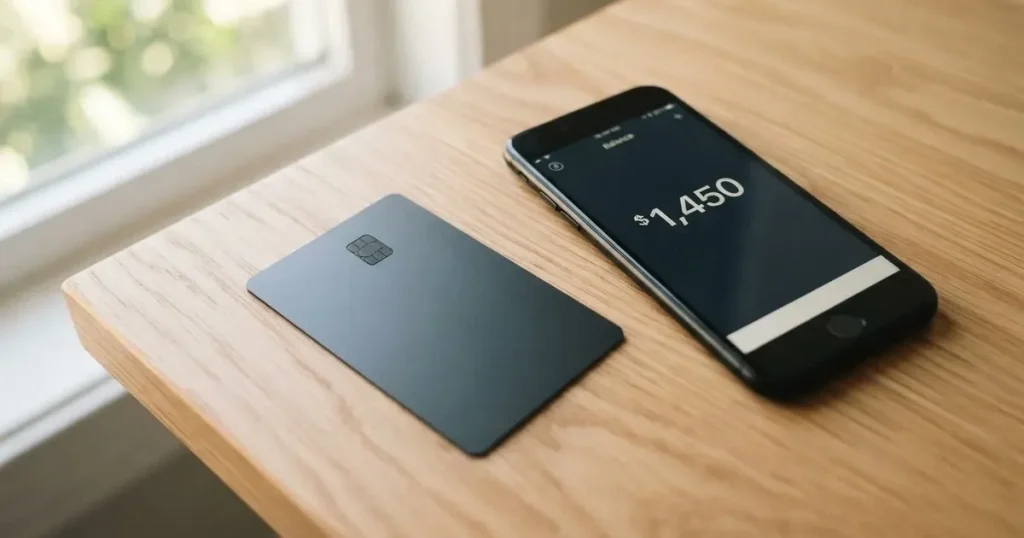
Telecard is a virtual Mastercard that you open inside a Telegram bot, top up with USDT or USDC, and use like an ordinary payment card in Apple Pay or Google Pay. There is no plastic to wait for and, on the Standard plan, an identity check sits between you and the card. What you get in exchange for that speed is a provider that does not name its legal entity, its jurisdiction, its issuer or its licences — and, as far as I can find, has no public track record of reviews to judge.
I scored it 6.1 out of 10. Not a warning, not an endorsement. It is a fair description of a product that is genuinely convenient for one narrow situation and genuinely unclear on the things that matter if you are thinking of putting real money through it.
The conditions described here are current as of October 28, 2026.
What I scored, and who the card is for
Telecard lives or dies on a single idea: open a card in a chat window, in minutes, without waiting for a physical card or a branch appointment. If that is the problem you have — you need a working card number today, you pay mostly online, you already live in Telegram — the product does exactly what it says. The card arrives instantly, the number goes straight into your phone’s wallet, and the money comes from a crypto balance you control the timing of.
Who it is not for is longer than who it is for. It is not for anyone who needs a plastic card, because there is no plastic and no metal. It is not for anyone who withdraws cash, because no ATM function is described at all. It is not for anyone who wants to know, in plain terms, which institution holds their money and under which licence — that information is simply not published, and I could not reconstruct it. And it is not for anyone planning to run the card as a primary everyday card over years, because a provider with no visible complaints is not the same as a provider with a good record.
| Criterion | Mark | Why |
|---|---|---|
| Who can get it | 8 / 10 | Works in more than 150 countries wherever Mastercard is accepted; the only exclusion in the terms is users under United States sanctions, including OFAC |
| Cost | 6 / 10 | Standard is 5 USD once; VIP is 49 USD plus 19 USD a month; 1.5% conversion on non-USD payments, 0.5 USDT gas per transaction, and a 99 USD minimum deposit that stays in the wallet |
| Top-up options | 7 / 10 | USDT on Tron (TRC-20) and Ethereum (ERC-20), USDC on Ethereum (ERC-20); deposit fee 0%; bank transfers marked “coming soon” |
| Reliability and complaints | 3 / 10 | Legal entity, jurisdiction, issuer and licences are not named, the company says it is “not a bank”, funds sit custodially on the Telecard account, and I found no reviews to read |
| Everyday use | 6 / 10 | Instant virtual Mastercard with Apple Pay and Google Pay; no plastic, no ATM, issued from inside a Telegram bot |
| Total | 6.1 / 10 | A quick crypto-funded virtual card with a real information gap underneath it |
Will they give you the card?
Yes, in a very wide range of places — and the reason you may have heard otherwise is worth checking before you apply.
Telecard states the card is usable in over 150 countries wherever Mastercard is accepted. That is a coverage statement, not a country list: the site does not publish which countries are supported or excluded, and it does not tie eligibility to citizenship or residence. Identity verification is described as “available in most major regions”, which is a softer promise than a definite list of places it works.
The single hard exclusion in the terms is users who are “blocked or sanctioned by the United States Government, including OFAC”. Practically, that means a sanctions screening step exists and it follows US lists. Two things follow from that, and they point in opposite directions. You do not need a United States address to be eligible. But screening against US lists is something that happens outside your control, and a match tends to end the application rather than delay it.
So the honest answer to “is it available in my country” is: probably yes, unless you are sanctioned — and confirm by asking support in the bot before you send any documents. What I could not verify is any country-specific restriction, because the card publishes none. No age requirement is stated either, which is a real gap rather than a detail.
How to get it
The whole flow happens in Telegram, which is either the main convenience or the main compromise depending on how you feel about keeping financial life inside a chat app.
There are two plans, and they differ on exactly one big axis: identity checking.
Standard requires KYC. You supply a government ID, a selfie holding that ID, and proof of address dated within three months. The review takes 24 to 48 hours and you are notified through Telegram. The card activates after approval — so on Standard you are waiting at least a day, and there is no physical card to wait for because there is no physical card.
VIP skips KYC entirely, at the cost of 49 USD to set up and 19 USD every month after that. It is a genuine product with its own economics, not a trial tier: it includes a 15 USD reissue if the card is lost or replaced, and holders can ask by email for higher limits than the standard ones.
One detail worth knowing before you plan your afternoon: the main page says verification “takes up to 5 minutes”, while the help page gives 24 to 48 hours for Standard review. Those two statements cannot both describe the Standard flow. Treat the shorter one as marketing copy about the bot flow, and the longer one as the realistic number. The card itself is issued instantly — once the account is cleared.
What the card is, physically: a virtual Mastercard, issued instantly, in USD. No plastic, no metal, no delivery. Apple Pay and Google Pay work with it. The reason rejection happens is not stated, which means if it does happen you will find out only from the message.
Fees: what it really costs
The headline is friendlier than the arithmetic. The main page says signing up is free and that the basic plan has no monthly fee, and the deposit fee is advertised as 0%. Then there is the $99 minimum deposit to activate — which the card explicitly labels as “NOT a fee”, and it is right in the sense that the money stays in your wallet. But you cannot start without it, so for the first month it functions like a locked balance rather than a charge.
The costs that actually bite day to day are the conversion fee and the gas fee. The card is denominated in USD, so any payment in another currency picks up a 1.5% conversion charge on top of whatever the network does. Each successful card transaction carries 0.5 USDT as gas. And on top of that, foreign-exchange and cross-border fees are quoted as “up to 3% each” — which is where a card marketed as no-hidden-charges quietly becomes the most expensive line in your month.
| Item | Standard | VIP |
|---|---|---|
| Issuance | 5 USD one-time | 49 USD setup |
| Monthly fee | None stated | 19 USD per month |
| Card reissue | Not stated | 15 USD |
| Currency conversion | 1.5% on non-USD payments | 1.5% on non-USD payments |
| Gas per successful card transaction | 0.5 USDT | 0.5 USDT |
| FX and cross-border fees | Up to 3% each | Up to 3% each |
| Minimum deposit to activate | 99 USD (stays in the wallet, not a fee) | 99 USD (stays in the wallet, not a fee) |
| ATM | Not stated | Not stated |
| Daily limit | 500 USD | 500 USD, higher on request by email |
| Monthly limit | 5,000 USD | 5,000 USD, higher on request by email |
Limits reset at midnight UTC and on the 1st respectively, and they do not apply to deposits, withdrawals or internal transfers. Multi-currency balances are not offered — it is a USD card with a conversion charge attached.
Three everyday payments, so you can see the shape of it:
- A $30 subscription in your home currency on Standard. That payment picks up a 1.5% conversion fee, plus 0.5 USDT gas, plus whatever the merchant’s own currency handling adds. Nothing dramatic, but the fee is unavoidable on any non-USD payment.
- A $220 laptop bought in euros from a shop that treats foreign cards as foreign. Here the “up to 3% each” language becomes the headline number rather than the footnote — a foreign BIN and a cross-border payment are exactly the situation those fees describe. Add the 1.5% conversion on top and the same purchase that costs $220 elsewhere costs materially more here.
- A $60 restaurant bill split with a friend who pays you back in cash. Simple enough in itself — but no ATM function is described, so there is no cash-out option to fall back on if the balance is wrong or a payment is declined and you need liquidity immediately.
Top up options
Topping up is the part the card does clearly. You send USDT on Tron (TRC-20) or on Ethereum (ERC-20), or USDC on Ethereum (ERC-20). Polygon is not supported. The deposit fee is advertised as 0%, and the $99 minimum to activate is the only threshold you have to clear.
Two inconsistencies are worth your attention because this is exactly where mistakes get expensive. The main page also lists ETH and TRX as things you can send; the help page does not mention them. And Circle stopped supporting USDC on Tron in February 2024, so USDC over TRC20 is not a native option anywhere in the ecosystem — if you are holding USDC on Tron and send it expecting it to work, that assumption fails outside this card too.
Who pays the network fee on a deposit is not stated. On-chain network fees for your deposit are charged by the blockchain, not by the card provider, so keep some of the native token — ETH for the ERC-20 route — available in the sending wallet, or the transfer simply cannot be made.
Bank transfers are marked “coming soon”. Same for buying with fiat. Today, crypto in is the way in.
Withdrawing works the other way: there is a withdraw button in the app that sends to an external crypto wallet on Tron or Ethereum, usually within minutes. Network fees there run about 0.5 to 2 USDT on Tron and 5 to 50 USDT or more on Ethereum, and the main page also lists a 0.5 USDT withdrawal gas fee. Two warnings: the transfer is irreversible once confirmed, and the balance remaining on closure is not stated — so do not treat the card balance as a place to park money between months.
Paying with it every day
The daily mechanics are small and mostly good. You get a virtual Mastercard number instantly, push it into Apple Pay or Google Pay, and pay. Apple Pay replaces the card number with a device-specific number stored in the Secure Element, so using it through the phone is the tidiest path and the one the card is built for.
Spending categories that are blocked are not stated. That matters more than it sounds: gambling (MCC 7995) and similar categories are commonly blocked by issuer policy rather than by law, and the list varies by issuer, so you cannot predict what will be refused until you try.
There is a rewards scheme, and it is thin. You earn 100 Fiorini per USDT, referral payments of Fiorini for each activated friend, and cashback when friends spend — but the actual cashback rate is not specified anywhere I could find. Treat the rewards as a reason to try it, not as a reason to rely on it.
There is also an in-app wallet inside the Telegram bot, and store ratings are not stated, so you have no external read on how the app behaves over time.
On disputes, the terms give you binding arbitration with no class actions, and the first point of contact is [email protected]. The refund policy is not addressed. For a card where the funding source is crypto and the merchant is often a stranger in another country, a refund policy you cannot read is not a small omission.
What can go wrong
This is the section where I have least good to say, and it is the section that produced the low mark.
The counterparty is unnamed. Telecard describes itself as “a financial technology company, not a bank and not insured by the FDIC”, and as a Mastercard partner. The legal entity, its jurisdiction, the issuing institution and the licences are not named in the terms. In this category that matters structurally: the card network routes messages and sets rules, an issuer licensed under that network’s licence holds the card programme, and the crypto brand is often just the programme manager and front end. Telecard does not tell you which of those it is.
Your money is custodial. Funds sit on the Telecard account and can be withdrawn to external wallets. That is convenient and it also means you must trust the provider completely, because control of the crypto belongs to whoever holds the credentials. Custodial platforms have a real history of failure — Mt. Gox (about US$350 million reported stolen, 2011-2014), Coincheck (about US$400 million, 2018), Ronin Network (US$625 million, 2022). A closure here would follow a pattern the industry has seen before: a notice period, then spending and loading stop, then you are asked to withdraw what is left.
No reviews means no track record, in either direction. I searched for reviews on Trustpilot and Reddit and found no Trustpilot page for Telecard and nothing naming the brand; searches on telecard.ai likewise returned nothing. No official incidents have surfaced either — which is worth saying clearly, because silence cuts both ways. It is not evidence of a problem, and it is not reassurance.
Two-factor authentication and card freeze are not described. The everyday safeguards people rely on — app-based 2FA, instant freeze, spending limits — are standard in the category, and here they are not stated. Support is in-app chat via Telegram @telecardcryptobot, the Help Center at telecard.ai/help, and email [email protected], with a general response time of 24-48 hours and urgent cases such as a blocked card prioritised. That is a support structure; it is not the same as controls on the account itself.
Declines and holds. Some merchants decline prepaid or foreign-issued cards because the BIN lookup reveals the card type and the issuer country, and address verification is generally unavailable for foreign-issued cards — which causes declines. A declined authorisation can leave a hold on your funds for several days, typically up to seven.
Unreversible transfers, in both directions. Blockchain transfers do not reverse. A deposit sent on a network the provider does not support, or to an address of the wrong network, can be lost or need manual recovery with no guarantee. On top of that, stablecoins are not censorship-proof: Tether says it disables tokens in wallets on the OFAC sanctions list and has frozen funds tied to illicit activity.
Taxes land on every payment. The IRS treats digital assets as property, so exchanging them for goods, services or dollars generally produces a taxable gain or loss, measured in local fiat currency at the fair market value on the date of the transaction. That can make each card payment funded from crypto a separate disposal. This is a general property of spending crypto, not a Telecard quirk, and I am not offering tax advice — but it belongs in the cost column when you plan to use the card daily.
What to take instead
None of these is a recommendation; they are the cards whose details are actually published, which is itself the contrast worth noticing.
| Score | Card | Country stance | Cost | Top up | Main gap | |
|---|---|---|---|---|---|---|
| Telecard | 6.1 | Virtual Mastercard, USD | 150+ countries; US sanctions excluded; no list published | 5 USD once, 1.5% conversion, 0.5 USDT gas | USDT TRC-20/ERC-20, USDC ERC-20 | Entity, issuer, licences not named |
| Azul Card | 5.3 | Virtual Mastercard, USD | Excludes Russia, Belarus, North Korea, Iran, Syria, Cuba, Sudan, Venezuela, Ukraine and specified regions, regardless of nationality | 20 USD creation refunded after 2,000 USD spending, 5 USD monthly, 4% crypto top-up, 0.25 USD per transaction | Crypto via Telegram, coins and networks not named | Higher fixed cost |
| OnCards | 4.6 | Virtual Mastercard / Visa in Telegram | Not stated | Not stated — “no hidden charges” with no amounts | USDT BEP20; bank transfers not accepted | Almost nothing published |
| Ape Wallet | 5.5 | Virtual Visa: service card and phone wallet card | No country list; works “wherever Visa is accepted”; Russian focus | Issuance price not stated; promo codes change it | Wallet balance in USDT | Price is not fixed |
Read that table carefully, because it is the argument of this review. Azul publishes its exclusions by name — including the rule that “the restrictions apply regardless of the user’s nationality”, meaning the card cannot be used in those places by anyone. That is a sterner policy than Telecard’s, and it is still a policy you can read. OnCards publishes almost nothing and scores lowest. Ape Wallet won’t fix its price in writing because promo codes move it.
For reference on how the category can fail: Visa terminated its global agreements with FTX on 13 November 2022 and the FTX US debit card was wound down by its issuer. WaveCrest, a Visa issuer that supplied crypto card brands, was suspended by Visa in Europe in 2018, closing all WaveCrest-issued Visa programmes. Programme closures usually run in the same order — new loads end, then spending stops, then you withdraw. One 2026 closure reported by a secondary source put new loads ending 8 July 2026 and spending stopping 8 August 2026; that is a single unconfirmed source, and I mention it only as the shape these things take.
Who I would recommend it to
If you are someone who cannot get an ordinary bank card — no address a bank will accept, no documents a bank will verify, no local account you can open — then a virtual Mastercard that arrives in minutes and spends from a crypto balance you already hold is a real answer, and Telecard does that job. The wide country reach, the USDT routes on both Tron and Ethereum, and the $0 deposit fee all point the same way. Just keep the money you load to what you can afford to have tied up in an unnamed custodial arrangement, and keep the amounts small.
If you already have a functioning card, or you need cash, or you intend to hold a balance there, I would look elsewhere. The absence of a named legal entity, issuer and licence is not a detail you can price — it is the absence of an answer to a basic question about who is responsible for your money.
And if you are comparing Telegram-based virtual cards generally: the four cards above show the range. The one with the most countries is not the one with the most information. Read the terms of whichever you pick, and if there is nothing to read, that is the finding.
Frequently asked questions
What is the Telecard card?
Telecard is a virtual Mastercard issued instantly inside a Telegram bot, with no plastic version. You top it up with USDT or USDC and spend the balance as dollars, in Apple Pay or Google Pay. It is aimed at people who need a working card number quickly and cannot easily open an ordinary bank account. There is no ATM function and no delivery, because there is nothing physical to deliver.
How does the Telecard card work?
You sign up in the Telegram bot, pass identity checks if you are on the Standard plan, and a virtual Mastercard number appears immediately, in USD. You fund it by sending USDT on Tron or Ethereum, or USDC on Ethereum, and the card spends that balance. Payments in other currencies convert at a 1.5% fee, and each successful transaction carries 0.5 USDT gas. Deposits and withdrawals run on those same networks.
Is Telecard a bank?
No, and it says so itself: “a financial technology company, not a bank and not insured by the FDIC”. The terms do not name the legal entity, its jurisdiction, the card issuer or any licence. That is different from a licensed e-money institution or a bank, both of which are identifiable. If who legally holds your balance matters to you, ask support before you load, because the public pages do not answer it.
Do I need KYC to get a Telecard card?
It depends on the plan. Standard requires a government ID, a selfie holding that ID, and proof of address dated within three months, with a review taking 24 to 48 hours before the card activates. VIP requires no KYC at all, but costs 49 USD to set up and 19 USD every month. The main page’s claim that verification takes up to 5 minutes disagrees with the help page.
How much does a Telecard card cost?
Standard is a one-time 5 USD. VIP is 49 USD to set up plus 19 USD a month, with card reissue at 15 USD. On top of that, non-USD payments cost 1.5% in conversion, each successful card transaction costs 0.5 USDT in gas, and foreign-exchange and cross-border fees are quoted as up to 3% each. A 99 USD minimum deposit activates the card and stays in your wallet rather than being charged.
How do I top up the Telecard card?
Send USDT on Tron (TRC-20) or Ethereum (ERC-20), or USDC on Ethereum (ERC-20). Polygon is not supported, and USDC over TRC20 is not a native option since Circle ended Tron support for it in February 2024. The deposit fee is advertised as 0% and the minimum is 99 USD. Bank transfers and fiat top-ups are marked “coming soon”, so crypto in is the only route today.
Is the Telecard card safe?
Nobody can promise you safety, and I am not going to. What I can tell you is the shape of the risk: funds sit custodially on the Telecard account, so you depend on a provider that does not publish its entity, issuer or licences. Two-factor authentication and card freeze are not described. I found no Trustpilot page and no reviews naming the brand, so there is no track record either way — which is not the same as a good one.
What are the limits on a Telecard card?
Both plans allow 500 USD a day and 5,000 USD a month, resetting at midnight UTC and on the 1st respectively. These limits do not apply to deposits, withdrawals or internal transfers. VIP holders can request higher limits by email. Card payments can also be declined at some merchants, and a declined authorisation can leave a hold on your funds for several days, typically up to seven.
Can I use the Telecard card in my country?
The card states it works in over 150 countries wherever Mastercard is accepted, and the only exclusion in the terms is users “blocked or sanctioned by the United States Government, including OFAC”. No country list is published, and identity verification is described as “available in most major regions”. Sanctions screening applies to citizenship as well as residence, so the safe move is to ask support in the bot before you send any documents.
Is the Telecard card free?
Mostly, and that is fair to say. The main page says signing up is free with no monthly fee on the basic plan, the deposit fee is 0%, and Standard issuance is a single 5 USD. The catches are elsewhere: the 99 USD minimum deposit to activate, which the card says is not a fee but which does lock up that much of your balance, the 19 USD monthly charge if you take VIP, and the running costs of conversion, gas and cross-border fees on every payment.
Virtual cards in the catalogue – cryptocardcatalog
Content created by the «cryptocardcatalog» team