
A free virtual Visa that spends crypto, with fees that bite when you travel
 Available in US

The Tangem card is one of the more interesting shapes a crypto payment card can take. The free tier gives you a virtual Visa that you do not pay a monthly fee for, it spends a stablecoin balance you load yourself, and the money you are not spending is supposed to stay in a wallet you control rather than sitting with a platform. That combination — no monthly charge, a virtual card immediately, Apple Pay and Google Pay support, and spending straight from stablecoins — is genuinely rare. It is also, in the details, a card in mid-launch: two of its own official pages disagree about whether you can take cash out at all, its issuer is described differently by an independent review than by the company’s own site, and its physical card ships to 20 countries fewer than the digital one is offered in. So the honest reading of this card is: the free virtual version is the interesting product, and everything about the money side needs reading twice.
This review is written for someone who has trouble getting an ordinary bank card, or who wants a card that spends crypto without opening a bank account. It is not written for someone looking for the cheapest way to convert and withdraw a large balance.
The conditions described here are current as of October 28, 2026.
Verdict: 7.5 out of 10, and the caveats are part of the score
Tangem scores 7.5 out of 10 in my assessment. That is not a grade of “excellent with small caveats” — it is a card that does two things unusually well and leaves three things unresolved on its own public pages. The thing it does best is the one most people are actually shopping for: a free virtual Visa you can hold within minutes and spend from a stablecoin balance, with no monthly plan fee. The thing it does second-best is top-up: four networks, two major stablecoins, and bank transfer where available is a broader set of funding routes than most cards in this category offer.
The three unresolved things are the ones that would decide a purchase for anyone outside the US. Cash withdrawals are described on one help page as available at 4% on the free tier, with a $250 cap per transaction and three per day — and on another help article as not yet available at all. The issuing bank is named as Rain on the card’s own pages, and as Third National by an independent review, with Rain providing co-signing. And there is no published list of supported countries: the tariff document says feature eligibility is decided by your country and region of residence, which tells you the rule but not the map. I cannot resolve those from what is published, so I am flagging them rather than choosing a side.
| Criterion | Mark | Why I gave it that |
|---|---|---|
| Who can get it | 7 / 10 | Available in the US and selected countries across Latin America, Asia-Pacific, the Middle East and Africa — but not every country, and not every US state |
| Cost | 7 / 10 | Free tier, first virtual card free, $0 transaction fee, FX at Visa’s rate plus 1.5%, ATM 4% on free tier; the Plus tier is $29.99 a month |
| Top-up options | 9 / 10 | USDC and USDT on Polygon, Base, Arbitrum and BNB Smart Chain, plus ACH or Fedwire bank transfer and swaps for other tokens |
| Reliability and complaints | 7 / 10 | Issued by Rain, a Visa Principal Member, run by Paera LLC, with Tangem not regulated as a financial services provider; unofficial reports name a different issuer, and there are complaints about network outages and support |
| Everyday use | 8 / 10 | Virtual card on the free tier, plastic on Plus, Apple Pay and Google Pay supported, 4% ATM fee on free tier and 2% on Plus — though another page says cash withdrawals are not yet available |
Who this suits: you already hold crypto and want a card number to spend it from, you want the card itself to cost nothing, you are in a supported region, and you are comfortable that the balance behind the card is not bank-insured. Who it does not suit: anyone who needs cash withdrawals as the main thing, anyone who cannot clear identity checks with a US-based programme operator, anyone who needs to know exactly which bank stands behind the card, and anyone planning to move a large balance.
The audience this card was clearly built for is hardware wallet owners who want a free virtual Visa attached to what they already hold. That is a coherent product, and most of what looks like ambiguity on the site is ambiguity about everything else.
Will they give you the card?
Here is what I can and cannot tell you, because the answer is unusually incomplete. Tangem Pay is offered in the United States and in selected countries across Latin America, Asia-Pacific, the Middle East and Africa. That is the company’s own statement. It does not follow that every country or every US state is included, and the application will be rejected during identity checks if your region turns out to be unsupported. The card’s tariff document says eligibility for some features “is determined based on your country and region of residence”, and the app shows what applies where you are.
So the practical answer is: you cannot read the country list off the website. You enter your residence country during onboarding and find out. The stated requirements are being 18 or older and having a residence address in a supported country. Citizenship is not stated as a requirement on the pages I read, but that is an absence of information rather than a confirmation — and in this category, as I will come to later, citizenship and place of birth get screened too.
One thing worth knowing before you start: if you apply twice with the same identity, the second application is automatically rejected, and Tangem says it cannot see the reason. So get it right the first time.
What I would tell a friend checking eligibility: enter your country in the app before you prepare any documents, because that is the cheapest possible test and it takes a minute. If your region is supported, the rest is ordinary identity verification.
How to get it
The signup runs through the Tangem app on iOS or Android, and the card itself is issued quickly. The programme is operated by Paera LLC, which is “responsible for your onboarding including performing KYC & AML verification”. The card’s own page adds a helpful boundary: “ID verification and eligibility checks applies to the card account only”.
Verification itself is handled by a single identity check through Sumsub. You give a phone number and email verified by codes, a government-issued ID, and your residence address. Biometric data is collected by that provider. If you are a US resident you also give your social security number. Documents are a government-issued ID, phone and email; a separate proof of address is not stated as required. You must be 18 or older. Limits on the card depend on your verification level, so the check is not just a formality — it sets how much you can spend.
The card is usually issued within 5 minutes, with a stated outer limit of 48 hours. If you are still waiting after that, the address given for account matters is [email protected].
Which card you get depends on the tier:
- Basic — a Visa Platinum, virtual only.
- Plus — a Visa Signature, in plastic.
- Prestige — a Visa Infinite, in virtual, plastic or metal; marked as coming soon.
Maximum cards per account are 3 on Basic, 5 on Plus and 10 on Prestige. The balance and card currency are the US dollar. Any purchase you make in another currency is converted by Visa.
If you want physical plastic, there are several conditions worth knowing before you order. The plastic card ships only inside the country you were verified in at identity check; the app shows the list and an estimated time when you order. Delivery addresses must be in Latin letters only, an order cannot be cancelled once placed, and the card arrives inactive. Delivery is charged to your Tangem Pay balance, and here the card’s own figures disagree: the product page puts the first Basic card at $15.63 to $63.45, while the tariff document dated 25 August 2026 says $14.53 to $82.10. Two official pages, two ranges. On Plus, the first plastic card is free and later ones carry the same delivery fee. Reissue is quoted at $5, with the tariff document saying $1 for a replacement. An additional virtual card costs $5 and is issued in about a minute, rarely longer than 48 hours.
Fees: what it really costs
The headline is genuinely good and the details are less uniform than the marketing. There is no monthly account fee on the free tier and no standard transaction fee at all — the card states a $0 transaction fee. On-chain withdrawal is also $0. What does cost is conversion, and currency conversion most of all.
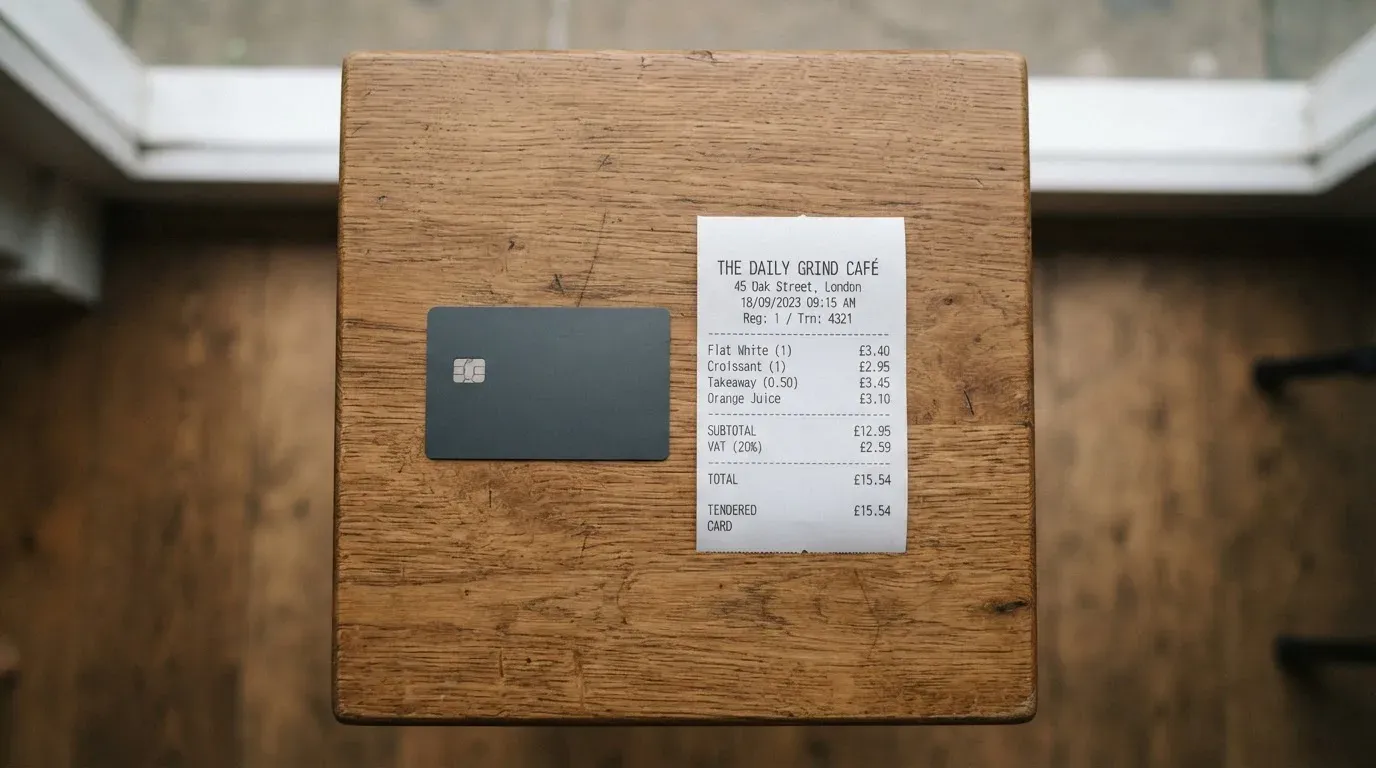
The number that matters most for ordinary life is the foreign-exchange mark-up: for non-USD transactions the card quotes “Visa Exchange Rate + 1.5%”. That is a 1.5% surcharge on top of whatever Visa’s rate is on the day, and it applies to anything you buy outside the United States or in a non-dollar currency. The help centre’s own advice is to choose the local currency at the terminal rather than letting the merchant charge you in dollars — which is the standard advice, but here it matters more than usual because the dollar conversion path adds the markup on top.
The number that catches people out is the ATM. The product page puts the fee at 4% on Basic, 2% on Plus and 1% on Prestige, charged on the withdrawal amount, with a maximum of three withdrawals per 24 hours and $250 per withdrawal. A separate help article adds conditions: contactless-enabled ATMs only, and only for cards issued after 10 March 2026 that show Platinum or Signature in Apple or Google Pay. That last detail matters more than it sounds — if you were issued a card earlier, an older card does not simply lose the feature, it needs reissuing. And then, in the same help centre, another article says “ATM cash withdrawals are not yet available”. I would plan as though cash withdrawal is uncertain, and check the app on the day you need it.
| Fee or limit | What it is | Amount |
|---|---|---|
| Basic plan | Monthly fee for the free tier | $0 |
| Plus plan | Monthly fee for the paid tier | $29.99/month |
| Prestige plan | Annual fee, marked coming soon | $999/year |
| First virtual card | Cost of the first virtual card | $0 |
| Additional virtual card | Each further virtual card | $5 |
| Replacement card | Quoted at $5 on the page, $1 in the tariff document | $5 / $1 |
| Physical card delivery | Charged to the Tangem Pay balance; two official ranges differ | $15.63-$63.45 or $14.53-$82.10 |
| Transaction fee | Standard card spending | $0 |
| FX fee | Non-USD transactions | Visa Exchange Rate + 1.5% |
| ATM fee | On the withdrawal amount | 4% Basic / 2% Plus / 1% Prestige |
| On-chain withdrawal | Taking USDC/USDT out | $0 |
| Dispute fee | When a formal dispute is opened | $30 |
| Bank transfer in (onramp) | Via bank details | ACH $1 / Fedwire $11 on Basic, $0 on Plus |
| Bank withdrawal out | To US banks only | ACH $1 / Fedwire $11, free on Plus |
| Daily spend per card | Per card | $10,000 Basic / $50,000 Plus / $100,000 Prestige |
| Annual spend per card | Per card | $10,000,000 |
| Transaction count | Per day / per month | 100 / 1,000 |
| Maximum card balance | Held on the card | $10,000 Basic / $50,000 Plus |
| Daily load | Amount you can add in a day | $100,000 |
| ATM withdrawal cap | Per transaction, per 24 hours | $250, maximum 3 |
Now, three everyday payments, so the table has some meaning.
A coffee at $4 in your own country costs nothing to make. No plan fee, no transaction fee, no conversion. This is where the card is at its best and where the “free virtual Visa” claim is literally true.
A $60 online subscription paid in dollars also costs nothing to make. The transaction fee is $0. What I cannot tell you is the cost of converting stablecoin into that dollar balance, because the card does not quantify its crypto conversion fee or spread. That gap is worth noting: the $0 transaction fee is the card’s fee, not the whole cost of the transaction.
A $60 meal in Europe is where the numbers start moving. Visa converts at its rate, the card adds 1.5%, and if you let the terminal charge you in dollars you have added the terminal’s own conversion on top. Choose the local currency and the extra is the 1.5%, which on $60 is 90 cents. Repeated daily, that is the number that decides whether this card suits you — not the monthly fee.
The tiers are worth comparing directly, because the jump from free to Plus is not just about plastic:
| Basic | Plus | |
|---|---|---|
| Plan fee | $0/month | $29.99/month |
| Card type | Visa Platinum, virtual | Visa Signature, plastic |
| Cards per account | Up to 3 | Up to 5 |
| Daily spend per card | $10,000 | $50,000 |
| Cashback | 1%, capped $100/month | 2%, capped $300/month |
| ATM fee | 4% | 2% |
| First plastic card | Paid delivery | Free |
| Bank transfers in and out | ACH $1 / Fedwire $11 | Free |
| Perks | — | Extended warranty, price protection, purchase protection, auto rental insurance, Airport Companion lounges |
The plan fee is charged every 30 days. If the balance cannot cover it, you get 30 days to top up before your Signature cards are closed and the account drops to Basic — which is worth understanding clearly, because losing your cards mid-trip because of a fee you forgot is a genuinely bad outcome. Nobody on the free tier has that problem.
How to top up the card
This is where the card is strongest, and it is why it scored 9 out of 10 on top-up options in my table. You can fund the card “with stablecoins or fiat directly from your bank account”, and the routes are concrete rather than hand-waved.
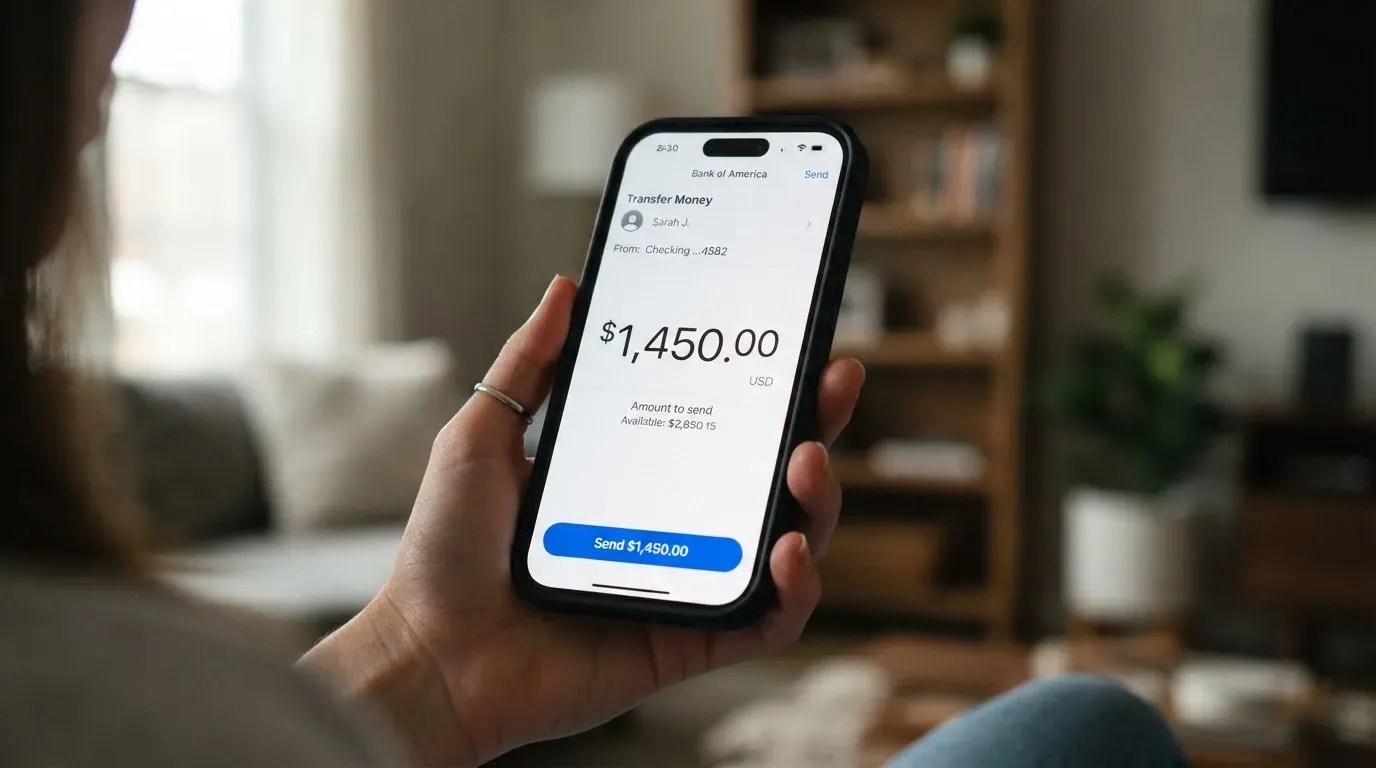
- From your Tangem Wallet, with an automatic swap if you hold a different token.
- From another wallet or exchange, using the deposit address for the relevant network.
- By bank transfer, ACH or Fedwire, where available in your region.
- Any other token, through the swap.
The named coins and networks are USDC and USDT on Polygon, Base, Arbitrum and BNB Smart Chain. Bank transfer converts to USDC. A bank deposit fee is deducted from the amount received rather than added on top, so the illustration given is $1,001 sent to receive $1,000 over ACH, and $1,011 via Fedwire — free on Plus. Network gas is paid by whoever sends. Limits are a daily load of $100,000, up to 24 loads a day and 150 a month. A minimum top-up is not stated.
One warning, and it is the one that costs real money: sending the wrong token or the wrong network is permanently lost. Blockchain transfers do not reverse, the network cannot freeze or return them, and the card does not promise recovery. Check the network twice — once against the deposit address in the app, once against what your sending wallet is actually going to use.
Taking money off the card works like this. You can withdraw USDC or USDT back to your Tangem Wallet at any time at a $0 on-chain withdrawal fee, with swap provider fees if you are converting another token. Bank withdrawal is ACH at $1 or Fedwire at $11, free on Plus, to US banks only, capped at $10,000 per transaction with no stated daily or monthly limit. Two things you cannot do with a merchant refund: it lands in the card balance and cannot be withdrawn from there.
And one genuinely important operational warning: if you factory-reset your Tangem hardware wallet or delete your Tangem account, you lose access to Tangem Pay and to the funds in it, and there is no relinking process yet. Withdraw your balance before you reset anything.
Paying with it every day
The Tangem Pay card lives inside the Tangem app on iOS and Android. I could not find an App Store or Google Play rating for it, so I have nothing to report there.
Wallets are the practical detail. Apple Pay and Google Pay are both supported, with Apple Pay depending on the country. That matters more than usual on a card like this because it means you can push the card into a phone wallet and use contactless without handling the physical card at all — including for a virtual card with no plastic to lose.
Rewards are modest and honestly stated. Cashback is 1% on Basic, 2% on Plus and 4% on Prestige, with monthly caps of $100, $300 and $1,000 respectively. An extra 5%, 10% or 15% on the first $500, and a welcome bonus of up to $75, are all marked coming soon. What currency the cashback is paid in is not stated. Given the cap of $100 a month, cashback is a small offset against a $29.99 monthly Plus fee — it does not come close to paying for the tier unless you spend heavily, and the $300 cap on Plus does not reach it either.
If you hold both USDC and USDT they go into a single combined balance and are spent from the highest balance first. That is a convenient rule and also a slightly opaque one: you lose direct control over which asset is being spent, which matters for tax purposes if you are in a jurisdiction where each disposal is taxable. The on-chain balance updates within two business days after a purchase, so the balance shown is not always live.
Some merchants are blocked. The restricted set, set by the issuer, covers gambling and online casinos, liquor stores and certain subscription services. Not a huge list, but worth knowing before you assume any decline is a bug. The full set of blocked categories and any wallet-related restrictions are not stated.
Getting a payment fixed when it goes wrong: disputes go to [email protected], follow the standard Visa chargeback procedure, and must be reported within 60 days of the transaction appearing on your statement. A $30 fee is charged when a formal dispute opens, and extra documents may be requested. Because merchant refunds only credit the card balance, a refund is money you can spend again but not money you can withdraw to your bank.
What can go wrong
The risks here are not exotic. They are the ordinary risks of this category, plus a few specific to how this card is built.
The first is that the money behind the card is not the money in your hardware wallet, and the separation is not entirely reassuring. Card funds sit in separate Tangem Pay smart-contract accounts, while your main assets stay in the non-custodial Tangem Wallet — that is the good part. But Tangem’s own footer states it is not regulated as a financial services provider, and the programme runs through Paera and Rain. Users have publicly disputed the self-custody claim on the grounds that a USDC withdrawal passes through a swap that charges fees, meaning value moves through a provider rather than straight to your wallet. I would read “you control your keys” as being about the wallet, and treat the card balance as a provider-held balance that happens to be denominated in stablecoins.
What you do get in the app is real and useful: freeze and unfreeze the card instantly, which shows as Suspended in Apple and Google Wallet; a 4-digit PIN; a custom daily spending limit you can set all the way down to $0; and one wallet linkable per account. What is not stated is whether any insurance or deposit protection applies to the balance. In the EU, electronic money institutions must safeguard customer funds by segregating them or insuring them — but such funds are not bank deposits and may not sit under a deposit guarantee scheme. I found nothing on these pages telling you the balance is protected in that way.
The second is who stands behind the card. The company’s own pages name Rain, described as a Visa Principal Member, as the issuer. An independent review from January 2026, unofficial and not confirmed by the card, describes the card as provided by Paera LLC and issued through Third National, a Visa licensed partner, with Rain providing co-signing and compliance. Registration country for Paera or Rain is not stated, and licences are not stated. If knowing the identity of the bank behind your card matters to you — and for anyone whose alternative is not having a bank card, it often does — this is unresolved in the public material.
The third is geography and the limits it puts on you. At the physical card launch, Tangem said shipping is restricted in 20 countries including China, Russia, North Korea and Palestine, citing KYC, sanctions and banking rules. The card is therefore digitally available in more places than plastic will ever reach. For the US, rejection by state is explicitly part of the KYC outcome.
The fourth is complaint themes. I found no broad pattern of user complaints about this card — a single search returned no Reddit or Trustpilot material specifically about it. Trustpilot shows Tangem at around 4.1 out of 5 across roughly 876 reviews, but that is the brand and the wallet, not the card. Card-specific reports are thin: one one-star review describing a card order shipped from Hong Kong with poor support, and the swap-fee objection above. Unofficial sources also report complaints about network outages and about support. Official incidents are not stated.
The fifth is the category risk nobody can remove. Card programmes close. Visa terminated its global agreements with FTX on 13 November 2022 and the FTX US debit card was wound down. Visa suspended WaveCrest in Europe in 2018, closing all WaveCrest-issued Visa programmes. Closures typically mean a notice period, then loading and spending stop, then you are asked to withdraw what is left. Tangem itself is a young programme — the launch was gradual from November 2025 across 38 jurisdictions initially — and the tariff terms date from 25 August 2026, which is a young document. None of that predicts a closure. It does mean you should not treat this card as the only place a balance lives.
What to take instead
Three alternatives came up in my research, and they fail in different ways from Tangem rather than being simply worse. All three are worth reading as a set.
MetaMask Card scores 7.1 out of 10, the closest of the three to Tangem. It is a Mastercard, virtual card issued instantly, with metal available to pre-order after the virtual card is approved, one card per user, issued by Monovate with Crypto Life as card provider. Sign-up is open in 45 listed countries and territories with proof of residency, other regions on a waitlist, and US and UK sign-ups temporarily closed per its FAQ. Virtual is free with no annual or maintenance fee; metal is $199 a year. Fees are described as “minimal fee for each transaction” with no amount stated on the pages read, and no foreign transaction fee — the Mastercard rate is used. It spends directly from the connected wallet on Linea, Base, Monad and Solana, with tokens named including mUSD, wETH, EURe, GBPe, USDC and USDT. Cashback is 1% on Virtual; on Metal the headline is 3% but the footnote limits 3% to the first $10,000 spent and 1% after. Against Tangem: a wider country list and a cleaner custody story, but an unquantified transaction fee and, right now, no US sign-ups.
KAST scores 6.1 out of 10 and has the most transparent fee schedule of the three. Three tiers: Standard at $0, Premium at $1,000 a year and Private at $10,000 a year, billed annually upfront with no monthly option. Cards run from Visa Platinum through Visa Infinite metal and gold-plated, with up to 10 cards per user. Fees: stablecoin top-up 0%, USD card spend 0%, transaction fee 0%, Apple and Google Pay 0%; non-USD foreign exchange 0.5% to 1.75% depending on your country and the transaction country; a $0.10 fee on non-USD transactions under $25; a $0.50 fee on a declined transaction for insufficient balance. Standard physical card is $0 plus $40 delivery. Cashback is 1.5% on the first $2,000 a month, 2% on the first $10,000, 3% on the first $40,000. The catch is eligibility: the country list is not published, it shows only at KYC, and holding an ID from a restricted region can disqualify you even if you live in a supported country — though dual citizens with an ID from a supported country may pass. KAST accepts USDT, USDC, PYUSD and RLUSD on several networks with no bank account needed, though its own terms say acceptable tokens are “currently USDT and USDC”, which conflicts with the app.
TokenPocket scores 5.8 out of 10 and is the weakest of the three. Visa debit for a list of European countries and territories, Mastercard debit for Australia, Canada, Hong Kong, Japan, Taiwan, New Zealand, Singapore, South Korea and the UK, among others. Fiat24 cards are virtual, balances in EUR24 and USD24, running on Arbitrum. Cost is low — the NFT creation fee is partly covered and the user pays a small portion — and apart from that no additional fees are charged. But a 1% fee is charged when depositing cryptocurrency into the card, intended to be refunded later via rewards or reduced transaction fees, which is a promise of a refund rather than a refund. No cashback stated, FX fee not stated.
| Tangem | MetaMask | KAST | TokenPocket | |
|---|---|---|---|---|
| Score in my assessment | 7.5 / 10 | 7.1 / 10 | 6.1 / 10 | 5.8 / 10 |
| Network | Visa | Mastercard | Visa | Visa or Mastercard |
| Free tier | $0, virtual card free | Virtual free | Standard $0 | Fee partly covered |
| Paid tier | $29.99/month | Metal $199/year | $1,000 to $10,000/year | Not stated |
| Transaction fee | $0 | “Minimal”, not stated | $0 | Not stated |
| FX | Visa rate + 1.5% | No FX fee, Mastercard rate | 0.5%-1.75% | Not stated |
| ATM | 4% free tier, 2% Plus | Not stated | Not stated | Not stated |
| Sign-up reach | US plus selected countries, list not published | 45 listed countries, US/UK closed | List shown at KYC only | Europe plus Asia-Pacific list |
| Cashback | 1% free tier, capped $100/month | 1% virtual | 1.5% to 3% on tier | None stated |
Who I would recommend it to
I would recommend the Tangem card to someone who already uses Tangem’s hardware wallet, holds USDC or USDT, lives in a supported region, and wants a card number at no monthly cost. For that person the free tier is a good deal: $0 plan, $0 first virtual card, $0 transaction fee, Apple Pay and Google Pay, and a balance that sits in the same app. The top-up routes are the best in this category, and the ability to set a daily spending limit or freeze the card instantly is a genuine comfort.
I would not recommend it as your only card. Not because anything is wrong with it, but because of what is unknown: whether cash withdrawal works today, which bank is the issuer, whether your balance is protected, and whether physical delivery reaches you. If any of those four matters to you, one of the alternatives above answers it more clearly — KAST publishes its whole fee schedule and its limits, MetaMask publishes a 45-country list and has no foreign transaction fee.
And I would think hard about the free tier before paying $29.99 a month for Plus. You get plastic, a higher spending ceiling, free bank transfers, better cashback and a lower ATM fee, plus the Visa Signature benefits. You do not get out of the 1.5% foreign-exchange mark-up, which is the fee you will actually meet while travelling. If you travel a lot, compare the Plus fee against what the 1.5% costs you; if you do not travel, the free tier is enough.
Frequently asked questions
What is the Tangem card?
The Tangem card is a Visa payment card that spends a stablecoin balance instead of a bank account. The free tier gives you a virtual Visa Platinum, paid tiers add a physical card, and the balance is loaded in USDC or USDT and held as dollars. It is offered in the US and selected countries across Latin America, Asia-Pacific, the Middle East and Africa.
Does the Tangem card require identity verification?
Yes. Verification runs through Sumsub as a single check: phone and email codes, a government-issued ID, and your residence address, with biometrics collected by the provider. US residents also give a social security number. You must be 18 or older, and limits on the card depend on the verification level you reach.
Where is the Tangem card available?
In the United States and selected countries across Latin America, Asia-Pacific, the Middle East and Africa — but not every country and not every US state. The published pages do not list the countries; eligibility is decided by your country and region of residence, and the app shows what applies when you enter your residence during onboarding.
How do I get a Tangem card?
Download the Tangem app on iOS or Android, enter your country, and complete the identity check. A virtual card is usually issued within 5 minutes and at the outside 48 hours; if it has not arrived by then, contact the account support address. Applying twice with the same identity is automatically rejected.
How much does the Tangem card cost?
The free tier has a $0 monthly fee, a $0 first virtual card and a $0 transaction fee. Plus costs $29.99 a month, with the first plastic card free. The costs that bite are a 1.5% markup on non-dollar transactions on top of Visa’s rate, and an ATM fee of 4% on the free tier and 2% on Plus.
Can I use the Tangem card with Apple Pay?
Yes, Apple Pay and Google Pay are both supported, though Apple Pay availability depends on your country. Pushing the card into your phone wallet means you can pay by contactless with no plastic in your hand at all, which is the main practical advantage of the virtual tier.
How do I top up the Tangem card?
You can top up with USDC or USDT on Polygon, Base, Arbitrum or BNB Smart Chain, by bank transfer over ACH or Fedwire where available, or by swapping another token. Limits are $100,000 a day, 24 loads a day and 150 a month. Sending the wrong token or network is permanently lost, so check the network twice.
Can I withdraw money from Tangem?
USDC or USDT can be withdrawn to your Tangem Wallet at any time with a $0 on-chain withdrawal fee, minus any swap provider fees. Bank withdrawal is possible to US banks only, at $1 by ACH or $11 by Fedwire, free on Plus, with a $10,000 per-transaction cap. Merchant refunds cannot be withdrawn.
Is the Tangem card safe?
Your main crypto stays in a non-custodial wallet you control, and the card balance sits in separate Tangem Pay smart-contract accounts. You get an instant freeze, a PIN, a custom daily spending limit you can set to $0, and one wallet per account. What the card does not state is any insurance or deposit protection on the balance, and it says it is not regulated as a financial services provider.
Is the Tangem card worth it?
Worth it if you want a card at no monthly cost, already hold stablecoins, and live somewhere it is supported. Less convincing if you need cash withdrawals, need to know which bank is the issuer, or need physical delivery to your country — the card’s own pages disagree on whether ATM withdrawals are available at all, and shipping is restricted in 20 countries.
Wallet cards in the catalogue – cryptocardcatalog
Content created by the «cryptocardcatalog» team