
Two card types, no identity checks, and a fee schedule the card itself does not publish
 Available in US

Sovrae sells what many people in places where an ordinary bank card is hard to get have been looking for: a Visa or Mastercard that you buy outright, load with stablecoins, and use like any other payment card, without handing over an identity document. The pitch is clear and the price is stated. What the public pages do not state is just as clear — the currency of the card, the size of the foreign exchange and transaction fees, the network fee you pay on a deposit, and which licences the partners actually hold. I went through the card’s own pages and the surrounding material and this is what I found. My score is 6.5 out of 10, and the reason it is not lower is that the core promise is genuinely delivered: a working card without KYC. The reason it is not higher is that you are asked to trust a company whose issuing partners and licences it does not name, and to pay fees it does not publish.
The conditions described below are current as of October 28, 2026.
Who should get the Sovrae card, and who should not
The single thing this card does that almost nothing else in the category does is operate without any identity verification. There is no document upload, no selfie, no waiting. That matters enormously to anyone who cannot open a bank account, does not want a financial institution holding a record of them, or simply lives somewhere the local banks will not issue to them. On that axis the card performs as advertised.
On cost, though, it is expensive in a way that is unusual for this category. A virtual card is $89 and a physical one is $349, both one-time, and then a top-up fee of 2% or 1.5% on every load. Add to that a foreign exchange fee and a transaction fee that apply to every purchase and are not quantified anywhere on the public pages. A card that charges a percentage to put money in, plus an unstated spread and an unstated per-transaction charge, is a card for people who spend in a stable currency and in fairly large amounts. It is not a card for someone paying a $4 coffee.
Reliability is where the caution belongs. The cards are issued by partners in Hong Kong and Singapore and no licences are named. I found no complaints — but I also found no Trustpilot page, no reviews on Reddit, and no record of independent incidents either way. Absence of complaints is not the same as evidence of a good track record. If you are choosing between this and a card with a published issuer and a licence number, that difference should weigh heavily.
Everyday use is the card’s best feature. A virtual card activates instantly and stays valid for three years; a physical one takes five to seven days and is valid for four years. Both work with Apple Pay and Google Pay. The physical card works in ATMs. That is a genuinely complete everyday offering for a no-KYC card.
| Criterion | Mark | Why |
|---|---|---|
| Who can get it | 9 / 10 | Open worldwide except a restricted country list, including Afghanistan, Belarus, Cuba, Iran, North Korea, Syria, Venezuela, Russia, Ukraine, Myanmar, Somalia and Yemen, among others |
| Cost | 2 / 10 | Virtual $89, physical $349, top-up 2% and 1.5%, plus FX and transaction fees with no amounts given |
| Top-up options | 9 / 10 | USDT and USDC on BEP-20, ERC-20 and TRC-20, other coins through an in-app swap, and a permanent deposit address per card |
| Reliability and complaints | 5 / 10 | Issued by partners in Hong Kong and Singapore with no licences named, no KYC, and no complaints or reviews found to judge by |
| Everyday use | 9 / 10 | Instant virtual card valid three years, physical card in 5–7 days valid four years, Apple Pay and Google Pay on both, ATM on the physical one |
| Total | 6.5 / 10 | A genuinely no-KYC card with excellent everyday coverage and a price and fee schedule you cannot fully see before you pay |
The audience this fits, in one line: people who have decided that avoiding an identity check is worth paying a premium and tolerating an incomplete fee schedule. If you have a normal bank account, a normal bank card is cheaper in every dimension that matters, and this is not a contest.
Will they give you the card
Eligibility is where Sovrae is unusually open, and it is also where the fine print is doing its work quietly. The card is available worldwide except a set of restricted countries, and the reason given is the Visa and Mastercard card network policies rather than Sovrae’s own risk appetite. The named countries are Afghanistan, Belarus, Cuba, Iran, North Korea, Syria, Venezuela, Russia, Ukraine, Myanmar, Somalia and Yemen, “among others”. The full list is not published on the page — the company says it will supply it on request by email or Telegram.
That request mechanism is worth pausing on. If your country is one of the unnamed “others”, you cannot check yourself before you try. You have to ask, and the answer comes from a private channel.
One thing the public pages do not say: whether the restriction follows your citizenship or where you live. This is not a technicality. Sanctions screening, and the risk policy of card networks, are commonly applied to nationality and country of birth as well as to your address. If you hold a passport from a restricted country but live and bank legitimately elsewhere, the card’s own page will not tell you whether that is a problem. My honest read is that you cannot resolve this from public information at all — it is a question to ask Sovrae directly before you pay $89 to find out.
How to get it
There is no application in the usual sense. There is no form, no document, no credit check. The card is described as pre-verified upon purchase, and the company states that your personal details are never passed to third parties. In practice the sequence is two steps: buy the card, then fund it with USDT or USDC.
What you end up with is one of two products.
- Virtual card. Activates instantly on purchase and is valid for three years. This is the one to start with, both because it is faster and because it is less than half the price.
- Physical card. Arrives in five to seven days and is valid for four years. By default it carries no name; personalisation is available on request.
Both are described as Visa and Mastercard worldwide cards. Which network each one runs on is not spelled out, and the card currency is not stated either. If you need a specific network for a specific subscription or a specific currency for a specific merchant, you cannot determine that from the public pages.
The company also does not state the delivery countries for the physical card, the delivery cost, or the cost of a replacement. It does not state a minimum age, and since there is no verification step at all, the usual “adults only” expectation for prepaid cards is not enforced anywhere I can see.
Fees: what it really costs
Here is the whole of what Sovrae publishes about price, which is worth reading in full before you decide anything. The issuance prices are high and the recurring fees are unquantified.

| Item | Virtual card | Physical card |
|---|---|---|
| One-time issuance | $89 | $349 |
| Monthly fee | None listed | None listed |
| Top-up fee | 2% | 1.5% |
| Foreign exchange fee | Charged on transactions, amount not stated | Charged on transactions, amount not stated |
| Transaction fee | Charged on transactions, amount not stated | Charged on transactions, amount not stated |
| ATM | Not available | Available, fee not stated |
| ATM limits | Not applicable | $3,750 daily, $80k monthly |
| Spending limits | $80,000 per transaction, $1M daily | $80,000 per transaction, $1M daily |
Two cards, no tiers, no subscription — the tiers here are just the two products.
Let us run three ordinary payments through that table, because the arithmetic is where this card’s cost actually lives. I use round figures and nothing else.
A $20 supermarket shop, paid from a USDC balance. The top-up fee was already charged when you loaded, so the cost here is the transaction fee plus, if the merchant prices in your local currency, the foreign exchange fee. Both amounts are not stated. What I can tell you is that the card’s own structure guarantees you pay at least one undisclosed percentage or fixed charge on top of the price of the goods, and probably two.
A $60 subscription billed in euros while your balance is in dollars. Add the foreign exchange conversion to the transaction fee, and expect the usual friction that comes with any foreign-issued card. Address verification is mainly offered in the US, Canada and the UK, and is generally unavailable on foreign-issued cards, which causes declines on a share of online checkouts. Prepaid and foreign BINs get declined at some merchants for the same reason: the merchant’s lookup shows the card type and the issuer country.
A $200 cash withdrawal from an ATM in Thailand. The top-up fee of 1.5% on the load, the foreign exchange rate your bank or ATM operator applies to a dollar card in a baht economy, and then an ATM fee the card does not state. This is the weakest use case for the physical card and I would think hard about it.
Notice also that the largest number in the table — $80,000 per transaction and $1M daily spending — is a limit, not a benefit. Nobody needs it, and a high ceiling on an account with no identity verification attached is not a comfort.
How to top up
Topping up is the part Sovrae has clearly thought about, and it is the strongest part of the product.
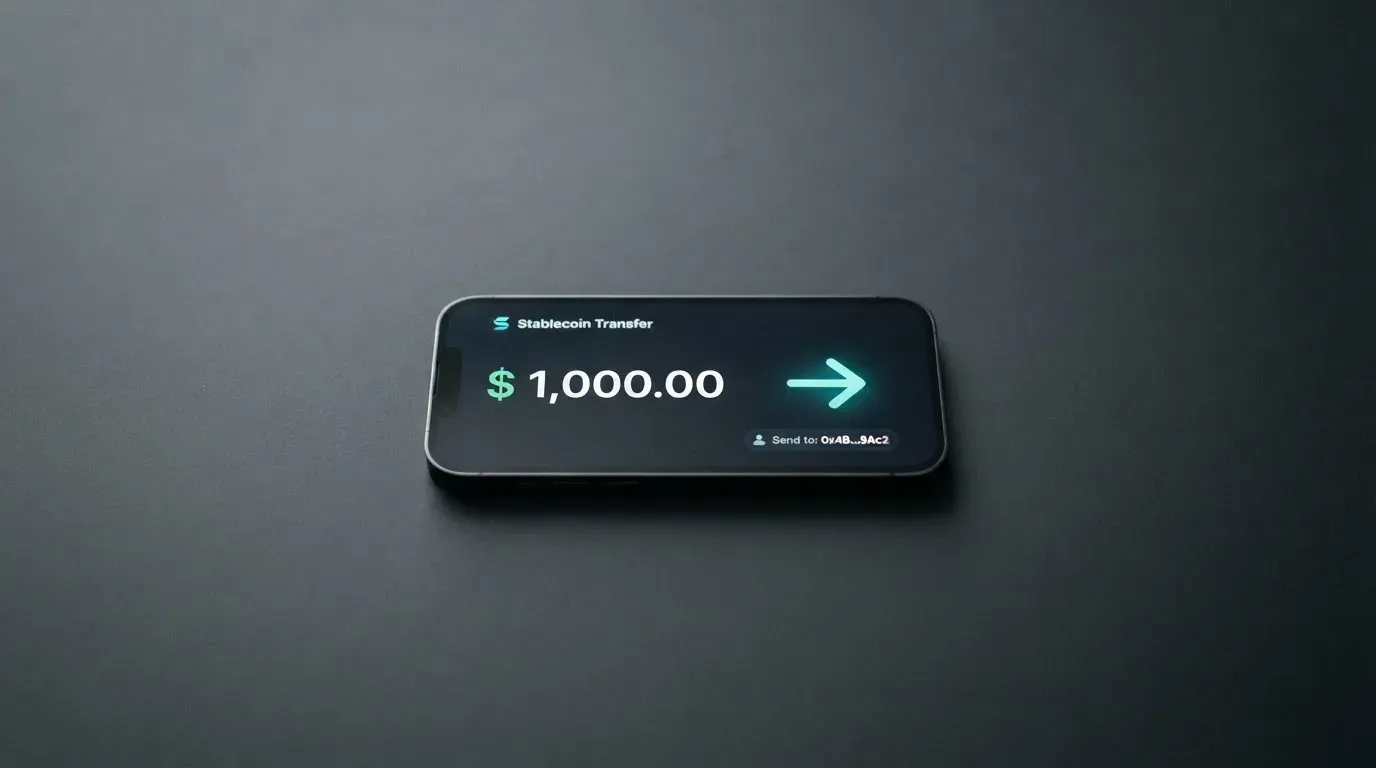
You fund with USDT or USDC, on any of three networks: BEP-20, ERC-20 or TRC-20. Other coins can be converted through an in-app swap. Each card has a permanent crypto deposit address — a fixed address you can send to repeatedly rather than generating a new one per deposit, which removes an entire class of mistakes. Funds sit in a non-custodial wallet until you top up, meaning the keys are yours until the moment the balance moves.
Top-ups are described as instant and as reflecting in minutes. The fee is 2% for the virtual card and 1.5% for the physical one.
What is not stated: the minimum top-up, whether you pay the blockchain’s own network fee, and whether fiat top-up is possible at all. I would assume not, because nothing on the page mentions a bank transfer or a card funding route, but assume is the word doing the work there.
On the network choice, one caution that applies to everybody and matters more here because there is no help desk in the traditional sense. ERC-20 fees are gas, paid only in ETH, so a wallet holding USDT with no ETH cannot send at all. Tron fees are paid through bandwidth and energy, and often burn TRX. And one thing to know before you plan around TRC-20: Circle stopped supporting USDC on Tron in February 2024, so “USDC over TRC20” is not a native option — USDT on Tron, yes; USDC on Tron, essentially no. On BEP-20 and ERC-20, USDC works as you’d expect.
Paying with it every day
Day to day, this is a well-behaved card. Both cards work with Apple Pay and Google Pay, which in practice is how you will use the virtual one, since it exists nowhere but on a screen. When you add it to a mobile wallet, the card number is replaced by a device-specific number held in the phone’s secure hardware, never on Apple’s servers, and each payment carries a one-time code. That is a meaningfully better security posture than a card number written on a piece of paper.
The physical card works at ATMs, within the $3,750 daily and $80,000 monthly ATM limits. There is no cashback listed. There is a referral programme of up to $50 per card bought by a user you referred, across three levels — modest, and worth knowing about only if you were already going to buy cards.
A list of blocked categories is published: petrol stations, betting, crypto purchases, military supplies, gaming credits, non-profits and government agencies. Some of these are network-level rather than card-level restrictions — gambling, for instance, sits under a merchant category code that many issuers block as policy rather than law, and the blocked list varies by issuer elsewhere. But petrol is a surprising one to see here, and if you drive for a living it rules the card out for you.
Also not stated, and these matter in a bad week: the app listing (there is no app page on the site’s public material I could find), and the dispute process. No chargeback route, no reason codes, no stated timeline. When something goes wrong, you would be relying entirely on the Telegram channel for support.
What can go wrong
I want to be specific here rather than gloomy, because most of these are ordinary card-industry risks that apply to any prepaid card, plus one or two that are specific to this setup.
The unnamed issuer. The cards are issued by partners in Hong Kong and Singapore, and no licences are named. There is a real, checkable difference here. An electronic money institution must hold customer funds in segregated accounts or insure them, and those funds are not bank deposits and may not sit under a deposit guarantee scheme. A card issued under a named licence is answerable to a regulator. A card issued by an unnamed partner is not, as far as anything published goes.
No KYC means no safety net for you either. The usual reasons a card issuer freezes an account — sanctions matches, suspicious activity reports, source-of-funds questions — mostly come from having verified you. Without verification there is less to trigger, but it also means less protection if something looks unusual. If due diligence cannot be completed, EU rules require the institution to decline the relationship and, where needed, end it. Unverified is not the same as unregulated, but it does mean your counterparty risk is entirely on you.
Mistakes on the blockchain are yours. Transfers are irreversible. A deposit sent on a network the provider does not support, or to an address belonging to a different network, can be lost or need manual recovery with no guarantee of success. There is a permanent deposit address, which helps, but it does not protect you from sending from the wrong network.
Stables can and do depeg. USDT and USDC are dollar-pegged and roughly 90% of stablecoin market capitalisation sits in those two, but a stablecoin is not a deposit. TerraUSD collapsed in May 2022; USDC lost its peg briefly in March 2023. Tether also disables tokens in wallets on the OFAC sanctions list and has frozen funds tied to illicit activity, so stablecoins are not censorship-proof in your favour either.
Programme shutdown is a real category of risk. When a card programme ends, the pattern is consistent: a notice period, then loading stops, then spending stops, then you are asked to withdraw what remains. Visa terminated its global agreements with FTX on 13 November 2022 and the card was wound down by its issuer. WaveCrest, which supplied crypto card brands, was suspended by Visa in Europe in 2018 and every WaveCrest-issued Visa programme closed. A card with no named issuer and no licence number is harder for you to assess on exactly this point.
No dispute route, as far as the public pages show. If a merchant takes your money and delivers nothing, the process that a normal card gives you is not documented here.
I should say clearly what I did not find: no official incidents, no Trustpilot page, and nothing at all when searching for reviews on Trustpilot or Reddit. That is genuinely neutral. An unknown card with no complaints and no reviews tells you nothing about how it behaves when it is under pressure.
What to take instead
The comparison below is not apples to apples, and I would rather flag that than pretend it is. All three alternatives score lower than Sovrae on the same scale, largely because each publishes less than Sovrae does. Where they differ is in what kind of card they are.
| Sovrae | Cardex | CardFlow | HyperCard | |
|---|---|---|---|---|
| Score | 6.5 / 10 | 5.6 / 10 | 4.9 / 10 | 4.7 / 10 |
| Verification | None | Not stated | Not stated | Not stated |
| Card price | $89 virtual, $349 physical | Not stated | Virtual card free | Not stated, no fees listed |
| Networks | Visa and Mastercard worldwide | VERVE, VISA, Mastercard, UnionPay | Mastercard | Not stated |
| Funding | USDT, USDC on BEP-20, ERC-20, TRC-20, in-app swap | USDT, USDC, BTC wallets, networks not stated | Bitcoin, USDT, ETH or Naira transfer | USDT, BTC, ETH in the app |
| Card currency | Not stated | Naira per the App Store listing | USD | USD or EUR |
| Recurring fee | 2% / 1.5% top-up plus unstated FX and transaction fees | Real-time conversion, no percentage published | Not stated | Not stated |
Cardex markets one crypto card for 200+ countries with no country list and no exclusions published. Its App Store listing is Naira-focused, so if you are outside that market the picture is thin. Its interesting feature is an “AI-Powered Conversion Rate” that scans global exchange rates and picks the best one at the moment you spend. No fee percentage is published, which means the same uncertainty as with Sovrae but less disclosure. It scores 5.6.
CardFlow is explicitly built for Nigeria — “Nigeria’s smartest fintech card platform” — and also pitched to global users. A virtual USD Mastercard in 3 minutes, and creating one is free. Funding by Bitcoin, USDT, ETH or a Naira bank transfer. Fees are not stated. If you are in Nigeria this is a cheaper way in; if you are not, the fit is unproven. It scores 4.9.
HyperCard is the vaguest of the three. No country list on the official pages; the App Store says the card works in more than 176 countries, which is a statement about acceptance, not about who may apply. A prepaid card with a USD or EUR balance, funded by depositing USDT, BTC or ETH. No network stated, no fees stated. It scores 4.7.
The honest summary: if the thing you cannot get is a card without KYC, Sovrae is the strongest of these four and probably one of the stronger options in the category. If what you actually want is a cheap way to spend crypto, CardFlow’s free virtual card and Cardex’s conversion claims are worth a look, and both need fee figures you will have to ask for.
Who I would recommend it to
I would recommend this card to someone in a specific position: you have USDT or USDC, you are in a country where banking is difficult or you do not want a bank record, you will spend in a currency close to the dollar so the FX fee stays small, and you are comfortable being the one watching for wrong-network transfers and unquantified fees. If all four of those are true, the instant virtual card at $89 is a reasonable price for what it does.
I would not recommend it to a person who spends small amounts daily. With a 2% top-up fee, an unstated transaction fee and an unstated FX fee, small purchases are where this model hurts most, and there is no version of the numbers that makes a $3 coffee cheap.
I would also hesitate before recommending it to anyone who needs to raise a dispute, or who needs their money back if the operator stops. Both of those protections come from an issuer with a licence and a published complaint process, and this card does not name one.
Before you buy, three questions, and I mean ask them rather than look for them: what licence does the issuing partner in Hong Kong or Singapore hold, and under whose name; what exactly are the FX and transaction fees as a percentage or a fixed amount; and does the restriction list follow citizenship or residence. Get those three answered and this is a 7 or 8 out of 10 card. Leave them unanswered and it stays where I put it.
Frequently asked questions
What is the Sovrae card?
It is a Visa or Mastercard payment card sold outright and funded with cryptocurrency rather than through a bank account. You buy it — $89 for a virtual card, $349 for a physical one — and load it with USDT or USDC. The balance is converted and spent like an ordinary prepaid card, at shops, online, and in ATMs if you have the physical version. It is not a bank account and the company is not described as a bank.
Does the Sovrae card require KYC?
No. There is no identity verification at all, which the company states by saying the cards are pre-verified upon purchase and personal details are never passed to third parties. Documents, age checks and verification tiers are all not stated, because the site describes no verification process of any kind. That is the main reason to consider this card, and also the reason the licensing picture matters so much.
How much does the Sovrae card cost?
A virtual card costs $89 one time and a physical card $349 one time, with no monthly fee listed. On top of that, a top-up fee of 2% for virtual and 1.5% for physical, a foreign exchange fee and a transaction fee on every purchase with no amounts published, and an ATM fee on the physical card that is also not stated. Only the issuance prices are fully disclosed.
Can I use the Sovrae card in my country?
Probably, since the card is open worldwide except a restricted list that includes Afghanistan, Belarus, Cuba, Iran, North Korea, Syria, Venezuela, Russia, Ukraine, Myanmar, Somalia and Yemen, “among others”. The full list is not published; the company says it will send it on request by email or Telegram. The site does not say whether the restriction follows your citizenship or where you live, which is the question that actually decides it for some people.
How do I top up the Sovrae card?
Send USDT or USDC to the card’s permanent crypto deposit address, on the BEP-20, ERC-20 or TRC-20 network. Other coins go through an in-app swap. Top-ups are described as instant, reflecting in minutes, and cost 2% on the virtual card or 1.5% on the physical one. The minimum amount, who pays the blockchain network fee, and whether you can fund with fiat are not stated.
Can I use the virtual card straight away?
Yes, that is its main advantage. A virtual card activates instantly on purchase and stays valid for three years, and it works with both Apple Pay and Google Pay. You add it to your phone’s wallet and pay from it there, which is also the safest way to use a card number that only exists on a screen. It cannot be used at ATMs; only the physical card can do that.
Is the Sovrae card safe?
There is no way to give a simple yes. The reassuring parts: no KYC means a stolen card number exposes less, funds sit in a non-custodial wallet until you top up, and mobile wallet payments use device-specific numbers with one-time codes. The worrying parts: the cards are issued by unnamed partners in Hong Kong and Singapore with no licences named, personal details go nowhere but also so does any accountability, there is no published dispute or chargeback process, and I found no reviews or Trustpilot page either way to judge it by.
Which coins and networks can I use for a deposit?
USDT and USDC, on BEP-20, ERC-20 or TRC-20. Any other coin can be converted with the in-app swap. Two practical warnings: on ERC-20 the network fee must be paid in ETH, so USDT alone is not enough to send, and Circle stopped supporting USDC on Tron in February 2024, so USDC over TRC-20 is not a native option. Sending on the wrong network can lose the money outright.
What are the Sovrae card’s limits?
Spending is capped at $80,000 per transaction and $1M daily on both the virtual and the physical card. ATM use is physical-card only, limited to $3,750 daily and $80,000 monthly. There are no limits that vary by verification level, because there are no verification levels. The card also blocks certain categories: petrol, betting, crypto, military supplies, gaming credits, non-profits and government agencies.
Who do I contact if something goes wrong?
The published channels are Telegram @sovrae_io, X @Sovrae_io, and email [email protected]. Hours and languages are not stated. Be aware that this is a chat channel rather than a regulated complaint process, and no dispute or refund procedure is described, so if you need to raise a chargeback you would be starting from nothing. Keep your own records of transactions either way.
Virtual cards in the catalogue – cryptocardcatalog
Content created by the «cryptocardcatalog» team