
The card that names its programme manager but not its bank
 Available in US
SolCard is a crypto payment card: you load it with stablecoins or coins such as SOL, USDC, ETH or BTC, and it spends as a USD balance through a Visa network. It comes in two shapes — a virtual card with the details you type in by hand, and a Platinum physical card with contactless and mobile wallets. On paper that is a tidy product with worldwide acceptance and no monthly fee. In practice, the gaps in its public pages are wide enough that I would not load it with money I need back on a predictable schedule. My score: 5.6 / 10.
The conditions described here are current as of October 28, 2026.
The score, and who this card is really for
Here is the breakdown I worked from, criterion by criterion, with the total I arrived at.
| Criterion | Mark | Why |
|---|---|---|
| Who can get it | 8 / 10 | Accepted worldwide with “eligibility may vary by region”; Hong Kong residents and sanctioned countries excluded |
| Cost | 4 / 10 | Virtual: 5% + USD 10 top-up fee, FX 1-2%; Platinum: 0% top-up, FX 0-1.5%; no monthly fee but 10% of balance per month after 90 days idle |
| Top-up options | 6 / 10 | Stablecoins and crypto including SOL, USDC, ETH, BTC from any wallet; networks not named |
| Reliability and complaints | 3 / 10 | Issuer unnamed, SC PAYMENTS LIMITED is only the programme manager; Trustpilot 3.1 out of 5 |
| Everyday use | 7 / 10 | Virtual and physical Platinum, Apple Pay and Google Pay on Platinum only, ATM not disclosed |
| Total | 5.6 / 10 |
The two highest marks are the two that matter least when something breaks. Eligibility is broad, and paying with the card is straightforward once funded. The two lowest marks are the two that decide whether you get your money back: cost and reliability.
So who does this suit? Someone already holding SOL or a dollar-pegged stablecoin who wants a USD card to spend from, treats it like a wallet rather than a bank account, keeps the balance small, and has an exit route through another card for anything important. The Solana-heavy top-up list makes sense for that reader — this is a card built for people who already live on-chain.
Who it does not suit: anyone whose income depends on this balance, anyone living on a card that must work at a specific merchant, and anyone with a strong objection to handing a private key’s worth of trust to an unnamed issuer’s compliance department. If you need a bank-grade current account, this is not that, and no fee table will make it so.
Will they give you the card
SolCard’s public position is wide open: acceptance is worldwide, and the site qualifies it with “eligibility may vary by region”. That sentence does a lot of work, because it means the real list is somewhere the public pages do not show.
What the terms do exclude is clear enough. Hong Kong residents, Hong Kong-domiciled and Hong Kong-located users are out. So are users in countries under comprehensive UN, US, EU or UK sanctions, and named listed persons. That last clause is worth pausing on — it is the kind of screening that follows you around the industry, and it applies to you as an individual, not just your address.
So if you are reading this outside Hong Kong and outside a comprehensively sanctioned country, you are in the likely-eligible group. Whether you are in the actually-eligible group is something you learn by trying.
How to get it
The signup story is short, because SolCard does not publish much of it.
Identity verification “may be required for certain card tiers, features, or spending limits.” Beyond that — which documents, what kind of proof of address, how long it takes — the public pages do not say. The terms set a floor of 18+. The verification tiers are not defined anywhere public, and neither are the processing time or the reasons a check might fail.
There is a second, unofficial picture, and I want to be straight with you that it contradicts the first. A help-centre page read via a third-party site in August 2026 says no physical cards are being issued “for now”, while the product page still advertises a Platinum physical card. The same source says the virtual card is issued about 18 seconds after a first deposit confirms, and that the virtual card is marketed as no-KYC while Platinum requires identity verification. A Trustpilot review from July 2025 makes a narrower claim: the physical cards that work with Apple Pay and Google Pay require KYC. None of that is confirmed by SolCard, and where it contradicts the product page, trust the product page — but plan for the possibility that you get a virtual card and no plastic.
What it really costs: the Fees
This is where the card starts to cost you more than the headline suggests, and where the two products diverge sharply. Every figure below is from SolCard’s own materials.
| Fee or limit | Virtual | Platinum |
|---|---|---|
| Top-up fee, per new card | 5% + USD 10 | 0% |
| FX rate | 1-2% | 0-1.5% |
| Monthly fee | none for an active account | none for an active account |
| Dormancy | 10% of balance per month after 90 days inactive | 10% of balance per month after 90 days inactive |
| Monthly spending limit | USD 5,000 | none |
| Apple Pay / Google Pay | not available | included |
| Support | standard | priority |
The virtual card’s headline cost is brutal and you should read it as a one-per-new-card charge: 5% plus USD 10 on each top-up of a new card. After that card exists, the top-up fee is not repeated. Platinum charges nothing on top-up. Both charge you on the FX side, and both have no monthly fee as long as the account is active.
Now three everyday payments, and which fees actually bite:
- A USD 40 subscription in dollars. Neither card charges a conversion fee, because no conversion happens. Both charge the top-up fee that got the balance there, once.
- A EUR 30 subscription paid from a USD balance. The 1-2% spread on the virtual card, 0-1.5% on Platinum. On EUR 30 that is at most EUR 0.60, and it is the only fee that recurs.
- A cash withdrawal. The card does not state its ATM fee or its withdrawal terms. This is not a zero — it is an unknown, and unknowns on ATMs tend to resolve as the highest fee on the card.
One fee that is easy to miss and worth internalising: 10% of the balance per month after 90 days of no activity. That is not a fee on your spending. It is a slow bleed on anything you forget is sitting there. If you are going to hold a float, set a reminder.
Your card balance is in USD. Spend in another currency and a foreign-exchange spread may apply on top of the rates above.
How to Top up it
Top-ups are crypto-only as far as the public pages go. SOL, USDC, ETH and BTC are named, and the site promises “instant top-ups from any wallet”. The networks are not stated — and this is the single most consequential omission on the page, because blockchain transfers are irreversible. A deposit sent on a network the provider does not support, or to an address belonging to a different network, can be gone or reduced to a support ticket with no guarantee.
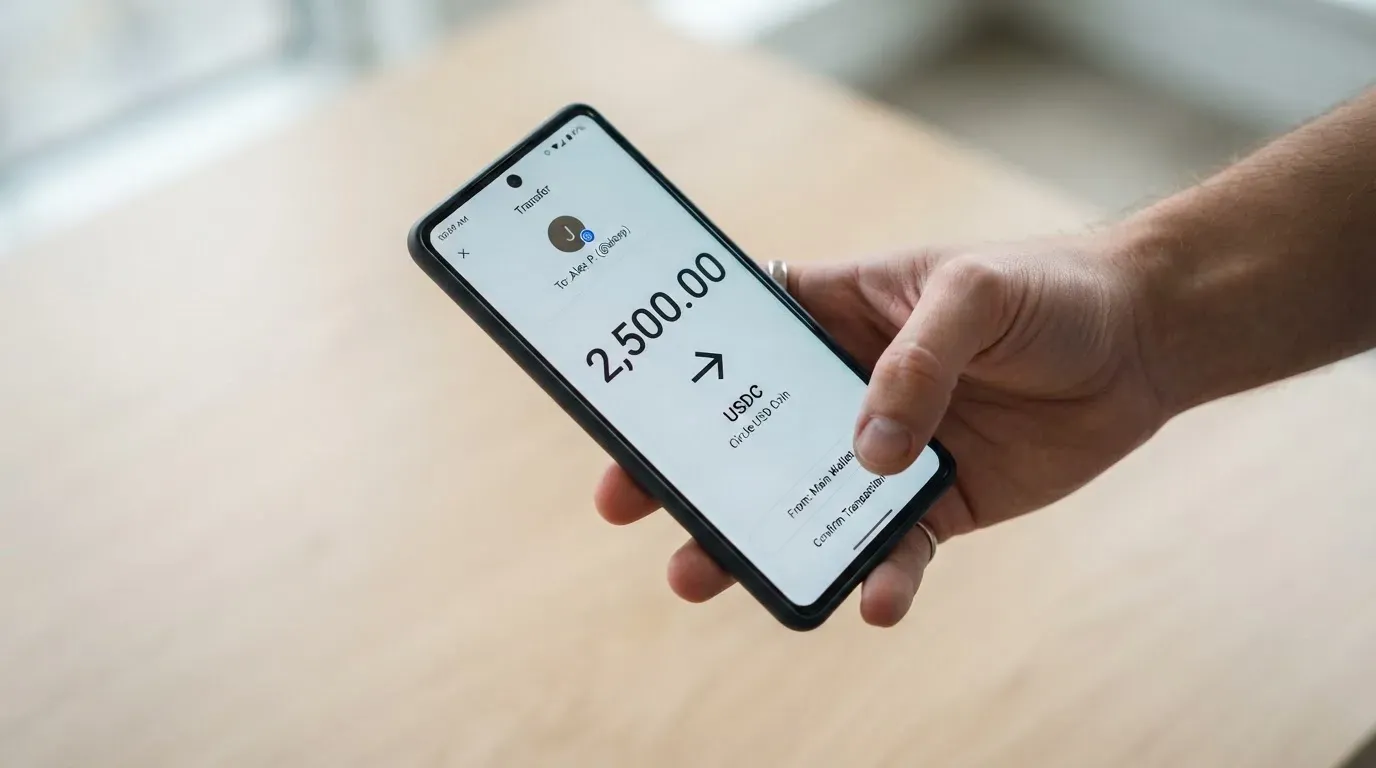
The mechanics are worth knowing. The minimum top-up amounts are published in the app and differ by card type. Your crypto is credited in USD only after the blockchain confirms, converted at that moment’s price, less the displayed top-up fees and the conversion spread. So the USD you receive is a function of the minute the transfer confirms, not the minute you pressed send. If you are topping up a large amount, that gap is real money.
Fiat top-up options are not stated. If you were expecting to add money from a bank account, the public pages do not confirm that is possible.
Getting money back out is the other half. Unused balance can be withdrawn subject to minimums, verification and processing windows shown in the app. On cancellation, a balance at or above the published minimum refundable amount is returned; below that minimum it is forfeited. On termination, eligible balances can be withdrawn, except where holds, disputes, chargebacks or legal restrictions apply. And the 10% monthly dormancy fee keeps accruing after 90 days regardless. Read the in-app minimums before you load, because that number decides whether a cancellation costs you the balance.
Paying with it every day
Day-to-day spending is the card’s strongest dimension, and this is where it earns its 7 out of 10.
The Platinum physical card supports contactless and Apple Pay and Google Pay. The virtual card does not support the mobile wallets at all — you type the card details in by hand. That is a real, if unglamorous, difference: no tap-to-pay, no wallet, and a card number that gets typed into sites often enough to be worth treating carefully.
The card sits under a Visa licence. The balance is USD.
Two things the everyday-use story is missing. There is no published list of blocked merchants — the site says merchants restricted by the issuer or the card network may be declined, which is honest but not specific. And the card does not state ATM availability or cost, which for anyone who withdraws regularly is a gap, not a detail.
Rewards: the official material says nothing about cashback. Unofficial sources say there is none, and that eligible spending instead earns entries into a prize draw — non-transferable, no cash value. Treat the official silence as the fact and the draw as unconfirmed.
The app is described only as a “Dashboard”. Platforms and store ratings were not found.
What can go wrong
This is the section I would not skip, and the reason the score is 5.6 rather than something higher.
The issuer is not named. SolCard’s terms name SC PAYMENTS LIMITED, a Hong Kong company (BRN 78350827, Unit 1603, 16/F, The L. Plaza, 367-375 Queen’s Road Central) as programme manager and technology platform, and state plainly that it is “not a bank”. The actual issuer is an unnamed licensed financial or e-money institution operating under a Visa licence. So the company you will deal with is not the company that holds your card programme, and it is not the company whose compliance department decides whether a withdrawal clears.
The complaint record is poor. Trustpilot reads 3.1 out of 5 from 29 reviews, of which 22 fall in the last 12 months: 38% five-star, 52% one-star. Trustpilot’s own notice says the company “may be associated with high-risk investments”. The themes repeat: withdrawals and transfers stuck (September 2025, August 2026, October 2026), declined payments (October 2026), unauthorised or disputed charges (June and July 2026), support that does not respond or behaves like a bot (March, August, October 2026), and a card cancelled while holding funds (September 2025). There is also a Tradersunion trust score of 2.1 out of 5, which is automated rather than editorial.
One clarification worth having, because it will otherwise worry you for the wrong reason: the phishing flags floating around this card concern a look-alike domain, solcards.cc — not solcard.cc, which is the real site.
The company is responding, but late. In October 2026 the company replied on Trustpilot saying it had removed the USD 20 minimum withdrawal, reworked withdrawals and transfers, and fixed a deposit hold — and attributed card declines to stricter issuer rules. A third-party site reported in August 2026 that public replies to old complaints only began in July 2026. Both of those are points in the company’s favour; neither changes the ratio of one-star reviews.
The custody is real. Your balance is custodial: held by SolCard, with top-ups converted to USD. You must protect your card number, CVV and PIN, report loss promptly, and you are liable for unauthorised use as the law allows. Withdrawals may be delayed for security review. Two-factor authentication, card freeze and insurance are not stated. Here is the general context, because it applies to any custodial card: holding funds with a custodian carries counterparty and hack risk, and the industry’s record includes Mt. Gox (about US$350 million reported stolen, 2011-2014), Coincheck (about US$400 million, 2018) and Ronin Network (US$625 million, 2022). Crypto transfers are also typically irreversible — the network cannot freeze or return them.
No time frames for disputes. The terms set none. A dispute can hold withdrawals, and a handling fee may be charged if you have a disproportionately large number of declines, reversals or disputes. Contract disputes go to HKIAC arbitration in Hong Kong, in English, before one arbitrator. That is a meaningful detail: a dispute with this card is litigated in Hong Kong under English-language arbitration, not in your home court.
Card networks can pull the rug. Visa and Mastercard do not issue crypto cards to consumers themselves; they license issuers, and they can suspend a programme. Visa terminated its global agreements with FTX on 13 November 2022 and the FTX US debit card was wound down. WaveCrest, a Visa issuer that supplied crypto card brands, was suspended by Visa in Europe in 2018, closing all its Visa programmes. Programme closures typically mean a notice period, then spending and loading stop, then you are asked to withdraw what is left.
One last category-level point that catches people out: merchants can look up your card’s issuing country and may apply extra scrutiny when it differs from your billing address. Some merchants decline prepaid or foreign-issued cards for exactly that reason. Address verification is mainly offered in the US, Canada and the UK and is generally unavailable for foreign-issued cards, which causes declines. A declined authorisation can also leave a hold on your funds for several days, typically up to seven.
What to take instead
If SolCard’s shape appeals to you but the unnamed issuer does not, these are the alternatives I compared it against, on the same questions.
| SolCard | Cardex | CardFlow | HyperCard | |
|---|---|---|---|---|
| Score | 5.6 / 10 | 5.6 / 10 | 4.9 / 10 | 4.7 / 10 |
| Who | Worldwide, region-dependent; Hong Kong and sanctioned countries excluded | “One crypto card, 200+ countries”; no list or exclusions published | Aimed at Nigeria and “Nigerians and global users”; no exclusions stated | No country list; App Store says works in “more than 176 countries” |
| Card | Virtual and Platinum physical, Visa licence | Debit card on VERVE, VISA, Mastercard, UnionPay; virtual and physical | Virtual USD Mastercard, about 3 minutes to create | Prepaid; network not stated |
| Cost | Virtual 5% + USD 10; Platinum 0% | Not stated | Virtual card free to create; monthly fee not stated | Not stated; no fees on the App Store page |
| Conversion | FX 1-2% virtual, 0-1.5% Platinum | Real-time conversion, “AI-Powered Conversion Rate”; no percentage stated | Not stated | Not stated |
| Top-up | SOL, USDC, ETH, BTC | USDT, USDC, BTC | Bitcoin, USDT, ETH or Naira bank transfer | USDT, BTC, ETH in the app |
| Currency | USD | Naira per the listing | USD | USD or EUR |
| Rewards | None stated | Not stated | Not stated | Not stated |
| Networks | Not stated | Not stated | Not stated | Not stated |
Read that table carefully, because the blanks are the story. Every one of these four cards declines to name its blockchain networks. Every one of them is vague about fees. That is the category norm, and SolCard is at least more specific about its costs than most — which is why its 4 out of 10 for cost reflects genuinely poor absolute numbers, not merely hidden ones.
Cardex is the closest sibling: same score, multi-network debit card, and an interesting conversion model that claims to scan exchange rates at the point of sale. CardFlow and HyperCard both score lower, and CardFlow is Nigeria-first with a Naira option that SolCard does not offer. None of the four names its issuer in what I could read either. If the unnamed-issuer problem is what stops you, switching within the category may not fix it; the difference is that Cardex and CardFlow at least tell you their card currency.
Who I would recommend it to
I would recommend SolCard to someone with a specific, bounded use: a Solana user who already holds USDC or SOL, wants a USD card for everyday spending abroad, keeps a small float on it, and holds a second card for anything that must not fail. For that person the Platinum product is the one to look at — 0% top-up, no spending limit, Apple Pay and Google Pay — and the 90-day dormancy clock is the thing to diarise.
I would not recommend it to someone sending salary to it, someone in a country where their income or family depends on uninterrupted access to the balance, or someone who cannot absorb a 10% monthly charge on forgotten funds. The dormancy fee alone makes long-term parking of money a bad idea, and the unnamed issuer plus a 3.1-out-of-5 Trustpilot score make me unwilling to hold a meaningful balance there.
If your situation is that you have been refused an ordinary bank card, I understand why this looks attractive — the eligibility is broad and the barrier is low. But the difficulty you had getting a bank account is a signal about your banking and identity situation, and this card sits inside the same compliance machinery with fewer safeguards around your money than a bank gives you. Getting in was the easy part for the people writing those reviews; getting your balance out is where the complaints cluster.
Frequently asked questions
What is SolCard card?
SolCard is a crypto payment card, not a bank account. You load it with stablecoins or coins such as SOL, USDC, ETH or BTC, and it converts them into a USD balance you spend like an ordinary Visa card. It comes as a virtual card you type in by hand, or a Platinum physical card with contactless and mobile wallets. The operating company, SC PAYMENTS LIMITED, describes itself as a programme manager and “not a bank”.
How does SolCard card work?
Top up with crypto from any wallet, wait for the blockchain to confirm, and the amount is credited in USD at that moment’s price, less the displayed top-up fees and the conversion spread. From then on it is a stored balance, not a linked bank account, so it cannot overdraw. The card is custodial: SolCard holds the balance. It is issued under a Visa licence by an unnamed licensed institution, and SC PAYMENTS LIMITED manages the programme.
Is SolCard a bank?
No. Its own terms say SC PAYMENTS LIMITED is a programme manager and technology platform and explicitly “not a bank”. The company behind the card is SC PAYMENTS LIMITED in Hong Kong, BRN 78350827. The bank or e-money institution that actually issues the card is not named in the public materials. That unnamed issuer is the entity whose rules decide your withdrawals.
Who owns SolCard card?
The programme is owned and operated by SC PAYMENTS LIMITED, a Hong Kong company at Unit 1603, 16/F, The L. Plaza, 367-375 Queen’s Road Central, listed under BRN 78350827. It markets the card, provides the technology platform and runs support. It is a front-end over someone else’s licence — the issuing institution behind the Visa programme remains unnamed.
Can I use SolCard card in my country?
Probably, but confirm before you rely on it. Acceptance is worldwide and the site says “eligibility may vary by region”, without publishing the list. The terms exclude Hong Kong residents, Hong Kong-domiciled and located users, countries under comprehensive UN, US, EU or UK sanctions, and listed individuals. Cards issued in one country can also look “foreign” to merchants, which can mean extra scrutiny or a decline.
How do I get SolCard card?
Register, complete whatever verification your tier requires, and fund the card. Identity verification “may be required for certain card tiers, features, or spending limits” — the public pages do not say which documents, how long it takes, or why a check fails. Unofficial sources say the virtual card appears in about 18 seconds after a first deposit confirms. Terms set a minimum age of 18.
Does SolCard card require KYC?
Officially: it depends. The terms say identity verification “may be required for certain card tiers, features, or spending limits” and do not define the tiers. Unofficial sources suggest the virtual card is marketed without KYC while Platinum requires verification, and that physical Apple Pay and Google Pay cards need it. Treat the tier structure as unconfirmed and expect to be asked for documents.
How much does SolCard card cost?
Virtual: 5% plus USD 10 top-up fee per new card, then FX at 1-2%. Platinum: 0% top-up fee, FX 0-1.5%. No monthly fee on an active account on either. The one to watch is the dormancy charge — 10% of your balance per month after 90 days of inactivity. ATM fees are not stated anywhere.
How do I top up SolCard card?
Send SOL, USDC, ETH or BTC from any wallet; the card credits USD once the blockchain confirms, at that minute’s price, less displayed top-up fees and the conversion spread. Minimum amounts are published in the app and vary by card. Networks are not named in public materials — this matters, because a deposit on an unsupported network or to a wrong-network address can be lost. Fiat top-up options are not stated.
Is SolCard card safe?
That depends on what you need. The balance is custodial, so it carries counterparty and hack risk, and two-factor authentication, card freeze and insurance are not stated. Withdrawals may be delayed for security review, and the terms set no dispute or refund time frames — disputes go to HKIAC arbitration in Hong Kong in English. Trustpilot reads 3.1 out of 5 from 29 reviews, with 52% one-star. Judge it as a small spending wallet, not as somewhere to keep money you depend on.
Virtual cards in the catalogue – cryptocardcatalog
Content created by the «cryptocardcatalog» team