
A dollar card for people who move money between Brazil and the US — thin on detail, generous on USD spending
 Available in US
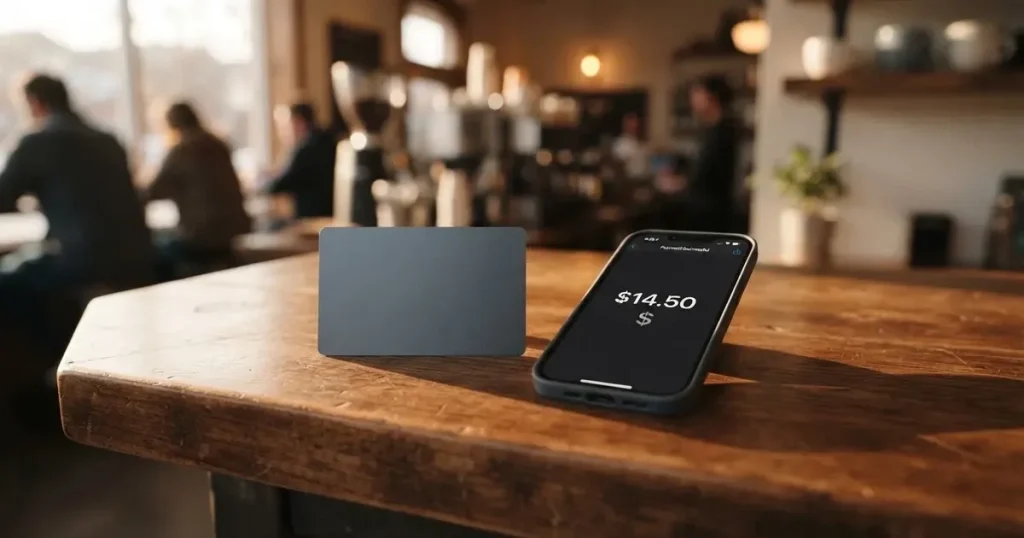
Ruvo is a card you load with money and then spend like an ordinary payment card, aimed at people who hold dollars and want to spend them without the friction a normal bank card puts in the way. It is a virtual card in US dollars, it works in Apple Pay and Google Pay, and the company behind it is Ruvo Financial Inc., a firm based in Brazil with Delaware governing law and a “NOT A BANK” notice on its terms. It pays no fee on purchases made in dollars, charges 1% plus the exchange rate on purchases in other currencies, and is funded by Pix in reais or by dollars.
Conditions are current as of October 28, 2026.
What decides whether that is useful to you is not the card’s feature list — it is narrow. This review is built for anyone, anywhere, who has trouble getting an ordinary bank card, and who wants to know, before spending an hour on an application, whether this one can actually do the job. The conditions described below are current as of 2026-10-20.
My score for Ruvo is 6.1 out of 10. That is not a bad card. It is a card with one genuinely excellent property — dollar spending is free — wrapped in a set of published gaps that make it hard to plan around: no published issuance or monthly fee, no stated ATM terms, no stated plastic card, no named card network on the official page, and no coin or network list for the crypto side of the funding story. If your spending is in USD and you live or move money between Brazil and the US, those gaps are annoying rather than fatal. If you need a physical card, a wide ATM network, or a long list of countries, they are the whole answer.
| Criterion | Mark | Why |
|---|---|---|
| Who can get it | 5 / 10 | Described as “accepted worldwide”, with Brazil (Pix) and the US (USD balance) singled out, but availability “varies by jurisdiction, user type, provider, and product” |
| Cost | 8 / 10 | Purchases in USD carry no fee; other currencies add 1% foreign transaction fee plus the rate; IOF 0%; a Pix example shows 0.5%; issuance not disclosed |
| Top-up options | 5 / 10 | Reais via Pix or dollars, in under a minute; earlier the route was USDT from a self-custodial wallet, ACH or wire for USD; coins and networks not named |
| Reliability and complaints | 6 / 10 | Ruvo Financial Inc., “NOT A BANK”, issuer not named, partners in the US and Brazil are licensed; no complaints found; App Store 4.9 from 31 ratings |
| Everyday use | 6 / 10 | Virtual card in USD, Apple Pay and Google Pay supported; plastic card and ATM terms not disclosed |
| Total | 6.1 / 10 | Strong on dollar spending, thin on published detail |
Who will they give you the card
The card page says the card is “accepted worldwide”, and it highlights two places specifically: Brazil, where funding runs through Pix, and the United States, where the balance is held in dollars. Read that second half carefully, though, because “accepted worldwide” is a statement about where the card can be used, not about who can hold one. The terms say availability “varies by jurisdiction, user type, provider, and product”, which is the legal way of saying that someone, somewhere, will decide whether you qualify.
There is also a sanctions layer. Ruvo may restrict access by jurisdiction and under sanctions rules, and as a user you represent that you are not subject to US, UN, EU, UK or Brazilian sanctions. In practice that means your location and your citizenship are both in scope, not just your address, and this is standard: in the US the customer identification programme requires name, date of birth, address and an identification number, and in the EU customer due diligence covers name, address, date of birth, nationality and identity documentation, a sanctions check, and a politically-exposed-person check. Nationality is screened separately from residence because sanctions screening and issuer risk policy are applied to citizenship and country of birth as well as to country of address. None of this is unusual for a regulated product; it is just the reality of holding a payment instrument that touches both crypto and dollars.
So who suits this card? The person it is built for is moving dollars out of a self-custody wallet and living in a place where a normal bank account is either unavailable, slow, or expensive to open — the Brazil-to-US pattern the card is designed around. If you already have a plain bank card that works where you live, the argument for Ruvo is thin, because you are trading a well-understood instrument for one that publishes almost nothing about its own fees.
There is one more thing you should know before you apply, and it is the thing that trips people up. Identity checks are not a formality here. The terms say partners may require your legal name, date of birth, address, government ID, taxpayer ID and biometric verification. The card is 18+. And the terms are blunt about the consequence of failing: limits, suspension, or termination. That is worth reading as “your account can be reduced to nothing if the documents do not land”, because that is how the clause is written.
What the card itself is
The card is denominated in US dollars. It is virtual, and the app is where you do everything: view the card details, freeze the card, set a PIN, replace the card, manage limits, and add it to Apple Wallet. The card network is not stated on the page. One unofficial report, from Brazil Journal in January 2026, describes it as a Visa Platinum card for USD spending — take that as an indication rather than a fact, since the card itself does not confirm it.
Physical delivery is not stated. The page shows only the digital and virtual card and wallet setup. There is no mention of a plastic card arriving in the post, and no mention of what it would cost if there were one. Verification tiers are also not stated — the page does not say whether limits rise as you add documents or how many levels exist.
That combination — virtual, USD, app-managed, network unnamed — is the shape you should hold in your head for the rest of this review. A virtual card is genuinely useful for phone payments and online subscriptions. It is less useful for the things a plastic card does: paying at a market stall reader that wants a dip, handing to someone else, or withdrawing cash.
How to get it
The card page does not publish an application flow. That is unusual, and it matters: when you cannot see the sequence — which document goes in first, whether the card arrives instantly, whether a selfie is required at the start or the end — you cannot budget your time for it.
What you can plan around is the substance. You need to be 18 or older. You need to be able to produce a legal name, date of birth, address, government ID, a taxpayer ID and biometric verification, because the partners may ask for all of it. And you need to be comfortable with the fact that failing to complete those checks leads to limits, suspension or termination.
The KYC level system is not stated either. Some card products publish a ladder — verified, then higher limits after extra documents — and Ruvo does not. So if your situation is “I can prove who I am but I need large limits”, you should assume the first limit you get is the limit you have until you find out otherwise.
Fees: what it really costs
Here is the honest position: Ruvo publishes no issuance fee and no monthly fee. Not “free” — not stated. There is no number on the page to check against, and if your decision depends on what the card costs to hold for a year, you will have to ask. Everything below is what the card does publish.
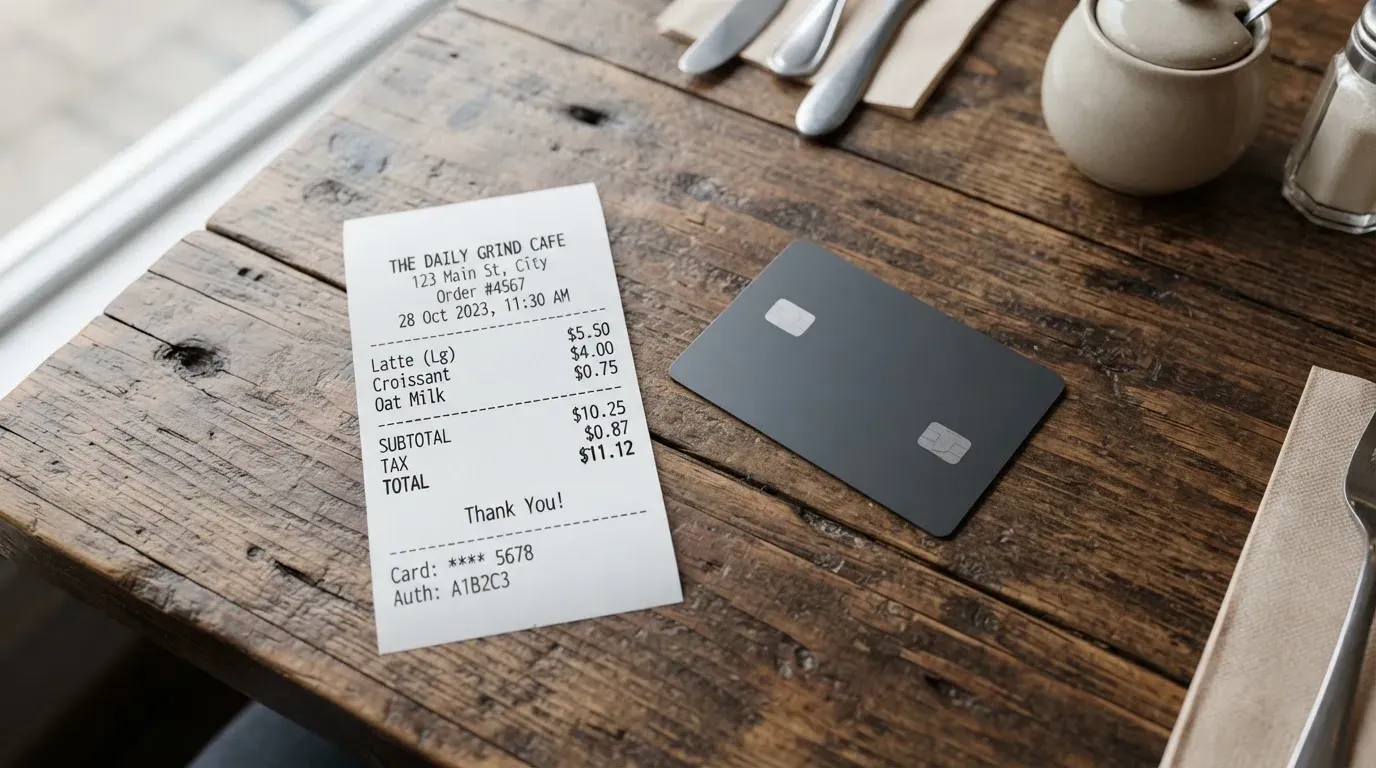
| Fee or limit | What Ruvo publishes |
|---|---|
| Issuance | not stated (no figure published) |
| Monthly fee | not stated (no figure published) |
| Purchase in USD | No fee |
| Purchase in another currency | 1% foreign transaction fee plus the applicable exchange rate |
| IOF | 0% |
| Pix conversion example | R$1,000 converts to about 196.41 USDC at 5.0915 BRL per USDC, after a 0.5% fee |
| ATM | not stated |
| Tiers | not stated (a single card appears on the page) |
| Spending cap | Your own Ruvo balance; you choose how much of it is available on the card, with no published figures |
Read that table twice, because the two halves pull in opposite directions. The cost of *spending* is unusually good. The cost of *holding* is unknown.
Three everyday payments, so the fees stop being abstract:
- A coffee in São Paulo, paid in reais on a card with dollars on it. You are outside the US, so the 1% foreign transaction fee applies, plus whatever exchange rate the transaction uses. The card page does not publish a markup on that rate, which means the real cost of this coffee is not knowable from the published terms — you are trusting the rate at the moment of payment. IOF is 0%, so at least there is no Brazilian tax wedge on top.
- A subscription billed in dollars, for example a software or hosting service. This is the case Ruvo is genuinely good at. No fee, and the card is a dollar card, so there is no conversion to pay. If most of your monthly card spending looks like this, the economics are strong.
- Converting R$1,000 through Pix. The card’s own example converts that to about 196.41 USDC at 5.0915 BRL per USDC after a 0.5% fee. This is the number to hold on to: funding in reais is not free, and the 0.5% sits on top of the rate.
Two other fee lines that are not Ruvo’s, and are easy to forget. If you fund the card by sending crypto on-chain, blockchain network fees — gas on Ethereum, or bandwidth and energy on Tron — are charged by the network, not by Ruvo, and they fluctuate. And an unofficial note from Brazil Journal, January 2026, lists individual fees of 0.9% for USDT to USD or BRL and 1.8% for USD to BRL, with lower rates for businesses and crypto-to-crypto conversion described as free; the card does not confirm that table, so treat it as a rumour with a source rather than as pricing.
There is a useful structural point behind all of this. The card cannot overdraw. Spending is capped by your own Ruvo balance, and you choose in the app how much of that balance is available on the card. That is the prepaid model, and it means a declined transaction is a closed wallet, not a debt — except that a declined authorisation can leave a hold on funds for several days, typically up to 7.
Top up: how the money gets in
You add money in reais through Pix or in dollars, and the funds arrive in under one minute. That speed is the feature people notice, and it is real as stated. 0% IOF applies. The Pix route carries the 0.5% fee from the conversion example above.
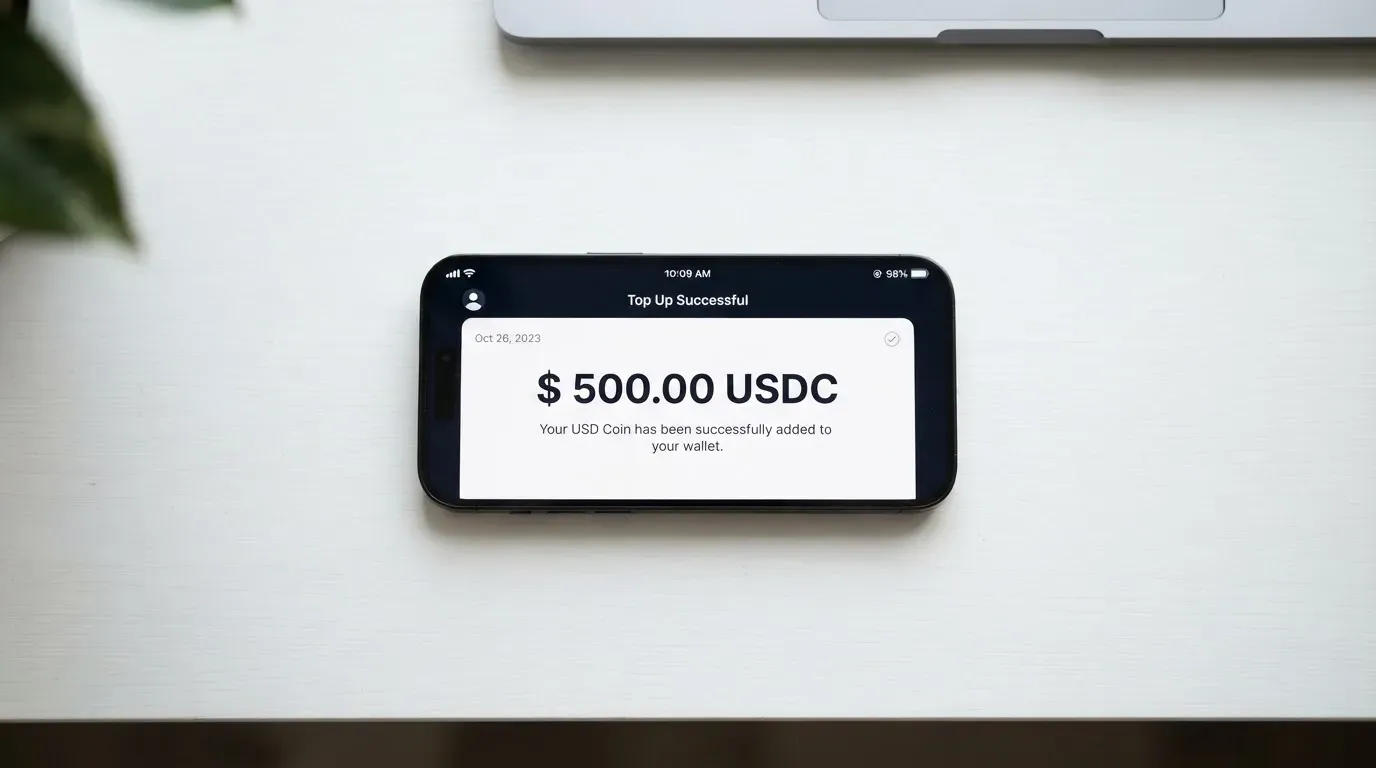
If you fund with crypto instead, the picture is thinner than it should be. An earlier check of the card found USDT in a self-custodial wallet, with ACH or wire for USD. The current card page does not list which coins or which networks it supports. Minimum top-up is not stated.
That last sentence deserves more weight than it looks like it carries, because this is the part of a crypto card where mistakes are expensive and irreversible. Blockchain transfers are irreversible. If you send on a network the card provider does not support, or to an address belonging to a different network, the funds can be lost or need manual support recovery with no guarantee. And the mechanics are not intuitive: ERC-20 fees are paid only in ETH, so a wallet holding USDT with no ETH cannot send at all; Tron prices fees through bandwidth and energy, often burning TRX; and Circle stopped supporting USDC on Tron in February 2024, so “USDC over TRC20” is not a native option any more. Circle lists USDC as natively supported on 38 networks as of 16 September 2026, including Ethereum, Solana, Base, Polygon PoS, Avalanche, Arbitrum and Stellar, and Tether describes USDT as issued across Ethereum, Tron, Solana, Polygon, Avalanche and others. All of that is general knowledge about the networks, not a list of what Ruvo accepts. Until you see a supported-asset list from Ruvo itself, the safe move is to ask support which coin and which network they want, and to send a small test amount first.
There is also a good reason to prefer Pix or a bank transfer over crypto for many people: network fees and the deposit address are entirely yours to get right, whereas a bank rail does not care which chain your money came from.
Withdrawing is not stated for the card. What is stated is how to close an account: by email to [email protected] or [email protected], processed within a reasonable time. If you use a self-custodial wallet, it is unaffected by closing with Ruvo. That last point is a real structural advantage of the self-custody model, and it is worth more than it first appears — your crypto does not disappear with the account.
Paying with it every day
Day to day, Ruvo behaves like a small dollar wallet with a card attached. You add money, you spend it, you freeze it when you are not using it, you set limits, and you add it to your phone. Apple Pay and Google Pay are both supported, for contactless payments in person and online payments on sites.
That covers most of what a card does. What is not stated: blocked merchant categories. This is a real question and not an academic one — a four-digit merchant category code classifies a business by goods or services, and gambling sits under MCC 7995, which many issuers block on specific cards by policy rather than by law, with the blocked list varying by issuer. If gambling, adult material, or fuel matters to you, that is a question for support, not something the card page answers. There is no cashback mentioned anywhere, and no rewards of any kind: rewards are not stated, and for a card that is free on dollar spending, the absence of any reward is worth stating plainly rather than glossing.
The App Store listing is “Ruvo – Global Dollar Account”, rated 4.9 from 31 ratings when I read it on 2026-10-21, version 2.1.9. Google Play is listed on the site but I did not read its rating. Thirty-one ratings is a very small sample, so treat 4.9 as “no visible complaint”, not as “widely loved”.
Two structural limits on everyday use. The card is virtual, so it works where a phone does; where a terminal needs a physical card, you have nothing to insert. And because it is a prepaid instrument, some merchants refuse it. A merchant can look up the BIN — the six or eight digit issuer identification number at the start of the card number — to see which institution and country issued the card, and apply extra scrutiny when the issuer country differs from the billing address. Some merchants decline prepaid or foreign BINs for exactly that reason. Address verification makes it worse: AVS compares the numeric parts of the billing address the buyer typed against issuer records, it is mainly offered in the US, Canada and the UK, and it is generally unavailable for foreign-issued cards, which can cause declines. Expect the occasional refusal on a US-issued card used on a European merchant.
On disputes, read this before you rely on it. Fiat and card transactions may be returned, reversed or charged back, and you stay liable. Fiat-rail disputes follow the provider’s rules rather than Ruvo’s. Informal resolution comes first, and Ruvo has up to 30 days to respond. The card help FAQ does not display its answers. In the EU and the UK, debit card reversal rights are broad; in the US, Regulation E covers debit and Regulation Z covers credit, prepaid-card coverage varies and should not be assumed; and under 3-D Secure, liability for fraudulent online payments can shift from the merchant to your bank, or to you, depending on who you ask. The practical advice is boring and correct: keep receipts, and do not assume a crypto-funded card gives you the consumer protections a domestic bank card gives you.
What can go wrong
Start with the one that unsettles most people. Ruvo is not a bank — the terms say so directly. It is Ruvo Financial Inc., headquartered in Brazil, with a CEO, Alec Howard, and Delaware governing law. It works with regulated partners in the US and Brazil who hold VASP and payment licences, but the issuer is not named, and Ruvo does not list its own licences. It does not custody funds or perform regulated activities in Brazil. So you are dealing with a programme manager fronting for licensed institutions, not with a bank you can complain to a regulator about as a customer.
That has a direct consequence for your money. The self-custodial wallet is genuinely yours — Ruvo does not hold private keys and does not custody fiat, per the terms. But the card side is not FDIC-insured and not SIPC-insured, and a prepaid balance is not a bank deposit. In the EU, electronic money institutions must safeguard customer funds by segregating them or insuring them, and those safeguarded funds are not the same as deposits and may not sit under a deposit guarantee scheme. Ruvo does not state an equivalent protection for your card balance. Ask before you keep a large balance there.
Then there is the category’s own history, which is fair to weigh because Ruvo is small and young. Visa terminated its global agreements with FTX on 13 November 2022 and the FTX US debit card was wound down. WaveCrest, a Visa issuer that supplied crypto card brands, was suspended by Visa in Europe in 2018 and all its Visa programmes closed. The pattern in a programme closure is a notice period, then loading and spending stop, then users are asked to withdraw. A secondary source describes one 2026 closure with new loads ending 8 July 2026 and spending stopping 8 August 2026 — single source, unconfirmed. The lesson is not that Ruvo will fail. It is that you should keep your balance on a card small enough that a shutdown would annoy you rather than hurt you.
Then the crypto side. Self-custody is safer in one dimension and worse in another: nobody can freeze your wallet, but nobody can recover it either. A seed phrase is typically 12 to 24 words and unencrypted, so anyone who obtains it can restore the wallet and spend the funds; crypto transfers are irreversible and a stolen key has no recovery path. And self-custody itself is not censorship-proof — Tether says it disables tokens in wallets on the OFAC sanctions list and has frozen funds tied to illicit activity. Stablecoins can also lose their peg: TerraUSD collapsed in May 2022, and USDC briefly lost its peg in March 2023 during the US banking crisis.
On complaints: I found none. No official incidents, no Trustpilot page for the Ruvo website as of 2026-10-21, and no recurring themes anywhere in search. That is a genuinely good sign, but read it for what it is — a company with a small footprint and a young product, not a track record. For context, custodial platforms do have a history of large failures: Mt. Gox (about US$350 million reported stolen, 2011–2014), Coincheck (about US$400 million, 2018), Ronin Network (US$625 million, 2022). Ruvo’s self-custody design deliberately keeps you out of that category, and that is its strongest safety argument.
What I would check first, in order: whether the balance is protected and by whom; what the ATM and cash-withdrawal terms actually are, since they are not stated; which card network is on the plastic-or-virtual; whether two-factor authentication is on the account — it is not stated — and whether freeze and PIN in the app are enough for you; and what happens to your balance if the account is suspended under the identity clause. Then the practical bits: help centre at ruvo.com/help, WhatsApp, and [email protected], in Portuguese and English, with hours not stated.
The company raised a seed round of US$4.6 million led by 1confirmation, per latamfintech.co and startupi in 2026. YC lists the company as formerly Cacao. Both are third-party and neither is a security guarantee.
What to take instead
Three alternatives came up when I looked, and all three solve Ruvo’s weaknesses differently. None of them is clearly better; they trade the same problem for different costs.
TokenPocket scores 5.8 / 10. It is a Visa debit for a list of European countries and territories — Germany, France, Spain, Switzerland among them — and a Mastercard debit for Australia, Canada, Hong Kong, Japan, Taiwan, New Zealand, Singapore, South Korea and the UK; the Americas were described as planned for Q2 2025. Cards run on Arbitrum, are virtual, with balances in EUR24 and USD24. NFT creation is partly covered by TokenPocket and you pay “a small portion”, with no other fees; depositing cryptocurrency costs 1%, described as refundable later through rewards and reduced transaction fees. Coins and networks are not listed. If you want Europe or Asia-Pacific rather than Brazil and the US, this is the more plausible list — but the 1% deposit fee is a real ongoing cost, and “refunded later through rewards” is not the same as refunded.
MetaMask scores 7.1 / 10, the highest of the four. Sign-up is open in 45 listed countries and territories — Andorra, Argentina, Brazil, Canada, Mexico, Germany, France, Spain, Uruguay among them — with other regions on a waitlist. Proof of residency is required, and the page is careful in a way Ruvo’s is not: ineligible regions limit sign-ups, not spending. US and UK sign-ups are temporarily closed per the FAQ. The card is Mastercard, virtual first and instant, with metal pre-orderable after approval, one card per user, issued by Monovate with Crypto Life as card provider. The virtual card is free with no annual or maintenance fee; metal is $199/year. Fees are “minimal” per transaction with the amount not stated on the pages I read, no additional MetaMask fees, and no foreign transaction fee because the Mastercard rate is used. It spends directly from the connected wallet on Linea, Base, Monad and Solana, with mUSD, wETH, EURe, GBPe, USDC and USDT named among the tokens. Cashback in mUSD is 1% on Virtual and a headline 3% on Metal, though the footnote caps 3% at the first $10,000 spent and 1% thereafter; $FLY bonuses are 5X and 7X through the Blackbird dining app. The catch: US and UK applicants cannot sign up at all right now.
KAST scores 6.1 / 10, the same as Ruvo, but on much more published detail. It shows a residence-based list at KYC, and the country list is not published, but it is explicit about ID: living in a supported country while holding an ID from a restricted region may still fail KYC, dual citizens with an ID from a supported country may pass, only the account holder’s own ID is accepted, and a VPN does not bypass it. You can create an account anywhere but KYC stays locked. Cards are virtual and physical, up to ten per user: Visa Platinum Standard, Visa Infinite metal Premium, Visa Infinite gold-plated Private, with other designs. Membership is 0 USD for Standard, 1,000 USD/year for Premium, 10,000 USD/year for Private billed annually upfront; an extra virtual card is 2 USD, a Standard physical card is 0 USD plus 40 USD delivery, and there is a 1 USD/month inactivity fee after 12 months. Top-up of stablecoins is 0%, USD card spend is 0%, transaction fee 0%, Apple and Google Pay 0%; the non-USD FX fee is 0.5%–1.75% depending on your residence country, transaction country and card programme, non-USD transactions under 25 USD cost 0.10 USD, and a declined transaction costs 0.50 USD. Funding is USDT, USDC, PYUSD and RLUSD on Ethereum, Solana, Polygon, Arbitrum and Tron, with no bank account needed — though the Terms say acceptable tokens are “currently USDT and USDC”, which conflicts with the app. Cashback is the real differentiator: 1.5% on the first 2,000 USD/month, 2% on the first 10,000 USD/month, or 3% on the first 40,000 USD/month depending on tier, plus KAST Points of +1% or +2% on Premium and Private. If you are outside the US and UK and can pass its ID rules, KAST currently publishes more than Ruvo does and rewards spending that Ruvo does not.
The comparison you should actually make is not feature-to-feature. It is: who can issue in my country, who names their fees, and who will still be here in three years. On those, Ruvo is the least transparent of the four and the most focused on the Brazil–US corridor.
Who I would recommend it to
I would recommend Ruvo to someone who already holds dollars or stablecoins, lives in or moves between Brazil and the US, and wants to spend dollars at zero fee on a phone without a bank card. If that is you, the economics are good, the funding is fast, and the missing details — issuance fee, monthly fee, ATM terms — matter less because the card is a spending tool you top up as you go rather than a financial product you hold a balance in.
I would not recommend it as your primary card, and I would be careful in three specific situations. If you need cash, the ATM terms are not stated and the card is virtual, so I would not plan a withdrawal around it. If your spending is in reais, euros or pounds, you are paying 1% plus an unpublished rate on every transaction, and the competition publishes that rate more openly. If you are trying to move money around identity or sanctions rules, stop and read section 1 again — this review will not help you with that, and the terms give Ruvo the right to restrict by jurisdiction.
And a rule for anyone: keep the balance small. This card has no stated deposit protection, no named issuer, no published ATM terms, an unnamed network, and no history of complaints mostly because it is young. None of that is disqualifying. All of it argues for using it the way you would use a travel wallet rather than the place your salary lands.
If any of that does not fit you, look at KAST if you are outside the US and UK, at MetaMask if your country is in its 45 and not closed to sign-ups, and at TokenPocket if you are in Europe or Asia-Pacific. The right card is the one whose issuer, fees and country list you can actually read.
Frequently asked questions
What is the Ruvo card?
Ruvo is a virtual payment card denominated in US dollars, issued by Ruvo Financial Inc., a company based in Brazil. You add money — reais through Pix or dollars — and spend that balance. The card page describes it as accepted worldwide, highlighting Brazil and the US, and it works in Apple Pay and Google Pay. It is a prepaid instrument: you load it, then spend from it.
Is Ruvo a bank?
No, and the terms say so. Ruvo states “NOT A BANK” and works with regulated partners in the US and Brazil who hold VASP and payment licences; the issuer itself is not named and Ruvo lists no licences of its own. Governing law is Delaware. Your card balance is not a bank deposit and is not FDIC- or SIPC-insured, so you should not treat it as somewhere to park significant savings.
Who can get the Ruvo card?
Availability “varies by jurisdiction, user type, provider, and product”, so there is no list you can check. You must be 18 or older, and you should expect identity checks covering legal name, date of birth, address, government ID, taxpayer ID and biometric verification. You also represent that you are not subject to US, UN, EU, UK or Brazilian sanctions.
Is the Ruvo card free?
Partly, and the honest answer is incomplete. Purchases in US dollars carry no fee, which is the strongest part of the offer. But no issuance fee and no monthly fee are stated — the page publishes no figure at all — and ATM terms are not stated either. Non-dollar purchases add a 1% foreign transaction fee plus the exchange rate, and a Pix conversion example shows a 0.5% fee.
How do I top up the Ruvo card?
Add money in reais via Pix or in dollars, and the funds arrive in under one minute, with 0% IOF. The Pix route carries the 0.5% fee from the card’s own conversion example. If you send crypto instead, the card does not list which coins or networks it accepts, and blockchain network fees are separate and fluctuate — so confirm the supported asset with support and test with a small amount first.
Can I add the Ruvo card to Apple Wallet?
Yes. Apple Pay is supported, alongside Google Pay, for both contactless payments in person and online payments. The app also lets you view the card details, freeze the card, set a PIN, replace the card and manage limits. Two-factor authentication on the account is not stated, so confirm that before you rely on the app as your only protection.
Is the Ruvo card safe to use?
In the sense that matters most for crypto, yes: Ruvo does not hold private keys and does not custody fiat, so your self-custodial wallet stays yours. The card side is less protected — no named issuer, no stated deposit insurance, unnamed network, ATM terms unpublished. There are no Trustpilot page and no complaint themes found, but that reflects a young product rather than a long record. Keep balances modest.
Where can I use the Ruvo card?
The card page says accepted worldwide and highlights Brazil and the US, but merchant acceptance is not guaranteed. As a prepaid US-issued card, it can be declined: shops can read the issuer country from the BIN and apply extra scrutiny, and address verification is generally unavailable for foreign-issued cards, which causes declines. Blocked merchant categories are not stated. Expect the occasional refusal and keep a backup payment method.
Can I withdraw money from Ruvo?
Withdrawal terms are not stated for the card, and ATM fees are not stated, so treat cash as unavailable rather than cheap. You can close an account by emailing [email protected] or [email protected], processed within a reasonable time. If your crypto sits in a self-custodial wallet, closing with Ruvo does not affect it — the wallet is yours and stays yours.
What are the alternatives to the Ruvo card?
Three worth comparing: MetaMask (7.1 / 10), a Mastercard with a free virtual card, available in 45 listed countries though US and UK sign-ups are closed; KAST (6.1 / 10), publishing far more detail including membership tiers, FX fees and cashback of up to 3% on the first 40,000 USD/month; and TokenPocket (5.8 / 10), aimed at Europe and Asia-Pacific with a 1% crypto deposit fee. If you cannot read your candidate card’s fees, ask it to publish them.
Wallet cards in the catalogue – cryptocardcatalog
Content created by the «cryptocardcatalog» team