
Phantom Cash is a virtual Visa for US residents that spends a stablecoin balance — narrow access, thin fees
 Available in US
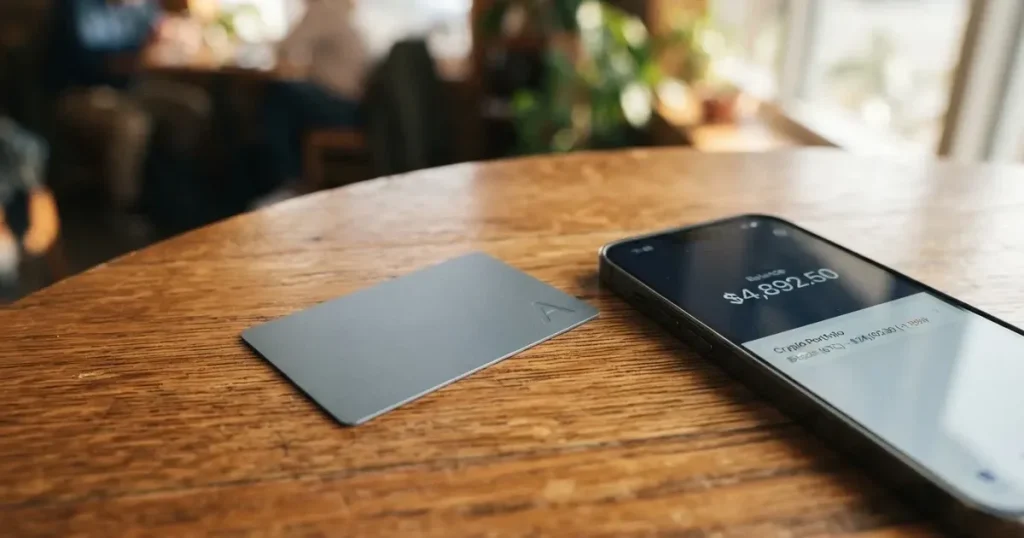
Phantom Cash is a virtual prepaid Visa debit card that spends the balance of a “Cash” account inside the Phantom app, and the balance is denominated in CASH, a stablecoin. That single sentence carries most of what matters about this card. It is virtual only. It is US-only. It is tied to a stablecoin balance rather than to a bank account. And the card’s own public pages are notably quiet about fees, limits and even the card currency.
If you have read this far, you are probably in one of two situations. Either you already hold dollar stablecoins in Phantom and you want a card that spends them without a manual swap each time. Or you cannot get an ordinary bank card — a declined application, a country the banks won’t touch, a long paper application — and a crypto-issued card looks like the shortest road to paying for something. The first group will get a lot from this card. The second group should read the eligibility section twice before they start, because the door is narrower than the marketing suggests.
My score for the card is 5.3 out of 10. That is not a rejection; it is a card that does a narrow job competently while leaving most of the questions a payment card is normally expected to answer unanswered.
Conditions are current as of October 28, 2026.
Verdict
Phantom Cash scores 5.3 / 10 overall. The shape of that number tells you more than the number does: the card is cheap and simple in the places that are easy for a crypto product to be good at (top-ups, low friction), and weak in the places that are hard (who can have it, what a payment actually costs, what happens when the issuer changes).
Here is the breakdown, criterion by criterion, with the reasons in my own words.
| Criterion | Mark | Why |
|---|---|---|
| Who can get it | 4 / 10 | United States only, excluding New York, by place of residence. Nothing else is offered anywhere. |
| Cost | 7 / 10 | The card’s own pages say only that “fees may apply” and never give amounts. Unofficial sources suggest issuance, replacement and inactivity are free, that loading cash is free, and that an international transaction costs 1% + $0.30. |
| Top-up options | 4 / 10 | The card spends a CASH balance; that balance is funded by Apple Pay, Google Pay, a debit card or a bank, and cash can be withdrawn to a bank or a Solana wallet. Direct crypto top-up of the card is not named. |
| Reliability and complaints | 6 / 10 | Lead Bank issues the card, Bridge Ventures LLC manages the programme, Stripe processes transactions. The virtual card is being replaced because the issuer is changing, with no dates given. No complaints specific to Phantom Cash were found. |
| Everyday use | 5 / 10 | A virtual Visa that goes into Apple Wallet and Google Wallet. No physical card is stated. Unofficial sources say there is no ATM. |
| Total | 5.3 / 10 | A competent narrow card, held back mostly by access and silence. |
Who suits it: US residents, outside New York, who already hold dollar stablecoins in Phantom and want to spend them at ordinary shops without converting by hand each time. For that person the daily mechanics are good — add the virtual card to a phone wallet, load the Cash balance, tap.
Who it does not suit: anyone outside the United States, anyone in New York State, anyone who needs cash from an ATM, anyone who wants a plastic card in a wallet, and anyone who plans to run a high monthly spend. The unofficial default spending limit is $2,000 a day, rising to $5,000 on request; the monthly figure is not disclosed. If your rent or your salary runs through a card, that ceiling is not the instrument for it.
Who they will give you the card to
United States only, excluding the state of New York, and eligibility is by where you live rather than by citizenship.
That is the whole of the published eligibility rule, and it is worth sitting with the two limitations inside it. First, New York is carved out — not the city, the state — so a resident of Buffalo, Rochester or Albany is excluded along with a resident of Manhattan. Second, residence is the test, not nationality. A US resident with a foreign passport is inside the rule; a non-resident with a US passport is not, as far as the published wording goes.
The card’s pages also say, on the KYC question, that identity verification is not required for Phantom or Phantom Cash in general. That is a real distinction and an easy one to misread. Verification becomes required for three specific things: bank transfers, direct deposit, and the debit card itself. If you only ever load the Cash balance with Apple Pay or Google Pay, the card’s own material does not put a verification step in that path. The moment you want the bank rails, the question changes.
One more thing the public pages do not tell you, and I will say once and then leave it: the verification levels, how long they take, and the reasons an application can be refused are not stated. Nobody has published them. If you are trying to plan around a same-day application, you cannot, because the timeline is not on offer.
How to get it
The card’s own sequence is short: fund the Cash balance, verify, get the virtual card, add it to Apple or Google Wallet.
What that omits is where the verification comes from. The marketing page says verification for bank transfers, direct deposit and debit card is handled by Stripe, and the setup description names Link as the verification route for the virtual card. Stripe is the processor, not the issuer — that distinction matters more than it first appears, and I will come back to it in the risks section.
Who can apply: applicants 18 and over, US residents outside New York. Proof of address is not stated. In the US, the customer identification programme asks for name, date of birth, address and an identification number, and electronic systems also check proof-of-address documents against records — so expect to be asked for documents even though the card’s own pages do not promise a specific list.
What you end up holding is a virtual prepaid Visa debit card. It works wherever Visa is accepted. No physical card is stated, so if you were picturing something you can hand over at a shop counter or slide into an ATM, that is not this product. The card currency is implied to be US dollars through the CASH stablecoin, but the pages do not state it, and I would not build anything on that implication.
Delivery is not stated — which is consistent with a card that only ever exists in your phone. There is nothing in the mail.
Fees and what a payment really costs
Here is the honest position: the card does not publish its fees. The Cardholder Agreement is referenced, and the words on the marketing page are “fees may apply”. Amounts are not stated. That is the whole of the official answer on fees, and everything below it in this section comes from unofficial third-party data.
| Fee or limit | Value | Source status |
|---|---|---|
| Issuance fee | Not stated; unofficial reports say none | Unofficial |
| Replacement fee | Not stated; unofficial reports say none | Unofficial |
| Inactivity fee | Not stated; unofficial reports say none | Unofficial |
| Loading cash into the account | Not stated; unofficial reports say free | Unofficial |
| US purchases | Not stated; unofficial reports say free | Unofficial |
| International transaction | 1% + $0.30 | Unofficial |
| ATM withdrawal | Not available (unofficial); ATM fee not disclosed | Unofficial |
| Daily spending limit | $2,000 by default, up to $5,000 on request | Unofficial |
| Monthly limit | Not disclosed | Unofficial |
The unofficial figures come from a third-party card-details page dated September 2026, and that page itself carries a caveat: some of its data was last verified on 28 September 2026 and partly carried forward from an older dataset. Read that as a direction of travel, not a contract. If a fee number decides whether you use this card, confirm it in the Cardholder Agreement before you rely on it.
Now three everyday payments, with the fees that would apply.
A coffee in your own city. Buying coffee in the United States, on unofficial figures, costs you nothing beyond the price of the coffee. The balance is already in dollars or in a dollar-pegged stablecoin, the merchant is in the same country as the card, and no conversion is needed. This is the case the card is genuinely good at.
A hotel night abroad in euros. The international rate applies: 1% + $0.30, unofficial. Beyond that, there is a second, quieter cost — the conversion itself. The balance is a stablecoin, and the rate you actually get on the day the stablecoin trades is the rate you get, not a rate the card promises. There is no hedging here and no spread protection stated.
A subscription you forgot about. The daily limit of $2,000 by default is generous enough that a small recurring charge will not touch it. What can bite is a declined authorisation leaving a hold on funds that can stay for several days, typically up to 7. On a card that spends one balance, a hold is a real deduction from money you may have already committed elsewhere. Nobody on the card’s pages promises otherwise.
Two things the card’s pages describe in a way that sounds better than the price list. Stablecoin trades inside Phantom are described as fee-free. And on-chain network fees — the gas or bandwidth a blockchain charges for your deposit — are charged by the blockchain itself, never by the card provider. Both true, neither of them a discount on your Visa transaction.
Top up
The Cash balance is what the card spends. That balance is funded by Apple Pay, Google Pay, a debit card or a bank account, depending on region, and it can be withdrawn to a bank account in the US or to a Solana wallet.
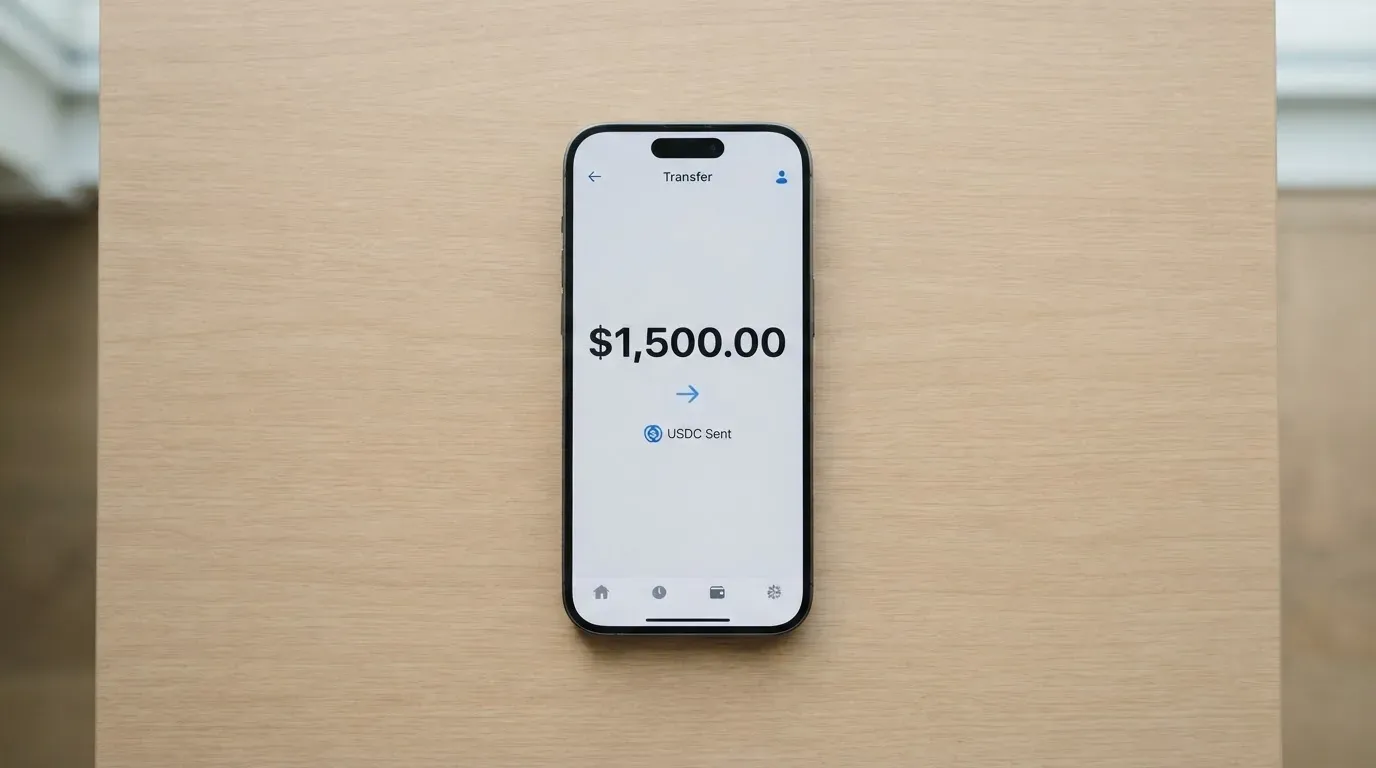
Notice the shape of that sentence. You are not sending USDC or USDT to the card. You are moving ordinary fiat into a Cash account through a payment rail — a phone wallet, a card, a bank — and the Cash account holds the value. Direct crypto top-up of the card is not supported, and this absence is worth taking seriously: if your plan is to buy crypto once and spend it, this card is not obviously the right tool, because the on-ramp on offer is fiat-shaped rather than crypto-shaped.
Fees and minimums for funding are not stated. Stablecoin trades inside the app are described as fee-free.
For withdrawals, the card’s pages confirm the two destinations — a bank account in the US, or a Solana wallet — but give no fees and no timing. Nor do they say what happens to a balance when the account is closed, which is the question to ask before you trust it with money you might want back.
One practical caution that belongs here rather than in the technical section: blockchain transfers are irreversible. A deposit sent on a network the provider does not support, or to an address belonging to a different network, can be lost outright or need manual support recovery with no guarantee attached. That is a property of the rails, not a quirk of this card, and it applies to the Solana-wallet withdrawal path in particular.
Paying with it every day
Add the card to Apple Wallet or Google Wallet, and the practical day is straightforward. Restricted merchant categories are not stated, so you cannot predict which purchases a shop or an issuer might decline from reading the documentation.
There is no cashback on the card. The related reward is on the asset side: holding CASH is described as earning passive income without lock-ups, but no rate is given, so treat it as a marketing description rather than a number you can plan around.
The app is the Phantom mobile app. Platforms and store ratings are not stated on the pages I read, which is a small thing, but if you are choosing between wallet apps it is the kind of small thing you end up wishing you had checked.
Disputes go through Stripe for debit card transactions. The process and the time frames are not stated. That matters more than it sounds: a chargeback is a refund the issuer orders to settle a dispute, with reason codes such as fraud, duplicate billing or goods not received, and the route you take depends on who is actually issuing the card. Here that is Lead Bank, with Stripe processing — which is precisely the arrangement the card says is changing.
What can go wrong
The issuer is changing and the card is being replaced. The card’s own help centre carries an incident notice: “Your virtual Phantom debit card is being replaced as we move to a new card issuer”, and users are told to add the replacement to Apple or Google Wallet again. No dates are given. This is not a scandal — it is how card programmes change — but it is a live operational fact, and it is the main reason my reliability mark is 6 and not higher. When a virtual card is replaced, the old token in your phone wallet can be the thing that fails silently at a till.
Who is actually behind it. Phantom is the platform provider and says plainly that it is “not a bank”. Lead Bank issues the card under a Visa licence. Bridge Ventures LLC is the programme manager. Stripe processes transactions and disputes, and that part is to change with the new issuer. So there are four parties between you and your money, and only one of them is a bank. Card programmes like this have a history: Visa terminated its global agreements with FTX on 13 November 2022, and WaveCrest, a Visa issuer that supplied several crypto card brands, was suspended by Visa in Europe in 2018, closing all WaveCrest-issued Visa programmes.
Where the funds sit. The Cash balance is secured on-chain as CASH, which is the part that is genuinely strong. Phantom says it does not store KYC information, with identity verification handled by Stripe. But “on-chain” is not the same as “not your responsibility”: stablecoins can depeg. TerraUSD collapsed in May 2022; USDC temporarily lost its peg in March 2023 during the US banking crisis. Tether also says it disables tokens in wallets on the OFAC sanctions list and freezes funds tied to illicit activity, so stablecoins are not censorship-proof either.
What nobody has published. Card freeze, two-factor authentication and insurance are not stated. Support is a Phantom Help Center with a “Start a chat” option, with no languages or hours given. Payments may not be blocked at merchants where the issuer cannot do so, so it is worth asking what the card does when it says no — and reading the terms yourself rather than relying on this page.
Complaints. I looked, and found nothing: no Trustpilot or Reddit complaints specific to Phantom Cash turned up in the searches done. Treat that as an absence of evidence rather than evidence of absence. A card that launched recently, or that few people outside the US can reach, would produce a thin complaint trail whether or not it deserves one.
What to take instead
Three cards come up in the same category with the same basic idea, and each solves a different part of what Phantom Cash leaves open. Scores are on the same 10-point scale.
| Card | Score | Who it is for | Card and cost | Funding | Cashback |
|---|---|---|---|---|---|
| MetaMask | 7.1 / 10 | Sign-up open in 45 listed countries and territories (Andorra, Argentina, Brazil, Canada, Mexico, Germany, France, Spain, Uruguay among them); others join a waitlist. US and UK sign-ups temporarily closed. | Mastercard. Virtual card issued instantly; Metal pre-ordered in app. One card per user. Virtual free, no annual or maintenance fee; Metal $199/year. Minimal per-transaction fee, amount not stated, no MetaMask fees, no foreign transaction fee. | Spends directly from the connected wallet. Networks Linea, Base, Monad, Solana; tokens named include mUSD, wETH, EURe, GBPe, USDC, USDT. | 1% in mUSD on Virtual; Metal headline 3% with a footnote limiting 3% to the first $10,000 spent then 1%. |
| KAST | 6.1 / 10 | Residence-based list shown at KYC, not published. ID citizenship also matters: living in a supported country with only an ID from a restricted region may still fail; dual citizens with a supported-country ID may pass; VPN does not bypass. | Virtual and physical, up to 10 cards. Visa Platinum, Visa Infinite metal, gold plated. Standard 0 USD/year, Premium 1,000 USD/year, Private 10,000 USD/year. Extra virtual card 2 USD; Standard physical 0 USD plus 40 USD delivery; inactivity 1 USD/month after 12 months. | USDT, USDC, PYUSD, RLUSD on Ethereum, Solana, Polygon, Arbitrum, Tron. No bank account needed. Stablecoin deposits converted 1:1, 0% spread. Non-USD FX fee 0.5%–1.75% by residence, transaction country and programme; non-USD under 25 USD costs 0.10 USD; a declined transaction costs 0.50 USD. | Standard 1.5% on the first 2,000 USD/month; Premium 2% on first 10,000; Private 3% on first 40,000. |
| TokenPocket | 5.8 / 10 | Visa debit for European countries and territories (Germany, France, Spain, Switzerland among them); Mastercard debit for Australia, Canada, Hong Kong, Japan, Taiwan, New Zealand, Singapore, South Korea, UK and others; the Americas were planned for Q2 2025. | Mastercard/Visa debit running on Arbitrum. Fiat24 cards are virtual. Balances in EUR24 and USD24. An NFT creation fee is partly covered by TokenPocket and the user pays “a small portion”, amount not stated; apart from that, no additional fees. | Crypto deposits from the TokenPocket wallet; specific coins and networks not listed in the FAQ. | None stated; a 1% fee on depositing crypto into the card is “to be refunded later via rewards, reduced transaction fees”. |
Read across the rows and the choice sharpens. If your problem is country access, MetaMask reaches far more of the world than Phantom Cash and spends straight from a self-custody wallet, though its US sign-ups are temporarily closed — which is the one place it cannot help you. If your problem is clearer economics, KAST publishes its fees in numbers: a free standard tier, a stated cashback ladder, and an FX band you can see. Its identity rules are stricter and vaguer at once, because the country list is not published. If your problem is Europe specifically, TokenPocket’s Visa and Mastercard coverage is broader than Phantom Cash’s single US line, at the price of a deposit fee it promises to refund later.
Against all three, Phantom Cash’s honest advantages are narrow: it is free of official charge where any charge is stated at all, and it integrates with a Solana wallet you may already hold. Its honest disadvantages are that it publishes nothing, and that it is only available in most of one country.
Who I would recommend it to
Three kinds of person, in order of how confidently I would say it.
Someone with dollar stablecoins already sitting in Phantom, living in the US outside New York, who wants them spendable. This is the case the card was built for and the case it serves well. You load the Cash balance, you add the virtual card to your phone, and you stop thinking about it. The unofficial numbers say domestic purchases are free.
Someone who wants a self-custody-linked card and has been put off by paperwork. Worth a look, with the eligibility caveat read twice: if you are in the US outside New York, verification applies to the debit card and to anything on the bank rails.
Everyone else, honestly. If you are outside the United States, the answer is simply no. If you are in New York State, also no. If you need an ATM, a physical card, or a published fee schedule you can plan a budget from, look at MetaMask or KAST instead. And if what you actually need is a normal bank card and this is a workaround for a declined application, I would spend your effort there first — the card works best for people who already have options.
One last framing, because it matters for anything holding money. In the EU, e-money institutions must safeguard customer funds in dedicated accounts or insure them, but those funds are not bank deposits and are not covered by deposit guarantee schemes. Nothing in this card’s material tells you that your Cash balance has a deposit guarantee behind it. I am not going to tell you it does, and I would not assume it.
Frequently asked questions
What is the Phantom Cash card?
It is a virtual prepaid Visa debit card that spends the balance of a “Cash” account inside the Phantom app, a balance denominated in CASH, a stablecoin. There is no physical card — it exists in your phone and you add it to Apple Wallet or Google Wallet. It works wherever Visa is accepted, and it is available only to United States residents outside the state of New York.
Is Phantom Cash a bank?
No, and Phantom says so itself. Phantom is the platform provider and describes itself as “not a bank”. Lead Bank issues the card under a Visa licence, Bridge Ventures LLC is the programme manager, and Stripe processes transactions and disputes — though the card says that arrangement is changing with a new issuer.
Who can get the Phantom Cash card?
United States residents, excluding New York State, aged 18 and over. Eligibility is by residence rather than citizenship. The card’s own material does not state what verification levels are involved, how long they take, or the reasons an application can be refused, so plan on finding that out yourself rather than reading it ahead of time.
Does Phantom Cash require KYC?
Not for Phantom or Phantom Cash in general, according to the card. Identity verification through Link, handled by Stripe, is required for three specific things: bank transfers, direct deposit, and the debit card itself. So the answer depends on which of those you plan to touch.
How much does the Phantom Cash card cost?
The card’s own pages say only that “fees may apply” and point to the Cardholder Agreement, without giving amounts. Unofficial third-party data from September 2026 suggests no issuance, replacement or inactivity fee, free cash loads and free US purchases, and an international transaction fee of 1% + $0.30. That data partly carried forward from an older dataset, so verify before relying on it.
What are the Phantom Cash card limits?
Unofficial sources give a daily spending limit of $2,000 by default, rising to $5,000 on request. The monthly limit is not disclosed, and the card’s own pages state no limits at all. If you are planning monthly recurring spending through this card, you are working from the wrong number — there isn’t one published.
Can I use Phantom Cash at an ATM?
Unofficial sources say no — ATM withdrawals are marked unavailable, and the ATM fee is not disclosed. What is certain is that the card is virtual only, with no physical card stated. If cash is part of your plan, this card is not the instrument for it.
How do I top up the Phantom Cash card?
You fund the Cash balance through Apple Pay, Google Pay, a debit card or a bank account, depending on region. Fees and minimums are not stated, though stablecoin trades inside the app are described as fee-free. Direct crypto top-up of the card is not named, so do not assume sending USDC to the card works.
Is the Phantom Cash card safe?
The Cash balance is secured on-chain as CASH, which is a genuine strength, and Phantom says it does not store KYC information. Against that: stablecoins can lose their peg, Tether says it freezes funds tied to illicit activity, and the card is mid-transition to a new issuer with no dates given. Card freeze, 2FA and insurance are not stated.
Is there an alternative to the Phantom Cash card?
Yes, and several score higher. MetaMask reaches 45 listed countries and territories with a Mastercard that spends straight from a self-custody wallet. KAST publishes real numbers, including a free tier and a cashback ladder. TokenPocket covers much of Europe and the Asia-Pacific. Each has its own catch, but Phantom Cash publishes the least of the three.
Wallet cards in the catalogue – cryptocardcatalog
Content created by the «cryptocardcatalog» team