
Payth, a virtual crypto card for people who can't get a bank card
 Available in US

Payth is a virtual card tied to a custodial crypto wallet, issued through an app, that lets you spend BTC, ETH or USDT at merchants and ATMs worldwide, with a 2% ATM fee and a stated promise of zero transaction fees. The product is genuinely useful for one specific kind of reader — someone who already holds crypto, has trouble getting an ordinary bank card, and is happy to work entirely from a phone. Outside that lane, the picture is much less tidy: the company behind it (POPPO LLC) is not the kind of name you can independently verify, the issuing bank, country of registration and licences are not stated on the public pages, and the app on the App Store has not gathered enough ratings to display a score. I came away thinking the card does what it says on the box in narrow situations, but I would not park large balances in the wallet behind it.
The conditions described in this review are current as of October 28, 2026.
Verdict: 6.2 out of 10 — useful for a narrow reader, thin on transparency everywhere else
Payth is a virtual card that draws on a custodial crypto wallet. It is built for one situation: you have crypto, you cannot or do not want to use a bank card, and you want to spend that balance in shops or pull cash from an ATM. In that situation it works in a thin, functional way. The moment you start asking the questions a normal bank card answers in a brochure — who issues this, under which licence, what does the company look like — the public pages go quiet.

Here is the score by criterion, with the reasons as I read them.
| Criterion | Score | Why I marked it this way |
|---|---|---|
| Who can get it | 8 / 10 | Issued globally except for a list of restricted countries that includes Afghanistan, Russia, Ukraine, Iran and Syria, and the list is updated periodically |
| Cost | 7 / 10 | Stated as “zero transaction fees” with a 2% ATM fee; issuance, monthly, conversion and FX fees are not stated |
| Top-up options | 6 / 10 | BTC, ETH or USDT into the wallet; the supported networks are not named |
| Reliability and complaints | 4 / 10 | Operator is POPPO LLC, country, issuer and licences are not stated; no app rating; custodial wallet; no public complaints trail |
| Everyday use | 5 / 10 | Virtual cards only; ATM access is there; Apple Pay and Google Pay support are not stated |
Total: 6.2 / 10.
In a sentence, this is the card I’d recommend to a crypto holder who wants a virtual card with ATM access and is comfortable with a custodial wallet behind a small, not-particularly-disclosed operator. It is not the card I’d recommend to anyone moving a serious balance, anyone who needs a physical card, or anyone who wants a brand they can look up on a regulator’s register.
Who they will give the card to
The short answer is: most adults, almost anywhere, with a clean ID and a citizenship or residence that is not on a restricted list.
Payth is described on its own pages as available globally, with an explicit statement that it “cannot serve residents of the following countries and regions.” The list as published includes Afghanistan, Russia, Ukraine, Iran and Syria among others, and the company adds the line that this list “is updated periodically based on issuer policies.” A separate check on the card showed Belarus on the restricted list. The restriction is stated by residence — where you live, not only where you were born — which is the standard way card programmes handle sanctions exposure.
The identity check itself is run by Sumsub, a well-known KYC vendor, and the FAQ says the document you upload has to be an ID or passport “issued by the same country as your ID.” That wording matters in practice: if your document is from one country and you live in another, the case is likely to need a manual step. The site says reviews “typically take 5–10 minutes”; age and proof of address are not stated publicly, which is unusual for a card programme and is something to be ready to provide if asked.
The honest summary is that the eligibility is broad in geography and tight in document logic. If you have a current passport from a non-restricted country, the path is short. If your documents are mixed, expect friction.
How to get the card
The short answer is: download the app, pass a Sumsub ID check, deposit crypto into the Payth wallet, and a virtual card is provisioned.
The signup flow is laid out in four steps on the public pages: register in the app, verify identity, deposit crypto into the Payth wallet, get a virtual card. The site describes “multiple virtual card options,” which reads as more than one card per account, but it does not state the card network (Visa or Mastercard) or the card’s base currency. No physical or metal tier is mentioned. Delivery time is not stated, because no physical card is described.
There is one KYC flow described, not a tiered one. The site says declines “may be due to a high-risk flag,” which is a polite way of saying the system is risk-based: a person with the right documents in a low-risk city sails through, and someone in a higher-risk profile can be held or refused without a clear reason on screen. The combination — single tier, risk-based decisions, no stated issuing bank — is normal for a programme manager in this category, but it is worth knowing before you sign up.
Practically, you should have your passport ready, a stable internet connection, and a small amount of crypto set aside for the first deposit. If you live somewhere that the app marks as supported, the steps line up and the card is provisioned inside the same app, ready to add to a checkout form or a wallet.
What it really costs
The short answer is: Payth says zero transaction fees and a 2% ATM fee, and almost everything else is unstated.
The published number is the one a reader will use most often: “zero transaction fees.” The crypto-to-fiat conversion is described as using “competitive rates,” with no percentage attached, and no separate FX fee is stated. The only fee that is given as a number on the public pages is the ATM fee, which is “only 2%,” with no free allowance mentioned. Issuance, monthly, inactivity and reload fees are not stated, and the card currency is not stated either.
| Fee or limit | What Payth says |
|---|---|
| Issuance | not stated |
| Monthly fee | not stated |
| Crypto conversion | “competitive rates,” no percentage |
| Foreign exchange (FX) | not stated |
| ATM withdrawal | 2% |
| Free ATM allowance | not stated |
| Daily spending limit | not stated |
| Monthly spending limit | not stated |
| Cashback / rewards | not stated |
The honest read is that the headline number — zero transaction fees — is genuinely useful for someone who pays a card once a week and wants to know the spread they pay. It is also a number that, in this category, often hides the spread baked into the conversion. If a Payth card charges “zero” but converts your USDT at a rate 1% worse than the mid-market rate, you have paid 1%, just not as a line item. The site does not publish the spread, and there is no third-party table of Payth’s rates to lean on.
Three everyday payments, walked through with the numbers that are public:
- An online subscription in US dollars. No transaction fee is stated. The crypto-to-fiat rate is described as competitive; the spread is not published. Your payment in USDT could end up costing you a little more or a little less, depending on the rate at the moment of payment.
- A €40 dinner in a country that uses euros. No transaction fee is stated. There is no FX fee line, which is unusual, and again the rate is folded into the conversion.
- A $100 ATM withdrawal on a trip. You pay the 2% ATM fee, which on $100 is $2. There is no stated free allowance, so a second $100 withdrawal in the same month would cost another $2, with no cap stated.
What to check first, in order: whether the card is free to issue at all (issuance is not stated), whether there is a monthly fee (not stated), and what the spread is in practice on a small test transaction before you move a large balance.
Top up: how to fund the card
The short answer is: send BTC, ETH or USDT to the Payth wallet from your own wallet, and the app credits your spending balance.
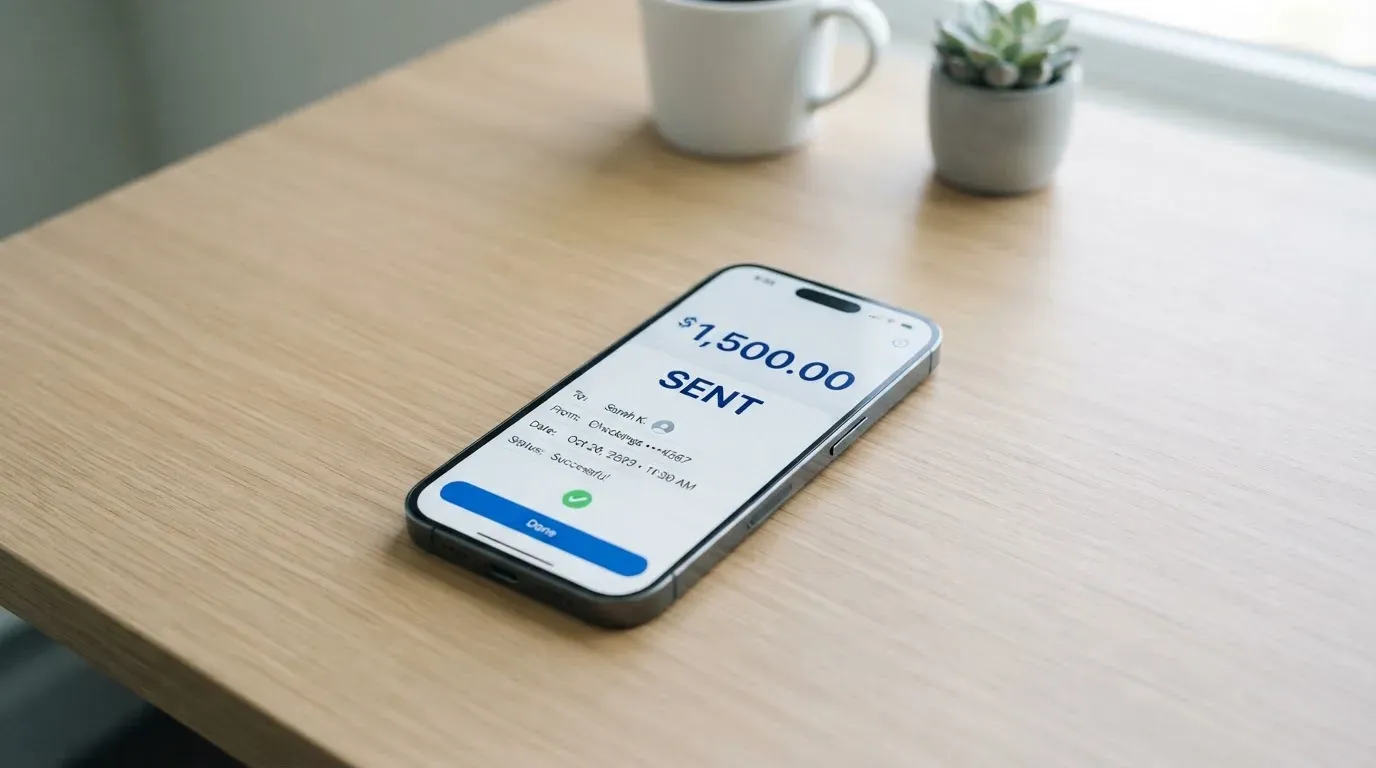
The funding model is the pre-loaded balance model. The public page says “Deposit BTC, ETH, or USDT in your wallet” and describes a step called “Top up your digital assets and get spending credit instantly.” That sequence is what a custodial card looks like: you send crypto, the app shows a fiat or stablecoin balance, and the card draws on that balance. The conversion happens on Payth’s side, not in your wallet.
What is not stated is the part that, in this category, causes most of the support tickets:
- The specific networks Payth accepts. The site says BTC, ETH and USDT; it does not say whether USDT arrives on Ethereum, Tron, Solana or another chain. The App Store listing adds “multiple cryptocurrencies” such as USDT and BTC, which is consistent with a list that goes beyond the three named on the site. The deposit address you receive in the app is what tells you the answer for your own account.
- The minimum top-up. Not stated.
- The deposit fee. Not stated.
- Whether Payth or the user pays the network fee (gas). Not stated.
- Whether you can top up with fiat. Not stated.
The unsupported-network risk is the one to take seriously here. Blockchain transfers are irreversible, so a deposit sent on a network Payth does not support, or to an address of a different network, can be lost or stuck in support with no guarantee of recovery. The same applies to sending a token on the right network but with a memo or tag the receiving system does not read. Before you send a meaningful amount, send a small test, wait for the balance to appear, and only then send the rest.
For a reader who has only ever used a bank card, the mental model to keep is: you are not loading a card, you are sending crypto to a custodian and the custodian is giving you a card-shaped view of that balance. That difference is what the risks section of this review is about.
Paying with it every day
The short answer is: it works like a prepaid virtual card, in shops, online and at ATMs, and the app is the only interface to it.
The card is virtual, which in practice means you read the long number out of the app and type it into a checkout form, or you add it to a wallet on your phone. The public page says Payth is usable “at millions of merchants and ATMs worldwide,” which is a claim about acceptance, not about your experience, and is the kind of line that fits a Visa or Mastercard-branded card. As I noted in the costs section, the card network and the card’s base currency are not stated publicly, so I cannot tell you which of those two it is.
Three things a reader will look for are not stated on the public pages: Apple Pay, Google Pay, and any list of blocked merchant categories. The site does not say whether the card can be tokenised into Apple Pay or Google Pay, and it does not list which MCC codes are restricted. Many card programmes in this category block gambling, and some block crypto exchanges, and the rules vary by issuer. Without a published list, you find out at the till.
There is no cashback, no rewards programme, and no sign-up bonus mentioned on the public pages, which I would not normally single out — many cards in this category have none.
The app itself is the only user surface I could verify, and it is thin. The App Store listing for Payth, as of 21 October 2026, has not gathered enough ratings or reviews to display an overview, and the version is 1.0.6. I could not read a Google Play rating. An app that has shipped a handful of versions and has not yet built a public rating is, in this category, a young product, and young products in this category have a habit of changing.
The FAQ covers practical topics, such as “Why haven’t I received the card transaction refund immediately?” and “Why did my payment transaction fail, but my card balance was deducted?” Questions about time frames for these are common, so check the latest in-app information before you rely on the card for a time-sensitive payment.
What can go wrong
The short answer is: a lot, and most of it is about who is behind the card rather than about the card itself.
The single biggest fact in this section is also the easiest to skim past: Payth is operated by POPPO LLC. That is the developer name on the App Store listing (“poppo llc”). The country of registration is not stated. The issuing bank is not stated. The licences — payments, e-money, money transmission, virtual asset service provider, whatever applies in the relevant jurisdiction — are not stated. That does not mean POPPO LLC has no licences; it means the public pages do not say so, and a cardholder cannot check what is not published. The combination is unusual in the EU, where MiCA-style transparency is becoming the norm, and in the UK, where the FCA keeps a public register of authorised firms.
The wallet is custodial. The site’s own wording — “deposit crypto in your wallet,” and the named “Payth Wallet” — points to a setup in which the private keys are held by the operator. The category background is plain about what that means: you trust the operator to look after your balance, and you bear the counterparty and hack risk that comes with that. The standard safeguards — app-based two-factor authentication, instant card freeze, 3-D Secure confirmation, tokenised mobile wallets — are not stated for Payth specifically. The app listing mentions “built-in risk controls,” which is a phrase that can mean a great deal or very little.
The complaints trail, in this case, is what is missing. I looked for Trustpilot and Reddit mentions of Payth and did not find a dedicated page; the results that came back were for unrelated brands (PayThem, Payy). That absence is, in this category, mildly reassuring and mildly worrying at the same time. It is reassuring because a product with active users tends to leave a footprint, and the footprint here is small. It is worrying because a small footprint is also what a young, low-volume product looks like, and a small product is a small target for a long legal fight if something goes wrong.
Two operational risks are worth naming in their own words. First, the network-fee risk: in this category, the user usually pays the on-chain fee for the deposit, and that fee is set by the blockchain, not by Payth. On Ethereum mainnet that can be a few dollars at quiet times and a great deal more at congested times; on Tron it is typically much lower. If you plan to top up frequently and in small amounts, the network fee is a meaningful part of the cost. Second, the failure-handling risk: a payment that fails but still debits your card balance is a known pattern in the category, and the FAQ acknowledges it for Payth. The time it takes to clear the hold is the question, and the answer is the kind of detail that should be in writing before you rely on the card.
| Risk | How it shows up | What to do about it |
|---|---|---|
| Operator not transparent | POPPO LLC is named; country, issuer, licences are not | Do not park more than you can lose; keep a separate wallet for long-term holdings |
| Custodial wallet | Funds are held by the provider, not by you | Treat the balance as you would treat a small prepaid account |
| Network choice on deposits | Networks are not stated; wrong network = lost funds | Send a test transaction first; check the deposit address in the app |
| No public complaints page | No Trustpilot; no Reddit trail | Read the app’s FAQ on refunds and failed payments before you need them |
| App still building reputation | App Store rating not displayed; version 1.0.6 | Keep your balance low until the product has a longer track record |
The category also has a few background facts a Payth reader should keep in mind. Card programmes can be wound down: Visa terminated its global agreements with FTX on 13 November 2022, and the FTX US debit card was wound down by its issuer. WaveCrest, a Visa card issuer that supplied several crypto brands, was suspended by Visa in Europe in 2018, and every WaveCrest-issued programme closed. The mechanism in each case was the same: the network pulled the licence, the issuer exited, and users had a window to withdraw their balances. Payth is not in that situation today, but the situation is the kind that arrives without warning.
What to take instead
The short answer is: there is no obvious runner-up that fixes every weakness of Payth; the three I looked at are useful in different ways and weak in others.
I compared Payth to three other cards in the same general space. None of them are direct replacements, and each one shows up because it solves a different problem.
Cardex is a debit crypto card on the Verve, Visa, Mastercard and UnionPay networks, with virtual and physical cards. The site says it works in “200+ countries” and uses an “AI-Powered Conversion Rate” that scans global exchanges to pick the rate at the moment of payment. The App Store listing is Naira-focused. Cardex scores 5.6 out of 10. The case for it is the wide network and the broad geographic reach; the case against it is the same kind of opacity on fees and licences that Payth shows.
CardFlow is aimed at Nigeria (“Nigeria’s smartest fintech card platform”) and “Nigerians and global users,” with a virtual USD Mastercard that the site says is created in 3 minutes and is free to create. CardFlow scores 4.9 out of 10. The case for it is the speed and the cost of issuance; the case against it is that the eligibility story is largely Nigerian, and fees beyond issuance are not stated.
HyperCard is a prepaid card whose card balance is in USD or EUR, accepted (the App Store says) in “more than 176 countries.” HyperCard scores 4.7 out of 10. The case for it is the explicit fiat balance and the wide acceptance; the case against it is the usual one: no country list for eligibility, no fee schedule on the pages I could read.
| Card | Score | Card type | Where it works | Fees stated | Best for |
|---|---|---|---|---|---|
| Payth | 6.2 | Virtual, custodial crypto wallet | Most countries, restricted list published | Zero transaction, 2% ATM | A crypto holder who wants a virtual card with ATM access |
| Cardex | 5.6 | Virtual and physical, debit | 200+ countries (claimed) | None stated, “AI-powered” rate | A user who needs multi-network support and accepts an opaque rate |
| CardFlow | 4.9 | Virtual USD Mastercard | Nigeria and “global users” | Free to create, others not stated | A user in Nigeria who needs a card in minutes |
| HyperCard | 4.7 | Prepaid USD or EUR | 176+ countries (acceptance) | None stated | A user who wants an explicit fiat balance and does not need many details |
If Payth’s mix of “global except a published restricted list” and “ATM access” is the priority, the alternatives do not improve on it. If physical card, named issuer or a stronger licence story is the priority, the alternatives are also not strong — but the question to ask, in each case, is the same: who issues this, under which licence, in which country.
Who I would recommend it to
I would recommend Payth to a reader who already holds BTC, ETH or USDT, lives in a country that is not on the restricted list, has a passport or ID from a non-restricted country, and is happy with a virtual card on a phone. The combination of “zero transaction fees” and a 2% ATM fee is reasonable for someone who uses the card once a week and values a published fee line over a published spread. The ATM access is the genuine differentiator, because not every crypto card offers cash withdrawal, and the ones that do tend to charge more than 2%.
I would not recommend Payth to a reader who is moving a balance they cannot afford to lose, who needs a physical or metal card, who needs a named issuing bank on a regulator’s register, or who wants Apple Pay or Google Pay as a confirmed feature rather than a hope. I would also not recommend it to a reader who has never used crypto before and is choosing Payth as their first step: the deposit step is the part of the flow with the most room for an irreversible mistake, and a first-time user is the user least equipped to spot a network mismatch.
Two small things, in closing. The conditions in this review are current as of 20 October 2026, and Payth is a young product — an app on version 1.0.6 with no public rating — so the right cadence is to check the app’s FAQ and the public site before each top-up, and to keep a separate wallet for anything you cannot afford to lose.
Frequently asked questions
What is the Payth card?
Payth is a virtual card issued through an iOS and Android app, tied to a custodial crypto wallet, that lets you spend BTC, ETH or USDT at merchants and ATMs. The product is run by POPPO LLC, and the country of registration, issuing bank and licences are not stated on the public pages. It is a young product — the app on the App Store is on version 1.0.6 and has not gathered enough ratings to display a score.
Is Payth a bank?
No. Payth is described as a card programme, not as a bank. The site does not name an issuing bank, does not name a country of registration, and does not list any payment, e-money or virtual asset service licence. Treat it as a prepaid product from a private operator, not as a deposit-taking institution.
Who owns Payth?
The App Store developer is listed as “poppo llc.” That is the only ownership fact I could confirm from the public pages. The country in which POPPO LLC is registered, the issuing bank behind the card, and any licences the entity holds are not stated. Without those facts, the operator is hard to verify independently.
Is the Payth card available in my country?
Payth is described as available globally except for a list of restricted countries that is updated periodically. The list as published includes Afghanistan, Russia, Ukraine, Iran and Syria; a separate check also showed Belarus on the list. The restriction is by residence, not only by citizenship, and a Sumsub ID check has to be passed before a card is issued.
How do I get the Payth card?
You download the app, register an account, pass a Sumsub ID check with a passport or national ID, deposit BTC, ETH or USDT into the Payth wallet, and a virtual card is provisioned inside the app. The site says the review “typically takes 5–10 minutes,” and a single KYC flow is described rather than a tiered one.
Does the Payth card require KYC?
Yes. Payth uses Sumsub for KYC, and the FAQ says the document you upload has to be an ID or passport “issued by the same country as your ID.” Reviews are described as typically taking 5–10 minutes. Age and proof of address are not stated publicly, so be ready to provide them if asked. Declines can happen for “high-risk flag” reasons without a clear public reason.
How do I top up the Payth card?
You send BTC, ETH or USDT from your own wallet to the deposit address the Payth app gives you, and the balance shows up as spending credit. The specific networks Payth accepts are not stated on the public pages, so the deposit address in your app is what tells you the network to use. Send a small test first; wrong-network transfers are irreversible and may be unrecoverable.
How do I add the Payth card to Apple Wallet or Google Pay?
The public pages do not say. Apple Pay and Google Pay support are not stated for Payth, and the card is described as virtual only. Treat tokenised wallet support as unconfirmed until Payth publishes it; the absence of a statement is not the same as a confirmed “no.”
Is the Payth card free?
The only fee published as a number is a 2% ATM fee; transaction fees are described as zero. Issuance, monthly, inactivity, conversion-spread and FX fees are not stated on the public pages. The card currency is also not stated. Read the in-app terms carefully before you top up a meaningful balance, and watch the spread on a small test transaction.
How do I delete my Payth account?
The public pages do not describe a deletion flow. The site mentions an in-app FAQ and a support contact, and the typical approach in this category is to remove your card from any saved checkouts, withdraw the remaining balance to an external wallet, and then request account closure through the app or the support channel. Withdraw your balance before you ask for the account to be closed; a custodial account that is closed before the balance is moved can be hard to recover.
Virtual cards in the catalogue – cryptocardcatalog
Content created by the «cryptocardcatalog» team