
The NAKA card spends USDT straight from your own wallet, and leaves most of its fees unstated
 Available in US
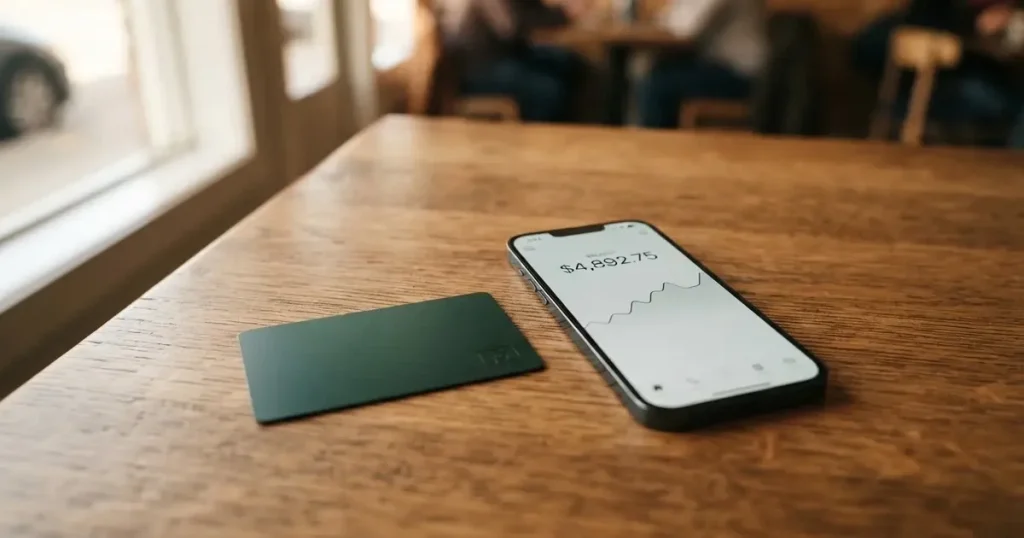
The NAKA card is a virtual, tokenized Visa Platinum that spends USDT sitting in a wallet you hold the keys to. Every payment needs a cryptographic signature from your device; the balance never leaves your wallet until you sign. That design is genuinely different from the custodial crypto cards most people know, where a company holds the money for you and you hold a promise instead. It also puts the sharp end of the risk squarely on you: a lost key, a wrong network, or a copied address is not something a support desk can reverse.
What I could not get to the bottom of is the money side. NAKA’s own pages describe pricing as being per user rather than per transaction, and then publish no figures — no issuance price, no monthly fee, no conversion fee, no foreign-exchange rate, no ATM allowance, no spending limits. Anyone reading this review to decide whether the card is cheap to keep will not find the number. What I did find is a company with real registered entities and current information-security certifications, a card that is still young (launch post dated October 24, 2025), and an app that nobody outside the company appears to have reviewed yet.
The conditions described here are current as of October 28, 2026.
Verdict: 5.1 out of 10
| Criterion | Mark | Why |
|---|---|---|
| Who can get it | 5 / 10 | Targets Latin America; the app is listed “worldwide” with no country list; starting data says “not a United States citizen” |
| Cost | 5 / 10 | Cost and fees are not disclosed — pricing is described as per user, with no figures |
| Top-up options | 3 / 10 | USDt in a self-custodial wallet; the app store listing caption says only USDT on Avalanche C-Chain is accepted |
| Reliability and complaints | 6 / 10 | NAKA GLOBAL d.o.o. (Ljubljana), ISO/IEC 27001:2022, ISO 9001:2015, ISO 22301:2019; issuer and licences not named; no complaints found; App Store 5.0 from 11 ratings |
| Everyday use | 6 / 10 | Virtual Visa Platinum, Apple Pay and Google Pay present; ATM mentioned without conditions |
| Total | 5.1 / 10 |
Five-point-one out of ten. That is not a dismissal. It is a card with an interesting security model and a blank spot where the price should be.
Who it suits. You already hold crypto, you are comfortable with self-custody (you have set up a wallet, you know what a network is, you can tell USDT on one chain from USDT on another), and you are in or connected to Latin America. You want a card number that draws on your own wallet rather than on a company’s balance sheet, and you would rather hold the risk of key loss than the risk of a custodian failing. The audience NAKA describes itself as is exactly that: spending USDT from a self-custody wallet with a Visa card.
Who it does not suit. If your priority is knowing what a payment costs before you make it, this card cannot tell you. If you are a United States citizen, the starting data says the card is not for you. If you want a physical card in the post, there is none — it is virtual only. If you want a mature rewards programme or a published cashback rate, the card has neither as far as the pages I read disclose.
Will they give you the card?
The stated picture is: the product “targets Latin America,” while the app is listed as “worldwide” without a country list. The starting data says “not a United States citizen,” which is a citizenship restriction rather than a residence one. Those two statements sit in some tension, and I would treat the honest reading as — check before you commit time to it.
What makes the position more complicated is that NAKA splits its legal documents by entity: NAKA Slovenia, NAKA Switzerland, NAKA El Salvador, with the note that the “specific provider depends on your jurisdiction and/or the product suite.” A US-specific card agreement also exists. So which company you are contracting with appears to depend on where you are and which product you landed on. Before you sign anything, find out which entity’s terms you are under, and read those rather than the ones summarised on the marketing site.
Beyond citizenship, the card’s public pages do not publish a country list, and I will not invent one. Your practical route in is: pick up the app, set up the wallet, and see whether the verification step accepts your documents from where you actually are.
How to get it
The stated process is short. You set up a wallet in NAKA Pay+, then complete “a quick KYC verification.” No bank account is required — which matters a great deal for the person this card is aimed at, since a bank account is often the very thing they cannot get.
What the pages do not say is almost everything you would want to know about that verification: which documents are accepted, whether proof of address is required, what minimum age applies, and what verification tiers exist. All not stated. The card’s terms are called the “NAKA Spend Card Terms” and exist, but I have not read them, so treat my description of the onboarding as a summary of marketing pages rather than of the contract.
Once you are through, what you get is a virtual, tokenized Visa Platinum card, described as accepted at “over 150 million locations.” The currency of the card is not stated. There is no physical-card delivery to wait for, and no plastic in the post.
Fees: what it really costs
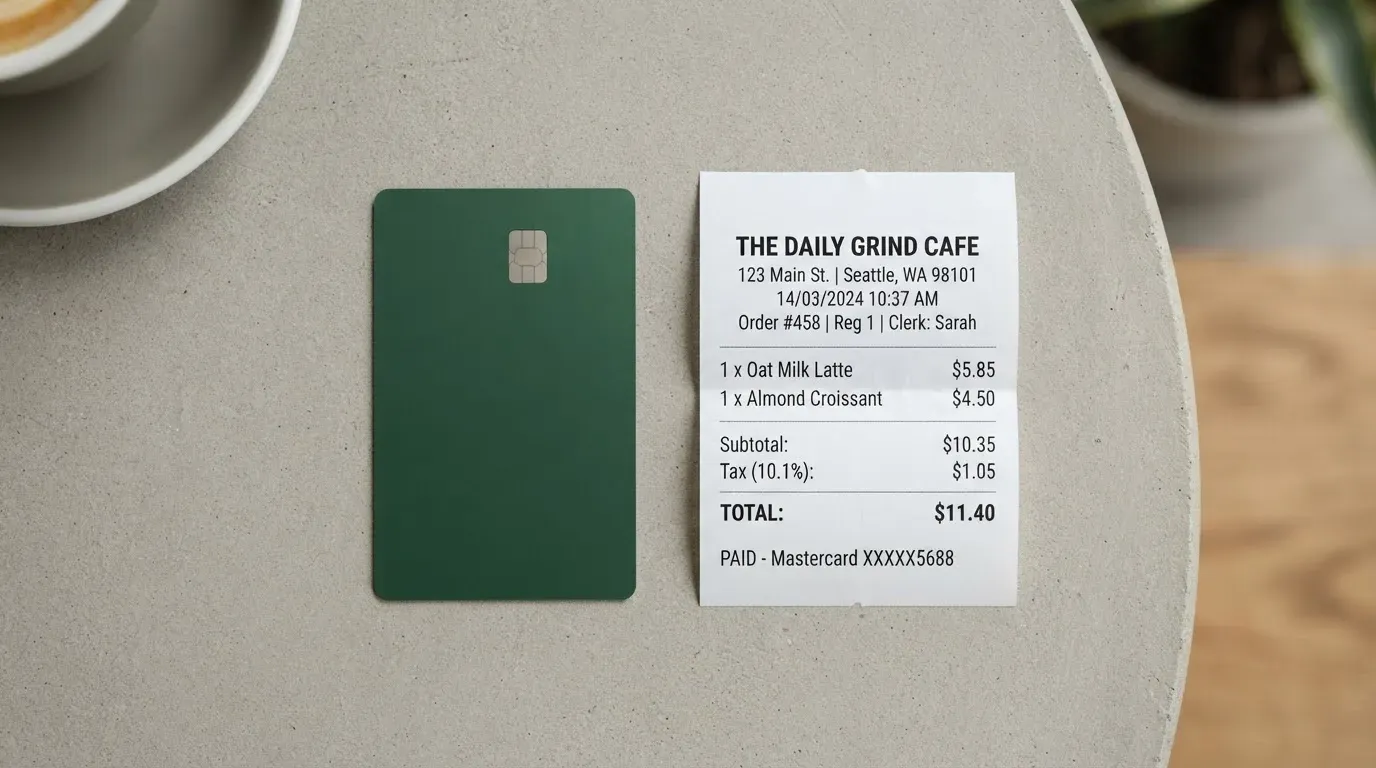
Here is the honest position: I cannot fill this table from NAKA’s disclosures, because NAKA does not publish these numbers. The table’s shape tells you what is missing.
| Fee or limit | What NAKA states |
|---|---|
| Issuance | Not stated |
| Monthly or annual fee | Not stated; pricing described as per user rather than per transaction, with no figures |
| Conversion (crypto to fiat) | Not stated; settlement is in USDT per the NAKA site |
| Foreign exchange | Not stated |
| ATM | Cards work “online, in-store, and ATM use” with major card networks; fee and allowance not stated |
| Daily and monthly spending limits | Adjustable by the user in the app; amounts not stated |
| On-chain network fee for your deposit | Charged by the blockchain, not by the card provider |
So let me be concrete about what that means in practice, using the structure of the question rather than invented numbers.
Paying for a coffee in your own currency. You sign, your USDT is converted at whatever rate applies on the day, and if you are not spending in the card’s own currency there is a second leg — a currency conversion. NAKA publishes neither the conversion rate nor the FX markup. If you instead convert at home through a crypto exchange, you pay that exchange’s spread as well. I cannot tell you which is cheaper, because neither side of the comparison is published.
Paying online. This is where the details bite. The card is described as accepted “over 150 million locations,” but acceptance and authorisation are different things. Address Verification Service, which compares the numeric parts of the billing address a buyer typed against the issuer’s records, is mainly offered in the US, Canada and the UK and is generally unavailable for foreign-issued cards — which can cause declines. Merchants may also apply extra scrutiny when the issuer country differs from the billing address, which is why a card issued in one country can look foreign to a shop in another. If a payment is declined, a hold can remain on your funds for several days, typically up to seven.
Taking money out at an ATM. The self-custody page says the cards work “online, in-store, and ATM use,” and then says nothing about what an ATM withdrawal costs or how much you may take. The app description, meanwhile, describes a virtual card. Two documents on the same product, one mentioning ATMs and one describing a virtual instrument, is not an answer about allowances.
Spending limits. You can adjust these yourself in the app, which is a genuinely useful feature and one of the better answers in this review. The amounts are not stated, so you set your own ceiling rather than inheriting one.
Top up: how the money gets in
There is no “top up” in the ordinary sense, and understanding why is the key to this card. Your USDT stays in a self-custodial, on-chain wallet. At each payment it is “settled via smart-contract signature.” Your funds remain on-chain in your wallet until you sign a payment — the card does not sweep your balance into a company account in advance.
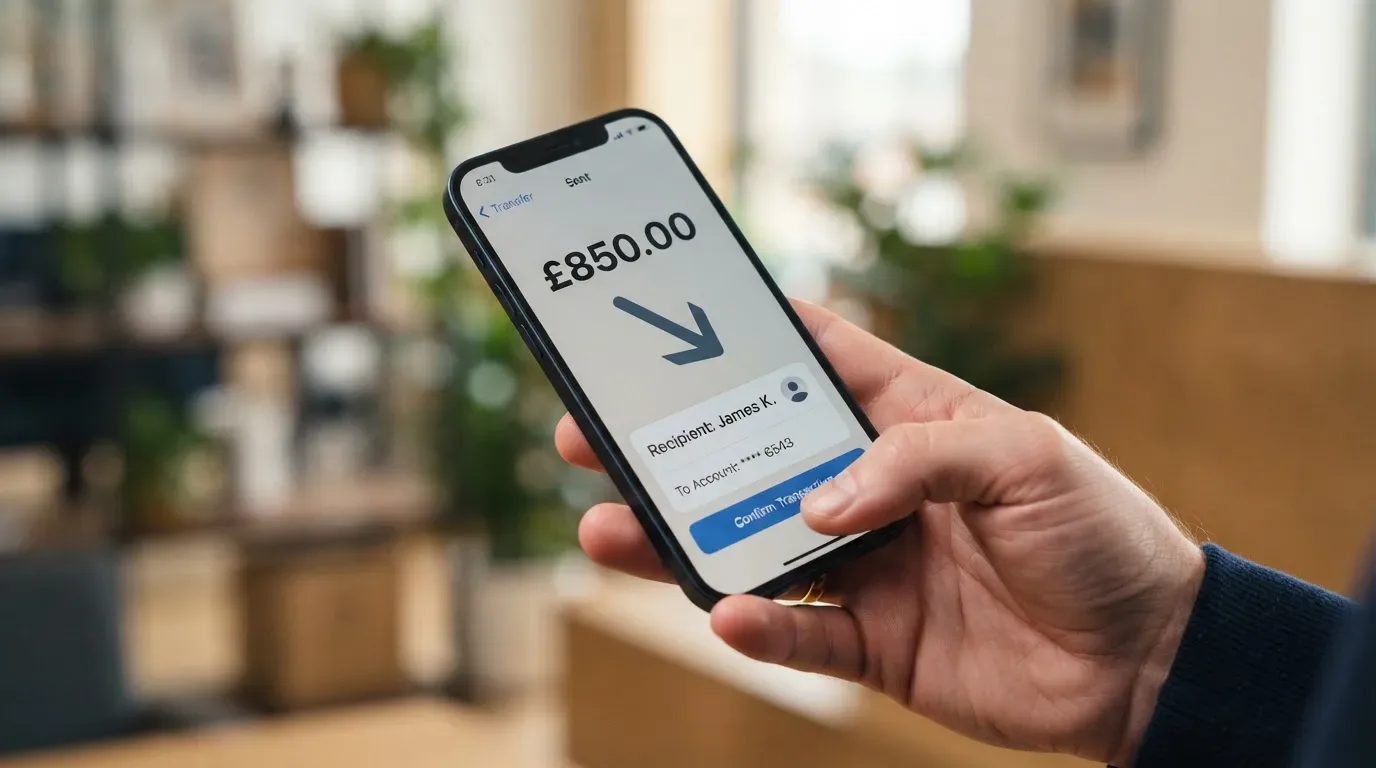
The trade-off is exact: no custodial pool to trust, but also no load button. If you have never used crypto, you will need to acquire USDt and send it to an address you control, and that is a separate process with its own failure modes.
The sharp detail here is the network. The app store listing caption states that only USDT on Avalanche C-Chain is accepted — that is a screenshot caption on the store listing, not a sentence from the legal terms, so I would treat it as a strong hint rather than a guarantee. Get it wrong and you have sent funds somewhere the card cannot use, on a chain it does not support. Blockchain transfers are irreversible; a deposit to an unsupported network or an address belonging to another network can be lost, or need manual support recovery with no guarantee. This is the single biggest practical trap in the whole product, and it is worth double-checking before your first transfer rather than after.
On-chain network fees for a deposit are charged by the blockchain, not by NAKA. Sending on Avalanche C-Chain costs something; sending on Ethereum costs considerably more, and Ethereum gas is paid only in ETH, so a wallet holding USDT but no ETH cannot send at all.
Withdrawals: not stated. The card’s own model implies there is no card withdrawal to make — your balance simply stays where it is, on-chain, in your wallet.
Paying with it every day
The everyday mechanics are the strong part. This is a virtual Visa Platinum, tokenized, and it works with Apple Pay and Google Pay per the launch post; the store listing also mentions Apple Wallet tap-and-go. Spending limits, card freeze and blocking are all in the app.
That combination — Apple Pay and Google Pay — is what makes a virtual card feel like an ordinary card. Apple Pay replaces the card number with a device-specific Device Account Number stored in the Secure Element, never on Apple servers, and each payment uses a one-time dynamic security code. The issuer can restrict the tokenised number, for example blocking it on magnetic-stripe, phone or website use. So the phone-wallet path is not a convenience wrapper around identical risk; it is a different payment path with its own controls.
You can also freeze and unblock the card yourself in the app, which is the single most useful everyday feature here. If the card details ever end up somewhere they should not, you can stop the bleeding without waiting for a support reply.
What is missing on the everyday-use side: blocked merchant categories are not stated. That matters more than it sounds. A merchant category code is a four-digit number classifying a business by goods or services, and gambling (MCC 7995) is one of the categories issuers commonly block by policy rather than by law — but the blocked list varies by issuer, and NAKA publishes none. Also unstated: whether the card supports 3-D Secure, Visa’s brand being Visa Secure, which decides whether an online payment can be challenged with a one-time code or a biometric.
Rewards: nothing stated for the card. NAKA’s blog refers to “programmable rewards” as a partner feature, which is a different thing from a cashback rate you can rely on.
The app. NAKA Pay+, from developer NAKA GLOBAL d.o.o. App Store 5.0 from 11 ratings, version 2.2, per a third-party report read 2026-10-21. Eleven ratings is not a track record in either direction — it is too small a sample to trust. A Google Play listing exists; its rating was not obtained.
Disputes and chargebacks: the “NAKA Spend Card Terms” exist but I have not read them, so how a disputed payment is handled is not something I can report. This is worth doing yourself before you rely on the card for anything you would have to fight to recover.
What can go wrong
The key is the whole security model, and the whole liability. Self-custody here is not a marketing adjective. Every single transaction requires a cryptographic signature from your private key, the key never leaves the device, and there is no shared custodial pool. Control of crypto belongs to whoever holds the private key or seed phrase. A seed phrase is typically 12 to 24 words in an unencrypted form of the key: anyone who obtains it can restore the wallet and spend the funds. There is no built-in recovery — the network cannot freeze or return stolen funds, because transfers are typically irreversible.
For contrast, custodial platforms have a record of failure: Mt. Gox (about US$350 million reported stolen 2011-2014), Coincheck (about US$400 million, 2018), and Ronin Network (US$625 million, 2022). With a self-custody-linked card the funds stay in your own wallet until the moment of payment, and you bear sole responsibility for key loss, phishing, and clipboard-hijacking malware that swaps copied addresses.
Wrong network, wrong address. Covered above, and it is the failure I would worry about most in the first month.
Stablecoins are not actually stable. A stablecoin aims to hold a stable value against an asset such as a fiat currency, but despite the name, stablecoins are not necessarily stable. TerraUSD collapsed in May 2022, and USDC temporarily lost its peg in March 2023 during the US banking crisis. If your balance is USDT and the peg moves, your spending power moves with it. The balance is also not censorship-proof: Tether says it disables tokens in wallets on the OFAC sanctions list and has frozen funds tied to illicit activity.
You are dealing with a young company and an unnamed issuer. NAKA GLOBAL, finančne tehnologije, d.o.o., Letališka cesta 33F, 1000 Ljubljana, Slovenia, registration number 8106452000, with related entities NAKA CH SAGL (Switzerland) and NAKA SLV, S.A. de C.V. (El Salvador). The company holds ISO/IEC 27001:2022, ISO 9001:2015 and ISO 22301:2019 — real certifications, and worth having. But the card issuer and the licences are not named on the pages I read. That gap is not academic. A card programme involves several parties: the network (Visa or Mastercard) routes messages and sets the rules, the issuer — a bank or e-money institution licensed to issue under that network’s licence — holds the programme, and the crypto brand is often only a programme manager or front end that markets the card. If you do not know who your issuer is, you do not know who is actually obliged to you.
I searched for reviews of this card and found none — no Trustpilot or Reddit page surfaced in that search, and no official incidents came up. Read that carefully: absence of complaints from eleven app ratings and no forum presence is not a record of good service. It is a record of nobody having written anything yet. Support is a “Talk to our team” contact page.
The launch itself is recent: a launch post dated October 24, 2025, though the page metadata shows a conflicting October 6, 2026; first shown publicly in Lugano; the NAKA Pay+ app first released October 9, 2025 per a third-party report.
The category’s own history. Programmes do close. Visa terminated its global agreements with FTX on 13 November 2022, and the FTX US debit card was wound down by its issuer. WaveCrest, a Visa card issuer that supplied crypto card brands, was suspended by Visa in Europe in 2018, closing all WaveCrest-issued Visa programmes. Closures typically give a notice period, then stop spending and loading, then ask users to withdraw remaining balances. With a self-custody model your funds are not sitting in that programme waiting for a withdrawal window — but the card can stop working, and your money is not trapped in it either. On balance, that is the safer side of this particular risk.
Regulation is coming around this product. MiCA, the EU’s markets-in-crypto-assets regulation, took legal effect in June 2023. Its rules on asset-referenced tokens and e-money tokens applied from 30 June 2024, and the remaining provisions, including crypto-asset service provider rules, applied from 30 December 2024. Under MiCA, e-money tokens may be issued only by a credit institution or an electronic money institution. Transitional grandfathering lets providers already operating under national law continue only until 1 July 2026, or until they receive or are refused a MiCA authorisation, whichever comes first. ESMA keeps an interim register of authorised providers, white papers and non-compliant entities — you can check a provider there, and that is a reasonable first step for anyone reading this. Note also that a card is a payment service regulated separately, while MiCA covers the crypto side, so a crypto card often depends on two licences.
One more thing you should know before spending. If you are taxed where you live, each payment funded from crypto may be a separate taxable disposal. The IRS treats digital assets as property, so exchanging them for goods, services or dollars generally produces a taxable gain or loss, measured in local fiat currency at fair market value on the date of the transaction. I am not giving you tax advice and you should check your own position, but the structural point stands: a card that converts and spends on your behalf does not necessarily spare you the bookkeeping.
What to take instead
None of these is a like-for-like substitute — none of them, as far as the material goes, spends from a wallet whose keys you hold. They are the alternatives a reader with the same problem would actually be choosing between, and they score higher.
| Alternative | Score | Card | Cost | Notable difference |
|---|---|---|---|---|
| NAKA | 5.1 / 10 | Virtual Visa Platinum | Not stated | Self-custody; settlement in USDT |
| TokenPocket | 5.8 / 10 | Mastercard/Visa debit | NFT creation fee partly covered, user pays “a small portion”; “Apart from these, TP Card does not charge any additional fees” | 1% fee on depositing crypto, said to be refunded later via rewards; runs on Arbitrum |
| KAST | 6.1 / 10 | Virtual and physical; Visa Platinum, Visa Infinite metal or gold | Standard 0 USD/year; Premium 1,000 USD/year; Private 10,000 USD/year | Stablecoin top-up 0%, USD spend 0%, transaction fee 0%, Apple/Google Pay 0%; FX 0.5%–1.75% |
| MetaMask | 7.1 / 10 | Mastercard, virtual first, metal optional | Virtual free; metal $199/year | “Minimal fee for each transaction”; no foreign transaction fee; cashback 1% on virtual |
MetaMask is the one to look at first if you want a card with printed numbers. Sign-up is open in 45 listed countries and territories — Andorra, Argentina, Brazil, Canada, Mexico, Germany, France, Spain, Uruguay among them — with other regions on a waitlist; US and UK sign-ups were temporarily closed. Proof of residency is required, and ineligible regions limit sign-ups rather than spending. It spends directly from the connected wallet on Linea, Base, Monad or Solana, in mUSD, wETH, EURe, GBPe, USDC or USDT. Cashback is paid in mUSD: 1% on Virtual, and on Metal a headline 3% that the footnote caps at the first $10,000 spent, then 1%. The trade is clear — you give up the self-custody-by-design model and, on Metal, you pay $199 a year.
KAST is the one with the most legible fee schedule, which is exactly the thing NAKA does not give you. Standard membership is free, Premium is 1,000 USD a year and Private 10,000 USD a year, billed annually upfront with no monthly option. Stablecoin top-up 0%, card spend in USD 0%, transaction fee 0%, Apple and Google Pay 0%. The FX fee is 0.5%–1.75% depending on your residence country, the transaction country and the card programme, and non-USD transactions under 25 USD cost 0.10 USD. Cashback is 1.5% on the first 2,000 USD a month, rising by tier. It funds from USDT, USDC, PYUSD and RLUSD across Ethereum, Solana, Polygon, Arbitrum and TRON — though its own Terms say acceptable tokens are “currently USDT and USDC,” which conflicts with the list in the app. And it is strict: it shows you the country list at KYC, and if you live in a supported country but hold an ID from a restricted region you may still fail; a VPN does not bypass it.
TokenPocket offers a Visa debit for a list of European countries and territories — Germany, France, Spain, Switzerland among them — and Mastercard for Australia, Canada, Hong Kong, Japan, Taiwan, New Zealand, Singapore, South Korea and the UK, with the Americas “planned for Q2 2025.” It runs on Arbitrum with balances in EUR24 and USD24. Beyond the partly covered NFT creation fee it says it charges no additional fees — but there is a 1% fee on depositing cryptocurrency into the card, said to be refunded later through rewards and reduced transaction fees.
Who I would recommend it to
I would recommend the NAKA card to exactly one person: someone who already runs a self-custody wallet, who is comfortable signing transactions and reading a network name, who is in or connected to Latin America and not a US citizen, and who wants a Visa number that spends their own USDT rather than a company’s balance. For that person the design is genuinely coherent — key never leaves the device, freeze and limits in the app, Apple Pay and Google Pay, no bank account needed, no custodial pool to fail.
I would tell everyone else to wait, and the reason is not the crypto. It is that the pricing is not public. A card you cannot cost is a card you cannot decide about. And before you do anything else there is a check worth making that takes five minutes: find out which legal entity you are contracting with — NAKA Slovenia, NAKA Switzerland, NAKA El Salvador or the US-specific agreement — read the NAKA Spend Card Terms for your jurisdiction, and look the provider up on ESMA’s interim register. Then send a small test amount of USDT on Avalanche C-Chain before you send anything you would miss.
Frequently asked questions
What is the NAKA card?
The NAKA card is a virtual, tokenized Visa Platinum that spends USDT held in a self-custodial, on-chain wallet. Every transaction requires a cryptographic signature from your private key, the key never leaves your device, and there is no shared custodial pool. Your balance stays on-chain until you sign a payment. The product targets Latin America, and the app is listed as “worldwide” without a country list.
How does the NAKA card work?
You set up a wallet in NAKA Pay+, complete a quick KYC verification with no bank account required, and receive a virtual card that works online, in-store and at ATMs with major card networks. When you pay, the USDT in your own wallet is settled via a smart-contract signature. Spending limits, card freeze and unblocking are controlled from the app, and the card integrates with Apple Pay and Google Pay.
Is NAKA a bank?
Not on the evidence of the pages I read. NAKA GLOBAL, finančne tehnologije, d.o.o. is a Ljubljana company, registration number 8106452000, with related entities in Switzerland and El Salvador, holding ISO/IEC 27001:2022, ISO 9001:2015 and ISO 22301:2019. The card issuer and the licences behind the card are not named on those pages, so I would not describe it as a bank.
Who owns NAKA?
NAKA GLOBAL, finančne tehnologije, d.o.o., at Letališka cesta 33F, 1000 Ljubljana, Slovenia. Related entities are NAKA CH SAGL in Switzerland and NAKA SLV, S.A. de C.V. in El Salvador. Legal documents are split by entity — NAKA Slovenia, NAKA Switzerland, NAKA El Salvador — with a note that the specific provider depends on your jurisdiction and product suite, plus a US-specific card agreement.
Is the NAKA card available in my country?
The stated picture is: it targets Latin America, the app is listed “worldwide” with no country list, and the starting data says “not a United States citizen.” A full country list is not stated on the public pages, so the reliable test is to install NAKA Pay+ and begin verification — the acceptance decision shows up there rather than on the website.
How do I top up the NAKA card?
There is no load button. USDT stays in your self-custodial, on-chain wallet and is settled by smart-contract signature at each payment. You buy USDT yourself and send it to an address you control. The app store listing caption says only USDT on the Avalanche C-Chain network is accepted, and on-chain network fees are charged by the blockchain rather than by NAKA.
What does the NAKA card cost?
NAKA’s own pages say pricing is per user rather than per transaction, and then publish no figures. Issuance, monthly fee, conversion, foreign exchange, ATM fees and allowances, and the daily and monthly spending limits are all not stated. Spending limits you can set yourself in the app. I cannot tell you what a payment costs, because the card does not say.
Is the NAKA card safe?
The security design is the strongest part: every payment needs a cryptographic signature from your private key, the key never leaves the device, and there is no shared custodial pool. The risk sits with you — a seed phrase is typically 12 to 24 words, transfers are typically irreversible, and a stolen key has no built-in recovery. There is also no public review record yet: no Trustpilot or Reddit page surfaced, and the app has 11 App Store ratings at 5.0.
Does the NAKA card have rewards or cashback?
Nothing is stated for the card. NAKA’s blog refers to “programmable rewards” as a partner feature, which is a different thing from a cashback rate you can budget around. If rewards decide your choice, treat this card as having none — and note that KAST publishes tiered cashback while MetaMask publishes 1% on its virtual card.
How do I add the NAKA card to Apple Wallet, and where can I use it?
The launch post says the card integrates with Apple Pay and Google Pay, and the store listing mentions Apple Wallet tap-and-go. Apple Pay replaces your card number with a device-specific number stored in the Secure Element, never on Apple servers, with a one-time security code per payment. The card is described as accepted at “over 150 million locations,” though acceptance does not guarantee authorisation — foreign-issued cards can be declined where address verification is unavailable.
Wallet cards in the catalogue – cryptocardcatalog
Content created by the «cryptocardcatalog» team