
A virtual dollar card aimed at Nigeria, priced well on crypto conversion, thin on the everyday details
 Available in US
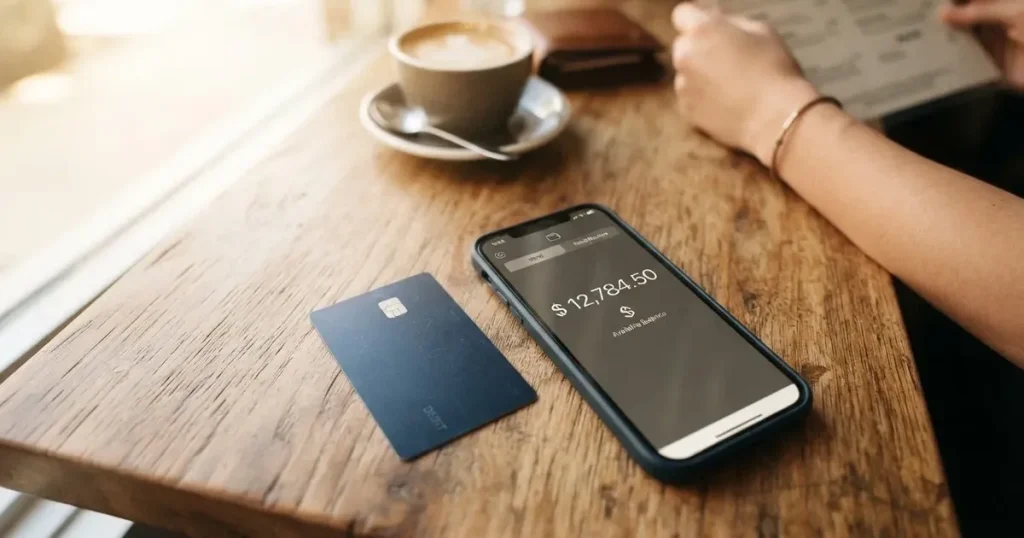
The Monica Pay card is a virtual dollar card — Visa and Mastercard, no plastic, spend from a balance you load yourself — sold by a Lagos-based fintech whose whole route into it runs through naira. That single sentence explains most of what follows. If you are a Nigerian resident who already holds crypto and wants to spend it at ordinary merchants anywhere Visa or Mastercard are taken, the proposition is unusually clean: the company advertises 0% conversion fees when you sell crypto for naira, and the card draws on the naira you get. If you are anywhere else, or you want a card that behaves like a normal bank card — Apple Pay, a bank you can name, an ATM, a disputes process — then what Monica does not say is at least as important as what it does. I scored it 5.6 out of 10 and I will show my working, because a single number without the reasons is worse than no number.
The conditions described below are current as of October 28, 2026.
Verdict: 5.6 out of 10
| Criterion | Mark | Why |
|---|---|---|
| Who can get it | 2 / 10 | The page is built around Nigeria (Lagos, EN-NG, payouts in NGN); there is no country list |
| Cost | 9 / 10 | “0% conversion fees” on selling crypto for naira and funding the card; unofficial: a one-time non-refundable $1 to unlock the card |
| Top-up options | 7 / 10 | BTC, ETH, SOL, TRX, BNB, USDT and USDC are sold for naira and the card loads from the naira balance; networks are not named |
| Reliability and complaints | 6 / 10 | Monica Technologies Limited (Lagos), claims alignment with the SEC VASP framework, issuer unnamed; App Store 4.6 from 15K ratings, Trustpilot 3.7 from 1 review |
| Everyday use | 4 / 10 | Virtual dollar Visa and Mastercard with NFC and QR; Apple Pay and Google Pay are not mentioned, no ATM |
| Total | 5.6 / 10 |
The 9 out of 10 for cost is real and deserves to be said plainly: 0% conversion fees on the crypto-to-naira leg is the thing that makes this card interesting, and it is rare. The 2 out of 10 for eligibility is the thing that makes it narrow — there is no published list of countries, the product page speaks only of Lagos, EN-NG and naira payouts, and a reader in Lisbon or Lagos-adjacent-but-not-Nigeria learns nothing about whether the card works for them. The 4 out of 10 for everyday use is where I would push hardest: a virtual-only card with no named mobile wallet support is a card you have to keep entering in the browser, and browser entry is exactly where declines bite.
Who it suits: Nigerian residents who already hold crypto, who want to spend it abroad or on sites that prefer dollars, and who can tolerate doing their own support archaeology when something goes wrong. Who it does not suit: anyone outside Nigeria who is guessing whether they can register, anyone who wants to add the card to a phone wallet, anyone who needs physical cash, and anyone who needs a card issuer whose name they can find.
Will they give you the card?
Short answer: if you are a Nigerian resident who passes verification, probably yes — and to almost no one else, at least as far as the public pages explain. The product page is Nigeria-centred. It names Lagos, uses the EN-NG language tag and talks about NGN payouts. There is no country list, no eligibility page, nothing that says which other nationalities are accepted. So I cannot tell you from the card’s own materials whether a Kenyan, Ghanaian or British resident with a Nigerian phone number would be approved, and I am not going to invent an answer for you.
What is stated works out your favour once you have it: the card is accepted wherever Visa or Mastercard is accepted. That is the ordinary network rule, and it means spending is not geographically fenced even if registration is. The terms add a bar you should read rather than skim — use is prohibited from any jurisdiction where crypto-asset services are unlawful. That is a self-declared limit, and it puts the burden on you to know the rules of the country you are in and the country you are in when you use the card.
One thing worth separating clearly, because it confuses people: who may register, who may hold the balance, and where the card may be spent are three different questions with three different answers here. Only the third is stated broadly.
| Question | What the card’s public pages say |
|---|---|
| Which countries may register | Not stated; the page is Nigeria-centred |
| Which currencies the balance holds | USD card funded from a naira balance; multi-currency balances not stated |
| Where the card may be spent | Wherever Visa or Mastercard is accepted |
| Jurisdictional bar | Use prohibited where crypto-asset services are unlawful |
| Tiers of eligibility | A single tier |
How to get it
The application is described as “one-screen KYC” inside the app. The terms require that only “eligible verified Users” may apply. Neither the company’s own pages nor the terms tell you which documents you will need, what age you must be, or what the verification tiers for this card are — general verification tiers under clause 5.2 of the terms apply to naira withdrawals, and nothing says the card rides on them separately.
So the honest answer to “how do I get it” has three parts: download the app, complete the verification it offers, and accept that you may discover the real document requirements only inside that flow. If you need to know before you start whether you qualify, this is not the card that will tell you from its marketing site.
There is one practical point in your favour. The card is virtual, so there is nothing to be posted and nothing to wait for. No delivery, no courier, no international shipping, no address to get right for a parcel. The trade is speed for paper: you get a card number essentially at once, and you give that up the certainty of knowing what you were asked to prove.
The app is on iOS and Android. On the App Store, Monica — Pay, Send, Bills — sits at 4.6 out of 5 from 15K ratings as I read it on 2026-10-21. That is a large number of ratings and a healthy score, though it measures the app, not the card. Google Play I did not read, so I will not guess at it.
Fees: what it really costs
Monica does not publish a fee schedule for the card. There is no table of charges on the public pages, and the ones that matter most to you are the ones I have to point at rather than quote. What is stated is this: 0% conversion fees on selling crypto for naira and on funding the card, and an FX spread set by the scheme operator that Monica says it does not retain. Other fees are not stated.

There is one unofficial figure and I want to be careful with it. A third-party app listing page, in 2026, describes a one-time, non-refundable $1 fee to unlock the Virtual USD Card. Monica does not confirm this on its own pages. Treat it as a strong rumour and check inside the app.
Here is the honest state of the ledger:
| Item | What the card’s public pages say |
|---|---|
| Card issuance | Not stated by Monica; unofficial third-party listing says one-time non-refundable $1 |
| Monthly or maintenance fee | Not stated |
| Crypto-to-naira conversion | “0% conversion fees” |
| Funding the card from the naira balance | “0% conversion fees” |
| FX spread | Set by the scheme operator; Monica says it does not retain it |
| ATM withdrawal | Not stated; no ATM is mentioned |
| Spending limits | Manageable in real time; no amounts given |
| Cross-border limits | Transactions outside Nigeria may be subject to “additional regulatory limits” |
| Tiers | Single tier |
Now let me make that concrete, because a percentage without a direction is not information. Two or three ordinary payments, and which line of the table each one touches.
A ₦-denominated purchase from your balance. Say you spend on a local site that quotes dollars. The card draws down USD, so the interesting number is the spread between the live naira rate and the rate you actually get when the operator converts — and the operator sets that, not Monica. The 0% figure does not describe it. That “additional regulatory limits” line on transactions outside Nigeria also may or may not apply depending on where the merchant is; the card does not say where the line sits.
A purchase at a merchant that prices in naira. Here the merchant’s own acquirer does the conversion and bills you in naira, which puts it outside Monica’s scheme entirely. Whatever spread your bank-side pricing carries is a separate animal from anything on this page.
A top-up. You sell crypto, you receive naira, and the 0% applies to that leg as stated. But on-chain network fees are charged by the blockchain, not by Monica, and the card does not say who pays them or what a minimum top-up is. If you send USDT over Tron, the network fee comes out of the same balance you were trying to move.
An ATM withdrawal. I cannot give you a number, because none is published and no ATM is mentioned at all. Treat cash as unsupported.
Top up options
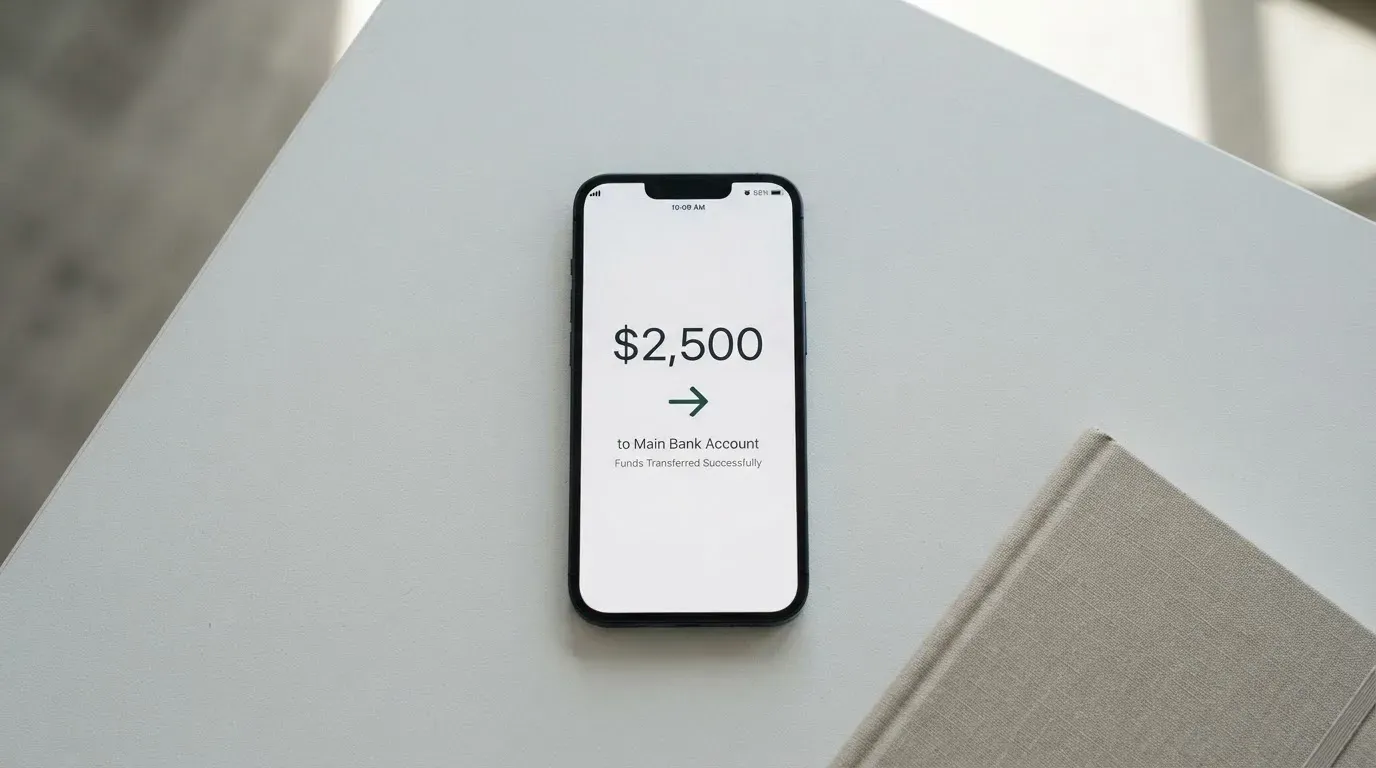
The funding route is short and, in its own way, clever. Inside Monica you sell BTC, ETH, SOL, TRX, BNB, USDT or USDC for naira at the live rate, and then load the USD card from that naira balance. Seven assets, one currency of account, one card. The card’s pages describe the top-up as instant, and the app description says money can be moved to your bank without fees, with naira reaching the bank within 60 seconds of on-chain confirmation.
Two things are missing that matter more than they first appear.
The networks are not itemised. Seven assets is not seven deposit routes. USDT and USDC each exist on many chains, and the card does not say which of them Monica accepts. Send on the wrong network and the funds are in trouble — blockchain transfers are irreversible, and a deposit to an unsupported network or an address belonging to another network can be lost or need manual support recovery with no guarantee of success. There is one specific trap worth knowing: Circle stopped supporting USDC on Tron in February 2024, so “USDC over TRC20” is not a native option even though TRX is in the asset list. The answer to “which network do I pick” is not on this page. It is in the app, at deposit time, and I would read it there rather than guess from the coin list.
The minimum is not stated, and neither is the network-fee payer. For a small top-up, a network fee can eat a meaningful slice of the amount.
| Top-up route | What is stated |
|---|---|
| Sell crypto for naira in-app | BTC, ETH, SOL, TRX, BNB, USDT, USDC |
| Load the USD card | From the naira balance, at 0% conversion fee |
| Speed | Described as instant |
| Naira to bank | Within 60 seconds of on-chain confirmation; “without fees” per the App Store listing |
| Networks accepted | Not itemised |
| Minimum top-up | Not stated |
| Who pays the network fee | Not stated |
| Card-balance return | Not stated |
Paying with it every day
The card is a virtual dollar debit card on Visa and Mastercard, and the Pay Cards product line offers NFC tap-to-pay and QR. USD is the currency. That is the good news, and it stops there.
Apple Pay and Google Pay are not mentioned anywhere on the public pages. I want to be careful with what that means, because people read “not mentioned” as “not supported” and as “not ready yet”, and it may be neither. What it means is that you will be typing card numbers by hand into websites and, where NFC is used, tapping a phone against a terminal with a card number that has no name embossed on it. That is a less pleasant daily experience than a wallet token, and it is the biggest single reason the everyday-use mark sits at 4.
Cash, or anything close to it, is out: no ATM is mentioned. Rewards are not stated. Blocked merchant categories are not stated — which matters because gambling sits under merchant category code 7995, many issuers block it on specific cards by policy rather than by law, and the blocked list varies by issuer with no published list here.
Two general mechanics will shape your experience more than the card’s own features. First, a card number begins with a six- or eight-digit issuer identification number, and a merchant can look it up to see which institution and which country issued it; if the issuer country differs from the billing address you typed, the merchant may apply extra scrutiny. This is why a card issued in one country can look foreign in another shop, and it is why declined payments sometimes happen for reasons that have nothing to do with your balance. Second, address verification compares the numeric parts of the billing address you type against issuer records, and it is mainly offered in the US, Canada and the UK — generally unavailable for foreign-issued cards, which can cause declines. If a subscription or a foreign merchant refuses you, that is a plausible reason, and retrying with a different spelling of your address will not fix it.
Declines can also leave a hold on your money for several days, typically up to seven. And with a pre-loaded balance model, the card cannot overdraw — which is genuinely reassuring, and is the trade: you cannot spend money you have not already converted.
What can go wrong
I looked for trouble and did not find a story. That is worth saying, but it is also worth saying what it is not: I found no official incident, and no independent review of the virtual card itself. Silence is not a clean bill of health; it is absence of data.
Who you are actually dealing with. Monica is Monica Technologies Limited, Lagos, Nigeria. The site claims alignment with the SEC VASP framework and compliance with NDPA 2023 and NFIU requirements. Those are the company’s own claims, made by the company. The card issuer is an unnamed third-party card partner — meaning the entity that actually stands behind your card number, holds your balance and handles a chargeback is not identified on the pages I read. For a card whose entire value proposition is “spend crypto like normal money,” not knowing who issues the normal money is the largest structural gap I found.
Custody. Not stated, beyond real-time spending limits being available. This is the question I would most want answered, and it is the one with the heaviest history behind it. Whoever holds your private key or seed phrase controls the funds; a seed phrase — typically 12 to 24 words — is the unencrypted private key itself, and anyone who obtains it can restore the wallet and spend what is in it. Transfers are typically irreversible, so a stolen key has no recovery path. The record of custodial platforms failing is not hypothetical: Mt. Gox (about US$350 million reported stolen, 2011–2014), Coincheck (about US$400 million, 2018) and the Ronin Network (US$625 million, 2022). If Monica is custodial — and a naira off-ramp plus an integrated card suggests it may be — you are carrying that counterparty risk without being told.
Programmes can be switched off. Visa and Mastercard do not issue crypto cards to consumers themselves; they license issuers and can suspend a programme. Visa said in November 2022 that it had “terminated our global agreements with FTX” and the FTX US debit card was wound down by its issuer. WaveCrest, a Visa issuer that supplied crypto card brands, was suspended by Visa in Europe in 2018, closing all WaveCrest-issued Visa programmes. Closures typically follow a pattern: notice, then spending and loading stop, then users are asked to withdraw remaining balances. The lesson is not that Monica will close; it is that your exit depends on an unnamed third party you have no relationship with.
No dispute process. The card terms do not address disputes at all. The general process for the company is negotiation for 30 days, then arbitration in Lagos, under Nigerian governing law. A chargeback is a refund ordered by the card issuer, with reason codes for fraud, duplicate billing or goods not received; US debit-card reversal rights come from Regulation E and prepaid-card coverage varies and should not be assumed. So if a Nigerian merchant takes your money and delivers nothing, the card terms do not tell you what lever you have. In practice the only thing that helps is an issuer you can name and a 3-D Secure step on the payment.
Low and thin confidence signals. The Trustpilot profile shows 3.7 from a single review (5 stars, May 19, 2026), on an unclaimed profile, as I read it on 2026-10-21. One review is not a reputation; it is one data point, and a positive one. There were no complaint themes to read because there is no body of them. The App Store’s 4.6 from 15K ratings is the more meaningful number, and it measures the app.
Support. There is a support page at /get-support. Channels, languages and hours are not described. For a product whose users may be sending irreversible transfers on a network it has not itemised, that is thin.
Alternatives
If Monica is not quite right for you, here is what the alternatives look like against the same yardstick. All three are scored on the same scale out of 10.
| Monica Pay | International Visa Card | UNi Card | Whop Cards | |
|---|---|---|---|---|
| Score | 5.6 | 6.7 | 6.1 | 5.2 |
| Card | Virtual USD Visa and Mastercard | U.S.-issued Platinum Visa, virtual; physical “coming soon” | Multicurrency on Mastercard | Visa, works anywhere Visa is accepted |
| Cost to open | Not stated (unofficial $1) | $5 one-time, no maintenance fee | No annual fee; issuance not stated | “No extra fees”; no amounts listed |
| Ongoing cost | 0% crypto conversion | Card use in USD free; foreign currency “Visa exchange rate + 2% FX fee” | “No annual fee or foreign transaction fee”; live OTC rates, “no hidden exchange fees” | Not stated |
| Funding | Sell BTC, ETH, SOL, TRX, BNB, USDT, USDC for naira | USDC or USDT at 1:1 into the USD account, free; also USD, EUR, SEPA, SWIFT, FedNow | Not stated | Spends from a Whop balance, backed by stablecoin collateral from a linked wallet |
| Rewards | Not stated | No cashback stated | “Spend-to-Earn” up to 3% | 5% cashback at select merchants, currently Uber |
| Where you can have it | Nigeria-centred; no country list | Excludes residents and legal registrants of Belarus, mainland China, North Korea, Cuba, India, Iraq, Iran, Israel, Myanmar, Nepal, Nicaragua, Russia, Syria, Turkey, Ukraine, Venezuela, Vietnam | Not stated | 31 US states for consumers, 41 for businesses |
Read across the rows and the shapes are clear. The International Visa Card is the most complete product of the four: a named issuer country, a stated fee schedule, and five deposit rails. It is also the most restrictive on who can hold one — seventeen named countries for residence or legal registration, with FATF grey-list countries reviewed case by case, and purchases blocked in seven of them. Note the basis is residence or registration, not citizenship.
UNi Card is the cleanest on fees — no annual fee, no foreign transaction fee, live OTC rates and a stated absence of hidden exchange fees — and it pays up to 3% back. Its weakness is the same one that hurts Monica: nothing is stated about who can open one or how you fund it.
Whop Cards is the outlier. Its eligibility is US-state-based rather than country-based, it pays 5% cashback at select merchants, and it declares no extra fees. But it spends from a platform balance rather than from a card balance, and it does not state conversion or FX amounts, so the “no extra fees” claim is not something you can price.
None of these is a bank. That is worth sitting with for a moment. An electronic money institution can issue e-money, payment cards and e-wallets but cannot lend, and such institutions must safeguard customer funds by segregating them or insuring them — funds that are not the same as bank deposits and may not be covered by a deposit guarantee scheme. In the EU a card is regulated separately as a payment service while MiCA covers the crypto side, so a crypto card often depends on two licences.
Who I would recommend it to
I would recommend the Monica Pay card to one person: a Nigerian resident who already holds crypto, has a verified account, wants to spend it at merchants that prefer dollars, and is content to have a virtual card with no wallet token and no cash. For that person the 0% conversion fee is a real, unusual advantage, the naira-to-bank path is fast, and the app is well rated. That is a genuine niche well served.
I would not recommend it to you if any of these are true of your situation:
- You are not in Nigeria, and you cannot tell from the card’s own pages whether you are eligible.
- You need Apple Pay or Google Pay, or a physical card, or an ATM.
- You need to name the bank that issued your card, or you need a documented dispute process.
- You are moving large balances and have not established where the custody sits.
- You intend to send crypto on a network the app has not confirmed it supports.
If you are outside Nigeria and comparing options, the eligibility rules — not the fees — should decide it. The International Visa Card costs more to open and charges a stated 2% foreign-currency fee on top of the Visa exchange rate, but it tells you in advance who issues the card and what it charges. Paying a known percentage for a known issuer is often the better trade than paying zero for a card whose issuer is unnamed.
If you are in Nigeria and already inside the Monica app, the situation is different: the conversion saving may well outweigh the missing wallet support, because a 2% FX fee is real money on every foreign purchase. In that case the sensible order of operations is small top-ups first, a test payment at a merchant you know, and a look at the in-app support options before you commit anything substantial. If you are outside it, I would come back to this card when it publishes a country list and an issuer.
Frequently asked questions
What is the Monica Pay card?
It is a virtual dollar debit card offered by Monica Technologies Limited, a Lagos-based fintech. It comes in Visa and Mastercard versions and is spent from a balance you load yourself, in USD, with no physical card to be delivered. Its distinguishing feature is the funding route: you sell supported crypto for naira inside the app and the card spends from that naira balance, with no conversion fee on that step. It is aimed at Nigerian residents, not at the general market.
How does the Monica Pay card work in practice?
You buy crypto or hold it, sell part of it for naira at the live rate inside the app, and load the resulting naira onto the USD card. The card then behaves like an ordinary dollar card wherever Visa or Mastercard are accepted, including NFC tap-to-pay and QR. You can also move naira to your bank, which the app says happens without fees and within 60 seconds of an on-chain confirmation. Spending limits can be adjusted in real time in the app.
Is Monica Pay a bank?
No, and it does not present itself as one. Monica Technologies Limited is a fintech company; the card itself is issued by an unnamed third-party card partner, which is the institution that would actually hold the balance and handle a chargeback. That distinction matters for your protection: e-money balances are safeguarded by segregation or insurance rather than being bank deposits, and prepaid-card reversal coverage varies by scheme and should not be assumed to apply.
Who owns Monica Pay?
Monica Pay is operated by Monica Technologies Limited, based in Lagos, Nigeria. The company says it is aligned with the SEC VASP framework and compliant with the Nigerian Data Protection Act 2023 and NFIU requirements. Those are claims made on its own site. The company does not name the third party that issues the card, and if you are trying to work out who stands behind your card number, that is the gap.
Can I use the Monica Pay card outside Nigeria?
Yes, in the sense that it is accepted wherever Visa or Mastercard are accepted, and there is no spending restriction by country. Two cautions. Transactions outside Nigeria may be subject to additional regulatory limits, which the card does not quantify. And transactions can be declined for reasons unrelated to your balance — a merchant can look up the issuer country and apply extra scrutiny, and address verification is generally unavailable for foreign-issued cards.
How do I get the Monica Pay card?
Download the Monica app on iOS or Android, complete the one-screen KYC process it offers, and apply from there; the terms say only eligible verified Users may apply. Because the card is virtual there is no delivery step and no waiting. The company does not publish which documents you need or what age is required, so be prepared to find out inside the application flow rather than on the website.
Does the Monica Pay card require KYC?
Yes, verification is built in rather than optional — the app describes “one-screen KYC” and the terms restrict applications to eligible verified Users. The specific document list and age requirement are not stated on the public pages. General verification tiers under clause 5.2 of the terms apply to naira withdrawals, but card-specific verification levels are not described.
What does it cost to use the Monica Pay card?
The headline is 0% conversion fees on selling crypto for naira and on funding the card, which is the strongest part of the offer. The FX spread on card payments is set by the scheme operator, not Monica, and the card does not publish that figure. A monthly fee, ATM fees and card issuance are not stated by Monica; a third-party listing page in 2026 mentions a one-time non-refundable $1 to unlock the card, which the company does not confirm.
Can I add the Monica Pay card to Apple Wallet?
Apple Pay and Google Pay are not mentioned anywhere in the Monica Pay card’s public materials, so I cannot tell you that adding the card to Apple Wallet works. Treat mobile wallet support as unconfirmed rather than absent — the company may support it without documenting it, or may not intend to. If a phone-tap experience is important to you, ask support directly before you rely on it.
Is the Monica Pay card safe to use?
There is no official incident I could find, but I also found no independent review of the virtual card and no published custody model, so I would not treat the absence of problems as evidence. What the card does offer is real-time spending limits, which is a genuine control. What is missing is equally real: the issuer’s name, the dispute process, and any statement about who holds the crypto. Balances are pre-loaded, so the card cannot overdraw — but funds sit with a custodian and an unnamed card partner, and transfers on an unsupported network are irreversible.
App and neobank cards in the catalogue – cryptocardcatalog
Content created by the «cryptocardcatalog» team