
A thin virtual card aimed at ad spend, with the details that matter left unstated
 Available in US
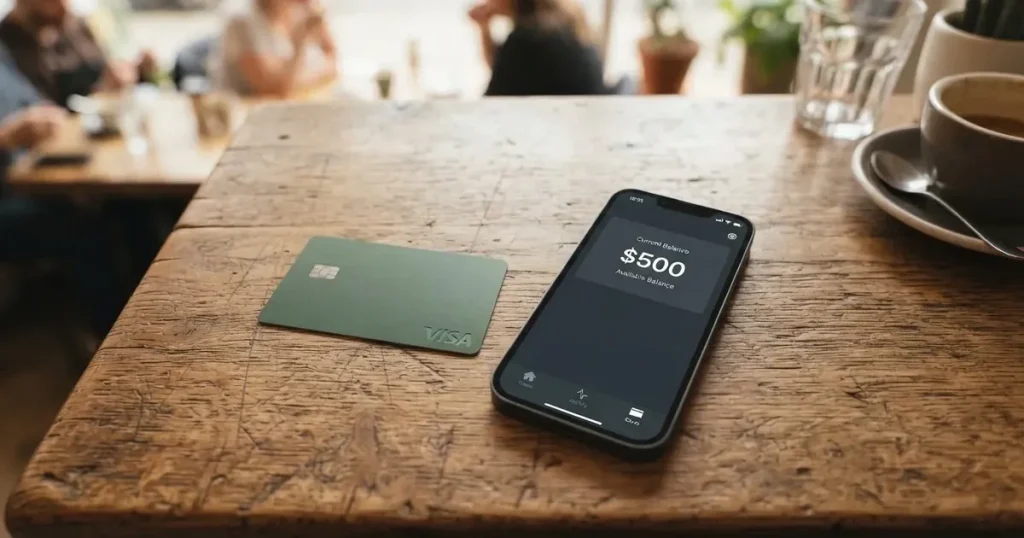
Mirocard is a virtual payment card, Visa and Mastercard only, that you fund from a crypto balance and then spend like an ordinary card online. There is no physical card in the box, no monthly fee, and three card types priced and charged differently: a travel card at $15.00, an advertising card at $5.00, and a services card from $5. That is the whole pitch, and in a fairly crowded field of crypto cards it is a narrow one. The card looks built for a specific person — a freelancer or a small business paying for advertising, AI tools, hosting, games, subscriptions and design work — and for that person the arithmetic can work. For everyone else, several of the basics a card is supposed to answer are simply not published.
I scored it 6.1 out of 10. That is a middling number and it is not a mystery: the top-up side is genuinely good, the costs on the cards that exist are low, and almost everything around them — who qualifies, what currency the card holds, what a foreign-currency purchase costs, what a dispute route is — is unstated on the public pages.
| Criterion | Mark | Why |
|---|---|---|
| Who can get it | 5 / 10 | No country list; cards not issued to people in a “Restricted Jurisdiction” the AML policy never enumerates |
| Cost | 7 / 10 | Travel issuance $15.00, advertising $5.00, services from $5; no monthly charge; transaction fee $0.20, $0.00, $0.00; top-up fee is individual |
| Top-up options | 9 / 10 | ETH, USDC, USDT, BTC, SOL, TON, TRX and other major coins into the Master Balance, credited within a few minutes |
| Reliability and complaints | 5 / 10 | Issuer unnamed (a third-party Card Provider); Mirocard is not a bank, EMI or issuer; no complaints or reviews found |
| Everyday use | 5 / 10 | Virtual Visa and Mastercard only, instantly; Apple Pay and Google Pay only on the travel card; no ATM |
The details behind these conditions are current as of October 28, 2026.
Who it suits, and who it will turn away
The most uncomfortable part of this card is that it does not publish a country list. There is no page saying who can sign up. What the pricing page does show are the BIN countries the cards are issued under: US, SG and EE plus one more for the services and advertising cards, and HK and SG for the travel card. That is the issuer’s country, not your eligibility — a shop can look up the BIN and see where the card came from, which is not the same as knowing who may hold it. Treat those codes as background, not as an answer to “can I get one”.
The terms do give one rule, and it is a real one. Mirocard is not offered to people who are located in, ordinarily resident in, incorporated in, or subject to the jurisdiction of anything called a “Restricted Jurisdiction” as designated under its AML policy — and that policy does not publish the list. So the exclusion exists, is legally operative, and is invisible from outside. If your country matters to you, there is no published answer, and the only way to find out is to try.
The site runs in English and Russian. That tells you something about where the service is aimed, but it is not a statement of availability either.
Getting hold of the card
Registration is online and the site says it takes “2 minutes” and is free. The account lives at app.mirocard.com — a web account, with no mobile app mentioned anywhere I could find and no ratings for either.
What you will be asked for is set out in the AML policy: full name, date of birth, nationality, residential address, government-issued ID, email. The terms set the age floor at 18 and say Mirocard and/or the Card Provider may require verification of your identity. Whether a proof of address is needed is not stated. Neither is what verification level you end up at — there is no tier system described, no description of what triggers a deeper check, and no published turnaround for a review that goes beyond the automatic path.
The card itself is virtual, on Visa and Mastercard, and you can hold several cards on one account. It is issued instantly, and nothing ships. The currency the card holds is not stated — prices are quoted in USD, which is a hint and not an answer.
Why “virtual only” matters: this is not a card you hand over in a shop. It lives in a wallet or in the account’s card details, and the security design assumes that. Card number, expiry and CVC are only visible after an extra confirmation step, 3-D Secure is on for all card types, and advertising cards ask for confirmation on every payment. That last one is a deliberate speed bump, and it will get old if you run ad spend through it.
Fees and what a payment actually costs
There is no monthly charge. Issuance is $15.00 for the travel/international card, $5.00 for the advertising/arbitrage card, and from $5 for foreign services and subscriptions. The per-transaction fee is $0.20 on travel and $0.00 on advertising and services. Top-up fees exist and are individual per card, with no amount published.
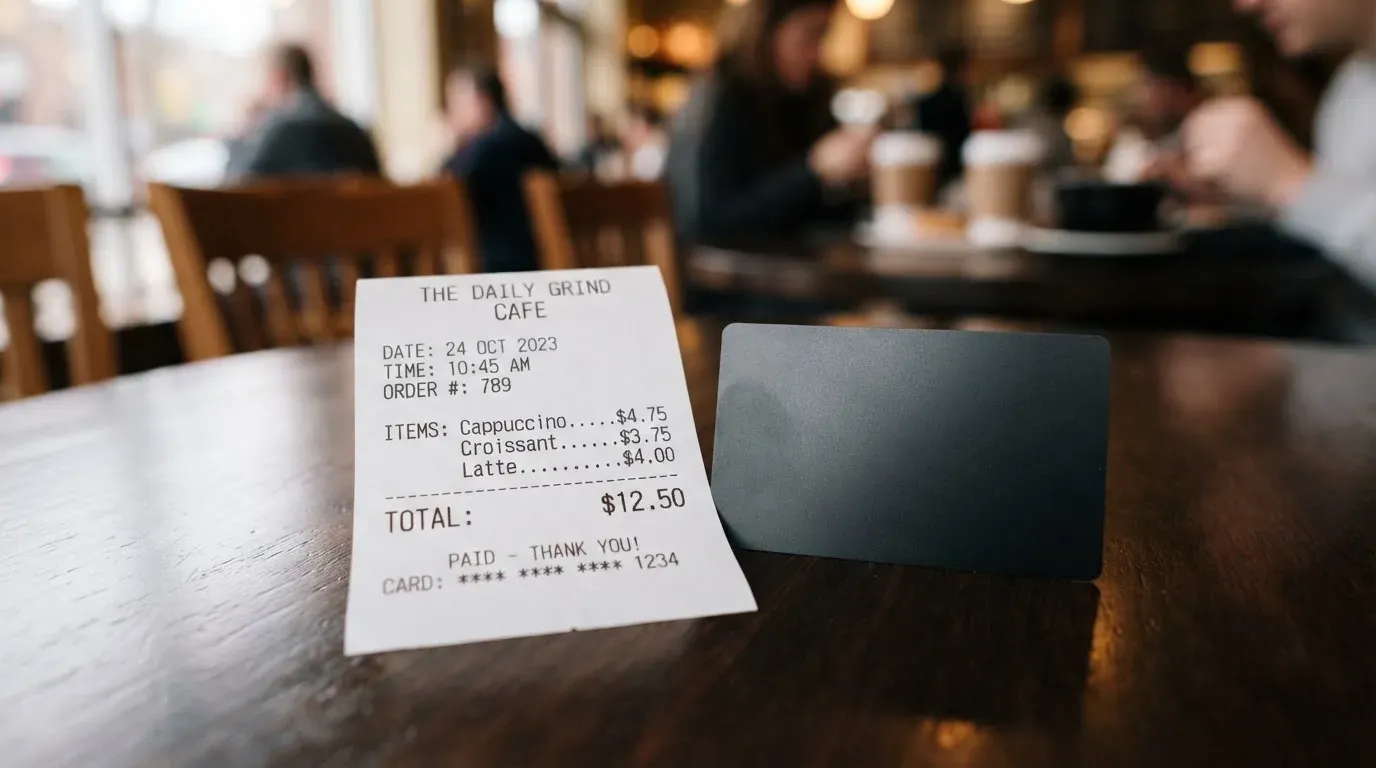
| Fee or limit | What the card states |
|---|---|
| Issuance, travel/international | $15.00 |
| Issuance, advertising/arbitrage | $5.00 |
| Issuance, foreign services/subscriptions | from $5 |
| Monthly fee | No monthly charges |
| Transaction fee, travel | $0.20 |
| Transaction fee, advertising | $0.00 |
| Transaction fee, services | $0.00 |
| Top-up fee | Individual for each card; no amount stated |
| FX fee | not stated |
| ATM | not stated; virtual cards only |
| Daily and monthly limits | No numeric limits; copy says “without limits or blocks” |
| Currency | not stated |
Three everyday payments, to make this concrete.
Paying for $500 of ad platform spend on the advertising card: $5.00 to issue, $0.00 per transaction. The top-up fee still applies at an unpublished rate. That is the clean case, and it is the one the card is designed around.
Paying for a $30 subscription on the services card: from $5 to issue, $0.00 per transaction. Fine, unless the subscription charges in a currency other than the card’s — and since the card currency is not stated and there is no published FX fee, you cannot predict the final amount.
Paying for a $200 hotel or flight on the travel card: $15.00 to issue, $0.20 per transaction, no FX fee stated. A hotel in a country outside your own is almost certainly a foreign-currency charge, and this is precisely where an unpublished FX fee or a declined transaction would hurt. Apple Pay and Google Pay are listed on this card only, which is at least the one card where they exist.
The “without limits or blocks” line is marketing copy, and it should be read as copy. There are no numbers behind it: no daily cap, no monthly cap, no per-merchant cap, nothing to plan around. If you need a ceiling on spend, you will not find one in the public material.
Top up the card
This is the strongest part of the product, and it is why the card scored 9 out of 10 on funding.
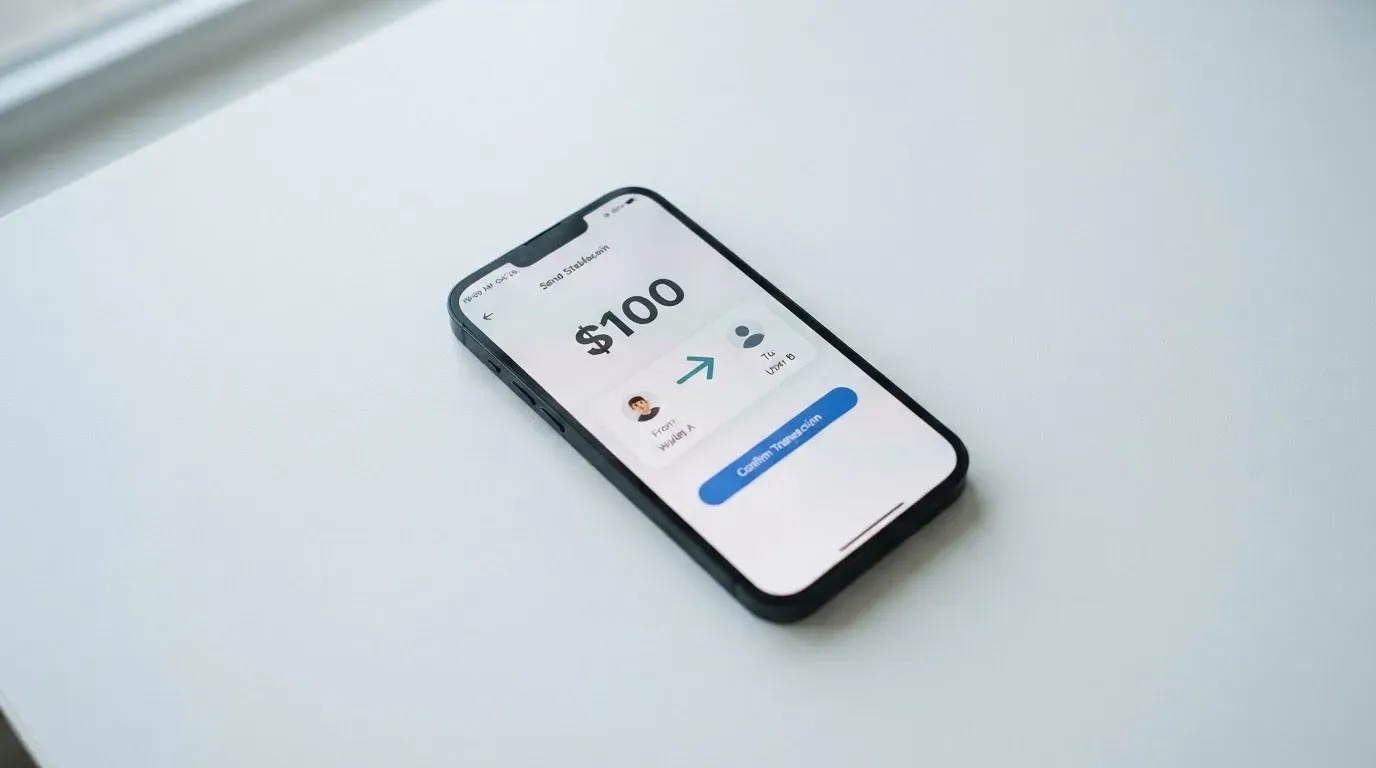
You fund a Master Balance with crypto from any wallet or exchange — ETH, USDC, USDT, BTC, SOL, TON, TRX and other major coins — then transfer that balance to the card. Credit lands “within a few minutes” of network confirmation. That is a plain, comprehensible model: one balance, many coins, card draws on it.
The catch is the same one every crypto card has, and here it is unstated. Networks are not itemised. Which chain your USDC must be sent on, whether a transfer sent on the wrong network can be recovered, who pays the network fee — none of that is on the page. This matters more than it sounds. A stablecoin exists on many chains, and they are not interchangeable: a USDC sent over Tron is not the same asset as a USDC sent over Ethereum. If you send on a network the provider does not support, blockchain transfers are irreversible and recovery is a manual support request with no guarantee. Card networks and their issuers also carry category restrictions that the card does not spell out for you.
Also unknown: the minimum top-up, the top-up fee amount, and whether you can get your balance back out. The card does not state a withdrawal process for card balances. Closing the account is by email to [email protected], and prepayments made to Mirocard for services are generally non-refundable, with a refund of eligible unused prepayment available within 30 calendar days of a request with documents.
Paying with it day to day
Apple Pay and Google Pay are listed for the travel card only. That is worth internalising: if you planned to run everything through a phone wallet, the advertising and services cards are not described as supporting it. If you add a card to Apple Wallet, the number is replaced by a device-specific token rather than stored anywhere, and each payment uses a one-time code.
Merchant categories the card names are ads, games, AI, subscriptions, design, travel, delivery, hosting and shopping. That is an unusually specific list and it matches the advertising-card pitch. What is not stated is the blocked side of the list — gambling is the classic one, and no card publishes a blocked-category list in advance.
Rewards are not stated. There is no cashback, no points programme, no referral scheme.
The reliability question is the one nobody else can answer for you either, because it is not about the merchant. A crypto card spends a stored balance, converted to fiat, so its behaviour depends on the issuer’s programme rather than on your own bank. Merchants can decline prepaid or foreign-issued BINs, and some apply extra scrutiny when the issuer country differs from the billing address. AVS address checks, which help many US declines clear, are generally unavailable on foreign-issued cards. And a declined authorisation can leave a hold on your money for days. So even on a $0-fee card, the payment is not guaranteed to go through on the first try.
Disputes are the sharpest gap in the daily-use picture. Chargebacks, refunds and reversals are governed exclusively by the Card Provider’s terms — the unnamed issuer, not Mirocard. Complaints go to [email protected] first. Time frames are not stated. In plain terms: if a charge goes wrong, you are in a third party’s process, through a second party’s front door, with no published clock.
What can go wrong
The issuer is not named. Mirocard states plainly that it is not a bank, not an electronic money institution and not a card issuer; a third-party Card Provider holds the programme. The site footer reads “© 2026 Mirocard”. A company name appears in starting material — Byte Commerce LLC, Kyrgyz Republic — but I could not confirm it in the documents I read, so treat it as unverified.
On complaints and track record: I found no official incident, and no reviews at all for mirocard.com. There is no Trustpilot page for the site. That cuts both ways — a young service with no footprint is exactly what a scam looks like, and it is also what a new service looks like. Absence of evidence is not evidence of anything, here, and no amount of reading will settle it. What settles it is that you should keep balances small on any card whose issuer you cannot name.
Mirai does not hold customer card balances, per the terms. That is a real protection against a specific failure, and it is also a reminder that custody sits somewhere else. The general category has a history here: custodial platforms have failed badly, and crypto transfers have no built-in recovery because the network cannot freeze or return funds.
One operational risk deserves a separate mention because it is the one that catches people out: sending a deposit on a network the card does not support. That money can be gone, or tied up in a support ticket with no guarantee. Networks being unlisted makes this the most likely operational mistake you will make here.
If your account is closed or frozen — which is what happens when due diligence cannot be completed, and the card says it may refuse for failed verification, inaccurate documents or risk — you then deal with a non-bank in an unnamed jurisdiction. There is no deposit guarantee scheme in front of you. Money held at an electronic money institution is safeguarded in segregated accounts or insured, but that is a different thing from a bank deposit, and Mirocard says outright that it is not one of those.
What to take instead
If Mirocard’s shape is not the problem, the alternatives below have the same general shape. I list them so you can see the field, not because any of them is a recommendation — each scored lower on my read, and each has its own gaps.
| Mirocard | Cardex | CardFlow | HyperCard | |
|---|---|---|---|---|
| Score | 6.1 / 10 | 5.6 / 10 | 4.9 / 10 | 4.7 / 10 |
| Eligibility | No country list; “Restricted Jurisdiction” rule unenumerated | “One crypto card, 200+ countries”; no exclusions stated | Aimed at Nigeria; no country list | No country list; “176 countries” is acceptance, not eligibility |
| Networks | Visa, Mastercard, virtual only | VERVE, Visa, Mastercard, UnionPay; virtual and physical | Virtual USD Mastercard, about 3 minutes | Network not stated; prepaid, USD or EUR balance |
| Cost | $15.00 / $5.00 / from $5, no monthly | not stated | Virtual card free; monthly not stated | not stated; app page lists no fees |
| Per-transaction fee | $0.20 / $0.00 / $0.00 | Conversion rate chosen at payment; percentage not stated | not stated | not stated |
| Funding | ETH, USDC, USDT, BTC, SOL, TON, TRX and others | USDT, USDC, BTC; networks not stated | BTC, USDT, ETH or Naira transfer | Crypto such as USDT, BTC, ETH, converted to USD or EUR |
| Mobile wallets | Apple Pay and Google Pay on travel card only | not stated | not stated | not stated |
Cardex is the broadest on paper — four networks including UnionPay, and a mechanism it calls an “AI-Powered Conversion Rate” that scans global exchange rates and picks one at the moment of spend, with no percentage published. Its app store listing is Naira-focused, and the card currency is Naira there. CardFlow is explicitly Nigerian and its virtual USD Mastercard is free to create. HyperCard is the least specified: a prepaid card in USD or EUR, no network named, no fees listed. None of the three states rewards either.
The comparison that actually matters for most readers is not card against card. It is card against no card. If a merchant takes crypto directly, or if the spend is small and infrequent, the recurring friction here — KYC, an unnamed issuer, an irreversible transfer on an unlisted network, a dispute route you cannot see — buys you very little.
Who I would recommend it to
I would recommend Mirocard to the person the card was built for: someone paying a business for advertising, AI tools, hosting, subscriptions or design services in crypto, at a volume where $0.00 per transaction matters more than the $5 to issue, and who is comfortable funding a balance through an unnamed issuer on a platform that publishes no country list. For that person, the top-up model is the best part of the offering and the fee structure is genuinely cheap.
I would not recommend it as a general payment card. There is no physical card, no ATM, Apple Pay and Google Pay on one card type only, no stated card currency, no FX fee published, no numeric limits behind the “without limits” line, and a dispute process run by a company whose name is not disclosed. If you need a card that works everywhere a normal card works, this is not it.
And the honest caveat for everyone: I could not find a single review of mirocard.com, no Trustpilot page, and no official incident — while the issuer is unnamed and the restricted-jurisdiction list is unpublished. Keep balances small until the card has a history you can see.
Frequently asked questions
What is Mirocard card?
Mirocard is a virtual payment card, on Visa and Mastercard, that you fund with crypto and spend like an ordinary card online. There is no physical card and no ATM access. Three card types exist — travel, advertising and services — differing in issuance price, per-transaction fee, and whether Apple Pay and Google Pay are supported. It is aimed at paying for things like ads, subscriptions, hosting and AI tools.
How does Mirocard card work?
You register online, get a virtual card instantly, and top up a shared Master Balance with crypto from any wallet or exchange. The balance credits within a few minutes of network confirmation, and the card spends from that balance. Because it works like a stored balance rather than a linked bank account, it cannot overdraw. Which networks are supported for each coin is not published.
Is Mirocard a bank?
No, and the card says so itself. Mirocard states it is not a bank, not an electronic money institution and not a card issuer. A third-party Card Provider, which is not named, holds the card programme. It also states it does not hold customer card balances. That means no deposit guarantee scheme stands behind your money.
Who owns Mirocard?
The public pages do not say. The site footer reads “© 2026 Mirocard”. A company name appeared in my starting material — Byte Commerce LLC, a Kyrgyz Republic entity — but I could not confirm it in the documents I read, so treat it as unverified. With no named issuer and no reviews of the site at all, ownership is genuinely unclear.
Is Mirocard available in my country?
There is no published country list, so there is no answer you can read. The pricing page shows BIN countries — US, SG and EE plus one more for services and advertising cards, HK and SG for the travel card — but those identify the issuing institution, not your eligibility. The terms exclude anyone in an unnamed “Restricted Jurisdiction”. You have to try.
Does Mirocard require KYC?
Yes. The AML policy lists full name, date of birth, nationality, residential address, government-issued ID and email as things that may be collected. The terms set 18 as the minimum age and say Mirocard and/or the Card Provider may require verification. Whether proof of address is required is not stated, nor is what verification tier you get or how long a manual review takes.
What does a Mirocard card cost?
Issuance is $15.00 for the travel card, $5.00 for the advertising card and from $5 for the services card, with no monthly charge. The per-transaction fee is $0.20 on travel and $0.00 on advertising and services. Top-up fees exist and are individual per card, with no amount published. The FX fee is not stated, which matters most on the travel card.
Can I add Mirocard to Apple Wallet?
Apple Pay and Google Pay are listed on the travel card only. Neither wallet is supported on the advertising or services cards. On the travel card, adding the card replaces the number with a device-specific token, so the account number itself is not what gets stored, and each payment carries a one-time security code.
Where can I use the card, and what about gambling?
The card names the categories it suits: ads, games, AI, subscriptions, design, travel, delivery, hosting and shopping. It does not publish a blocked-category list, and gambling is usually restricted on cards by issuer policy rather than by law. Separately, some merchants decline prepaid or foreign-issued BINs, and a declined authorisation can leave a hold on your funds for several days.
How do I get money back or close the account?
Withdrawing a card balance is not stated — no withdrawal process is described. Closing the account is done by email to [email protected]. Prepayments to Mirocard for services are generally non-refundable, though a refund of eligible unused prepayment can be requested within 30 calendar days along with supporting documents. Disputes on card purchases are handled entirely under the unnamed Card Provider’s terms.
Virtual cards in the catalogue – cryptocardcatalog
Content created by the «cryptocardcatalog» team